By GREGORY ZELLER //
A Cold Spring Harbor Laboratory spinoff and a Massachusetts-based neuroscience trailblazer are teaming up to advance ribonucleic acid splicing research – key to addressing several central nervous system disorders.
 Envisagenics, a 2013 bioinformatics startup cofounded by Chief Executive Officer Maria Luisa Pineda and Chief Technology Officer Martin Akerman, is joining forces with Cambridge-based Biogen, a circa-1978 laboratory innovator with numerous neurological diseases in its sights.
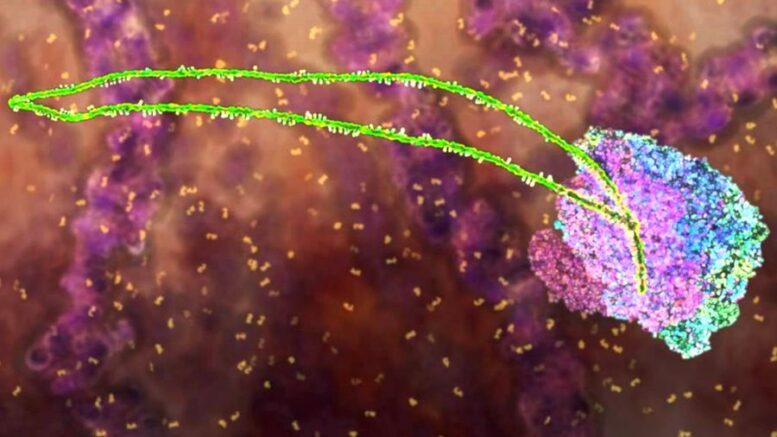
Through the collaboration, Biogen will leverage SpliceCore, Envisagenics’ proprietary drug-discovery platform – which uses artificial intelligence to identify biomarkers and potential pharmaceutical targets – to better understand the regulation of different RNA protein isoforms in central nervous system cells.
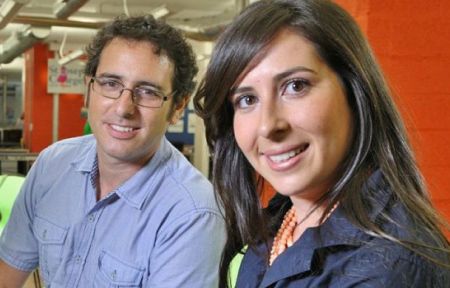
Biogen-erating new opportunities: Ackerman (left) and Pineda are “thrilled.”
Such “RNA splicing” – which edits out extra information embedded in RNA molecules to produce specific RNA-based proteins – is an “integral part” of Biogen’s work, according to Alfred Sandrock Jr., head of research and development for the Massachusetts biotech, who said SpliceCore absolutely fits the bill.
“By combining Envisagenics’ SpliceCore platform with our deep expertise in this scientific approach, we believe that Biogen will be able to advance our understanding of RNA splicing and potentially identify new drug targets for CNS diseases,” Sandrock said in a statement.
SpliceCore, which has attracted a number of lucrative research grants through the years from private and government sources, significantly alters R&D parameters in a field where detecting, cataloging and interpreting RNA splicing errors is traditionally a laborious and expensive process.
 The technology has used its machine-learning algorithms and high-speed computing power to build a database of roughly 7 million potential RNA splicing errors – the largest such database in the world, now providing Biogen “a broader lens to evaluate splicing events that may be targeted for therapeutic gain,” according to a statement from Envisagenics.
The 2013 startup – which relocated to New York City in 2016 and is also developing its own RNA-therapy programs focused on oncology and various neuromuscular disorders – is “thrilled to work with Biogen,” according to Pineda, who earned her PhD in biology from CSHL’s Watson School of Biological Sciences.
“We share a commitment to identifying potential treatments for [central nervous system] diseases through innovative AI technology,” the cofounder added. “Envisagenics and Biogen recognize the power of RNA splicing to aid in the discovery of potential therapeutics.”