By GREGORY ZELLER //
They’re getting down to the nitty gritty at the Feinstein Institutes for Medical Research, where investigators may have finally determined how and why electrical stimulation reduces chronic pain.
 Science has long known that high-frequency electrical stimulation, applied externally, helps reduce internal inflammation and overall pain. But the precise molecular reactions that occur when electrical stimulation is applied transcutaneously – that’s “across the skin” to you – have remained a mystery.
Until now: A new study published this week in the open-access journal Bioelectronic Medicine sheds light on those molecular mechanisms – in this case, literally.
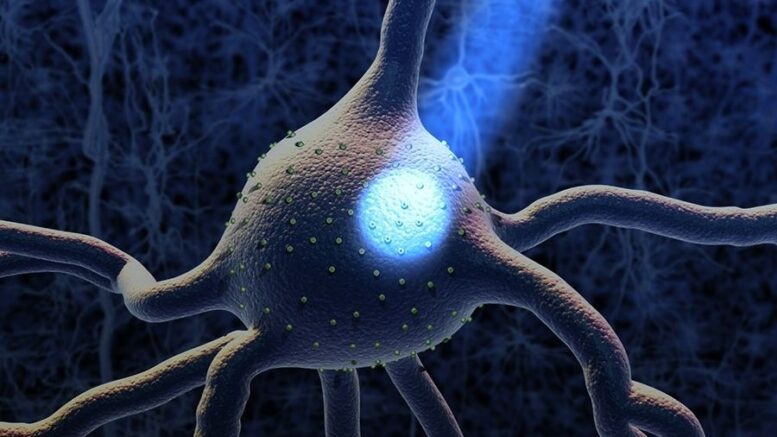
Led by Institute of Bioelectronic Medicine Professor Sangeesta Chavan, researchers combined optogenetics – a biological technique that controls neurons and other cells with light – with “pharmacologic and injury-related activation of nociceptors,” according to the Feinstein Institutes, on a program that measured the release of “pro-inflammatory molecules” in preclinical mouse models.

Sangeesta Chavan: Reset button.
The team then applied high-frequency electrical stimulation and showed it lessened “neuroinflammatory mediator release” in activated sensory neurons – suggesting HFES technology could serve as a preventative therapy against certain chronic-pain risks.
“This study reveals a previously unidentified mechanism for the pain-modulating effect of HFES,” Chavan said Wednesday. “[HFES] seems to reset sensory neurons by stopping the release of neuroinflammatory molecules, resulting in less inflammation and pain.”
That’s a fairly enormous discovery, according to Institute of Bioelectronic Medicine Assistant Professor Timir Datta, listed as one of 10 co-authors of the Bioelectronic Medicine paper, representing the Feinstein Institutes and Sweden’s Karolinska University Hospital.
“Until now, assessment of pain has been largely subjective,” Datta noted. “We now have a quantitative biomarker that correlates directly with pain symptoms and allows us to develop more effective treatments.”
The study was funded in part by TrueRelief, a California-based biotech whose namesake HFES handheld device earned U.S. Food and Drug Administration approvals in 2021 for use in cases of acute, chronic and post-operative pain.
While further research is needed to better understand the effects of TrueRelief and other HFES devices on inflammation and chronic pain – and their potential as opioid alternatives – better understanding of electrical stimulation’s precise molecular effects is already an enormous achievement, according to Feinstein Institutes President and CEO Kevin Tracey, the paper’s lead author.
“The discovery that neurons produce molecules that cause inflammation represents a major advance,” Tracey said in a statement. “Now this exciting new work shows it is possible to stop inflammation by targeting these neurons with bioelectronic devices.”