By GREGORY ZELLER //
Nearly half of Long Islanders think the local environment is unhealthy – and the farther west you go, the worse the numbers get.
 The latest Mount Sinai South Nassau Truth in Medicine Poll – conducted in July, released Dec. 28 – reveals general dissatisfaction with regional environmental conditions, with poor air and water qualities topping residents’ concerns.
Officially, 46 percent of Long Island adults (ages 18 and up) surveyed by phone last summer – and just 38 percent of New York City respondents – believe where they live is “environmentally healthy.”
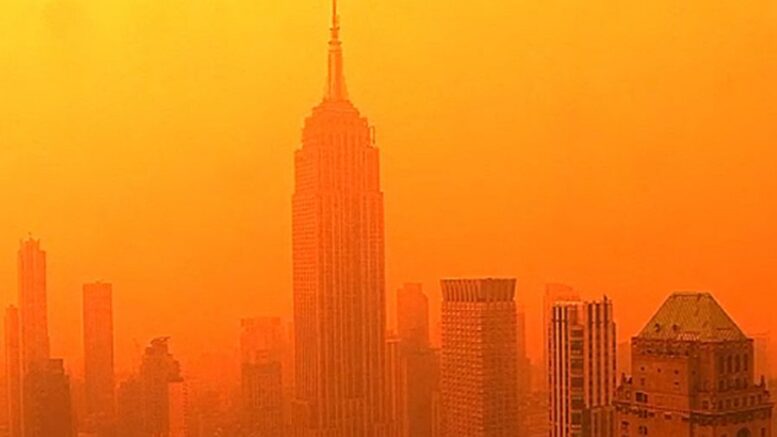
Air quality was their No. 1 concern: Ninety-one percent of the 600 total respondents said they were either “concerned” or “very concerned” about air local quality – not surprising, since the poll was conducted just weeks after smoke from Canadian wildfires blanketed the Greater New York Region.
Roughly 37 percent of respondents reported at least one health-related concern during the June 2023 air-quality crisis, while 20 percent said the health complications were serious enough to seek medical help.
That particular truth in medicine is validated by the American Lung Society’s 2023 State of the Air Report, which ranked the New York metropolitan area the 12th worst in the nation (out of 227 metro areas) for high-ozone pollution days – and placed Greater New York in the upper third of the largest 200 U.S. metropolises for annual particle pollution.

Sinking feeling: Long Islanders don’t completely trust their tap water.
In short: Islanders and their neighbors across NYC’s five boroughs have every reason to be concerned about air quality, according to Mount Sinai South Nassau President Adhi Sharma.
“Research has shown that high levels of fine particulate matter, nitrogen dioxide and nitric oxide can cause distress for people with heart or respiratory disease and put them at risk for other life-threatening diseases or illnesses,” Sharma noted. “There is also increasing evidence that exposure to air pollution … is associated with the development of metabolic diseases such as obesity and diabetes mellitus, atherosclerosis, hypertension, stroke and heart failure.”
Second only to those very valid air-pollution concerns were worries about the quality of the Long Island water supply. Better than 80 percent of respondents expressed concerns about regional tap water, ranking water woes above concerns about waste disposal, noise pollution and even climate change.

Aaron Glatt: You are what you drink.
In fact, 17 percent of Long Island-based respondents listed water quality as their top concern, higher even than air pollution. It’s an honest-to-goodness pick-your-poison choice – but those who fear the water more than the air are not wrong, according to Mount Sinai South Nassau epidemiologist Aaron Glatt.
Glatt, who chairs the hospital’s Department of Medicine, cites numerous studies associating exposure to certain perfluorinated and polyfluorinated substances in our water with health issues ranging from reproductive complications to liver disease to cancer.
“Regardless of where you live, we should be doing all that we can to reduce our exposure to these chemicals by using all-natural cleaning and personal-care products as much as possible,” the doctor noted.
Drinking filtered water is also critical, Glatt added, while regional governments should double down on “improving our public water purification systems” – a sentiment shared by more than 70 percent of poll respondents who agree that government agencies and public utilities are ultimately responsible for the effective regulation and operation of public water supplies.
The 17th Truth in Medicine Poll since the series began in 2017 – and third of 2023, following surveys covering weight loss and updated COVID vaccinations – was sponsored by Bethpage Federal Credit Union and conducted by independent national polling firm LJR Custom Strategies.
 And while it does allow a sampling error of plus or minus 3.9 percent, there is no doubt that environmental concerns weigh heavily on Long Islanders’ minds, according to BFCU Chief Marketing and Strategy Officer Linda Armyn.
“Like Mount Sinai South Nassau, we understand that a healthy and vibrant environment is a cornerstone of the quality of life that we enjoy,” Armyn said in a statement. “I strongly encourage the communities and customers we serve to make protecting and preserving our environment a top priority.”