


By GREGORY ZELLER //
A critical and often overlooked component of employee health and productivity took center stage this week at the Long Island Association.
 The LIA’s Health, Education and Not-For-Profit Committee on Wednesday welcomed 70 association members and a panel of mental-health experts for an in-depth discussion on mental health in the workplace – on the same day Gov. Kathy Hochul proposed to invest $1 billion in statewide mental-health services.
Far from a chuckle-fest about stolen staplers or the comedic caricatures of “The Office,” the panel discussion dove deep into the different, sometimes dramatic ways workplace mental health affects productivity and business success, while highlighting the many resources available to Long Island companies and their employees.
Long Island Association President and CEO Matt Cohen referenced a vital cog in the region’s socioeconomic engine – and put the onus for promoting better workplace mental-health parameters squarely on business leaders.
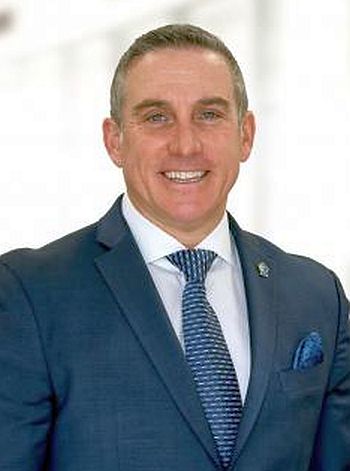
Patrick O’Shaughnessy: Battling the stigma.
“The business community can play an important role in fostering a culture that supports mental health and the wellbeing of our employees,” Cohen told attendees, adding that this support is “critical to increasing productivity, the bottom line of our companies and the region’s economic growth.”
Moderated by Catholic Health President and CEO Patrick O’Shaughnessy, an LIA board member and co-chair of the Health, Education and Not-For-Profit Committee, the panel dissected the effects poor mental health can have on the workplace – decreased engagement, lost time and worse.
Panelists – including New York State Office of Mental Health Executive Deputy Commissioner Moira Tashjian and Family and Children’s Association President and CEO Jeffrey Reynolds – also ranged into the COVID pandemic’s lingering mental-health effects and the deleterious stigma so often attached to mental-health issues.
“We need to foster a workplace culture where there is no stigma for employees to come forward and seek help,” O’Shaughnessy said.
Paule Pachter – president and CEO of Long Island Cares, the regional food bank founded by the late Harry Chapin – noted that for all its negativity, the pandemic also shined a new, positive light on the need for better workplace mental-health services.
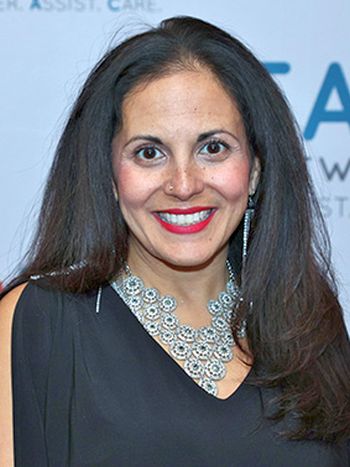
Neela Mukherjee Lockel: Innovative solutions.
“The pandemic allowed us to have an open conversation about mental health and its impact on our residents,” Pachter said. “Now, more attention and resources are being devoted to the issue to enable us to enact long-term systematic change.”
Devoting more resources to the cause is certainly on the governor’s mind. Hochul’s mental-health plan, unveiled as part of her ambitious 2023 State of the State agenda, includes a comprehensive combination of mandated insurance coverage, expanded outpatient services and an overhauled (and significantly enlarged) inpatient operational capacity, including 1,000 additional psychiatric-treatment beds at statewide care centers – all told, a billion-dollar-plus investment.
But it will take more than money to properly address the workplace issue, suggested panelist Neela Mukherjee Lockel, president and CEO of Greater New York social services-focused 501(c)3 organization EAC Network.
According to Lockel, innovation is key to promoting mentally strong workplaces – and, by extension, bolstering regional socioeconomics.
“As a community, it is important to be innovative in providing resources to people who are struggling,” Lockel added. “And in our places of business, (to) establish a culture that resonates to help employees obtain the assistance they need.”





A day like no other… ???
Indeed, attaching a stigma, acquiescing to those who do, is not a day like no other, it is business as usual.
Harold A Maio