By GREGORY ZELLER //
A three-year, seven-digit federal grant will place SUNY Old Westbury students on the cutting edge of high-energy physics experiments.
 Through its physics-focused RENEW program (for “Reaching a New Energy Sciences Workforce”), the U.S. Department of Energy has awarded $1.15 million to SUNY Old Westbury’s LEAP-UP effort (for “The Long Island High Energy and Astrophysics Undergraduate Pathway”).
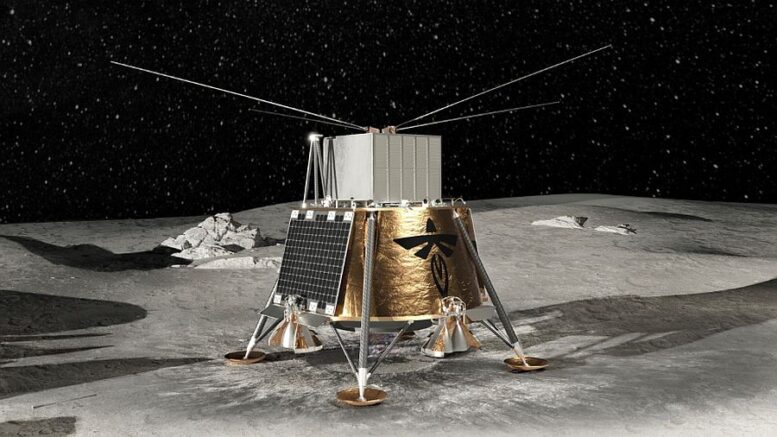
Tortured acronyms aside, the ambitious partnership aims to introduce SUNY Old Westbury learners – “underrepresented students,” according to the university – to Brookhaven National Laboratory scientists knee-deep in world-class high-energy physics programs, not only at the Long Island lab but in other exotic locales: deep inside a South Dakota mine, at the European Organization for Nuclear Research in Switzerland, even on the Moon.
John Estes, a SUNY Old Westbury assistant professor of physics and the grant’s principal investigator, applauded a “life-changing opportunity” for selected students, who will “be involved with world-leading scientists engaged in … some of the most interesting and potentially impactful science of our times.”
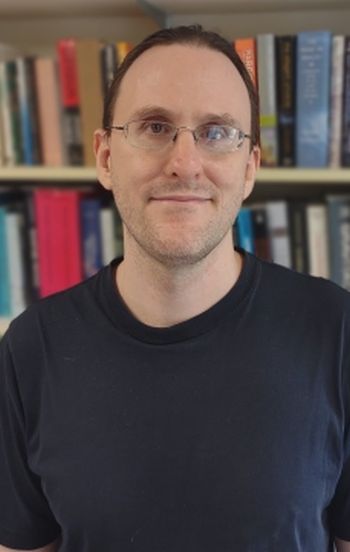
John Estes: Opportunities abound.
“As a campus committed to serving students from widely diverse backgrounds, we are proud that the academic, research and financial support these students receive will remove a variety of obstacles that might otherwise force them to choose another path in life,” Estes added.
The DOE reward targets SUNY Old Westbury students in their junior and senior years, who will regularly visit Upton-based BNL to work side-by-side with professional mentors.
Among the participating scientists are Kétévi Assamagan, who’s building new parts for the ATLAS Detector at the CERN’s Large Hadron Collider, the world’s highest-energy accelerator; Mary Bishai and Mateus Fernandes Carneiro, who are assembling neutrino detectors to track subterranean subatomic phenomena in South Dakota; and Anže Slosar, who’s constructing components for a new radio telescope destined for the dark side of the Moon.
Between their junior and senior years, the first cohort of students – all hailing from Long Island – will complete a 10-week summer research program at BNL. They’re also slated to participate this July in the eighth-biennial African School of Fundamental and Applied Physics, scheduled to run for two weeks at Cadi Ayyad University in Morocco.
The DOE funding covers the entirety of their international adventures, including full-tuition scholarships, academic-year and summer-month support stipends and all travel costs.
Dmitri Denisov, BNL’s deputy associate laboratory director for high-energy physics, trumpeted benefits not only for the students, but for BNL, the university and science itself.
 “Our goal is to work with Old Westbury to incorporate BNL- and DOE-related work into the college’s curriculum to encourage a sustained stream of students interested in particle physics and potential future employment at Brookhaven or another national lab,” Denisov said in a statement.
“We are excited to welcome students from Old Westbury to Brookhaven Lab,” the physicist added. “They will use our world-class scientific facilities and (the) expertise of our scientific staff to learn how to detect and study elementary particles and uncover new laws of nature that govern the world at the smallest and largest observable distances.”