By GREGORY ZELLER //
The dead will rise on Long Island, if the New York State Board of Historic Preservation has its way.
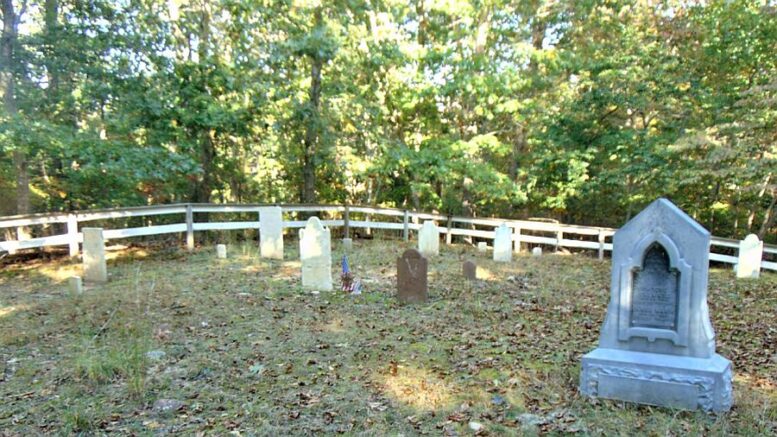
 The board has made 11 statewide recommendations for properties to add to the New York State and National registers of historic places, including the Van Scoy Burying Ground, a private 18th Century cemetery in the Town of East Hampton.
According to Gov. Kathy Hochul’s office, a recent state survey identified 45 historic cemeteries, gravesites and burial grounds in East Hampton dating from the mid-18th to mid-20th centuries. The sites are largely located on church-owned and association-owned properties, and the Van Scoy Burying Ground – an isolated family burial place dating from 1782 to 1884, now part of East Hampton’s Grassy Hollow Nature Preserve – is the first survey site nominated for the historic registries.

Erik Kulleseid: Historic commitment.
It joins the Ichabod Crane Schoolhouse in the Town of Kinderhook (Columbia County), a century-old player-piano factory in Syracuse and eight other preservation-worthy sites nominated this week, ranging in age from Rensselaer County’s Central Lansingburgh Historic District – an entire residential neighborhood dating back to 1770 – to a 1960s Monroe County apartment complex with a significant affordable-housing history.
The nominations must be approved by the New York State Office of Parks, Recreation and Historic Places to be officially included on the New York State Register of Historic Places and be nominated for the National Register of Historic Places.
But registered or not, the sites “showcase New York’s diverse history,” according to Hochul, who announced the nominees Monday.
“By adding these sites to our historic registers, we are recognizing the critical role that they play in telling our state’s story,” the governor added. “I hope these landmarks will inspire, educate and entertain future generations and help connect New Yorkers to our past.”
There are currently 120,000-plus historic New York State properties listed on the National Register of Historic Places, either individually or as components of historic districts. Listings on state and national historic registers can qualify properties for public preservation programs and services, including matching state grants and state and federal rehabilitation-project tax credits.
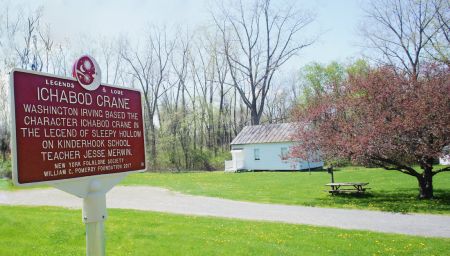
Crane kick: Officials are hoping to boost the restoration of the Ichabod Crane Schoolhouse with a coveted historical-site designation.
Since 2012, Albany has approved the use of rehabilitation commercial tax credits for more than 1,000 historic properties across New York State, driving more than $12 billion in private investments, according to the governor’s office.
New York State Office of Parks, Recreation and Historic Preservation Commissioner Erik Kulleseid said approving the 11 new sites was part of the office’s “commitment to preserving and promoting the remarkable range of historic resources found throughout New York.”
“Our historic resources can have an integral role in New York’s future,” Kulleseid said in a statement. “And the incentives that come with state and national registers recognition … can help stabilize historic structures as well as encourage investments in our local communities.”