
By GREGORY ZELLER //
With the New Year comes a series of new mental-health initiatives targeting some of Long Island’s most vulnerable populations – and those who support them.
 The Family & Children’s Association, a Garden City-based nonprofit ranked among Long Island’s busiest health and human services organizations, has received a $25,000 grant from the Long Island Community Foundation earmarked for a new Mental Health Navigator program.
The groundbreaking effort creates a safe and confidential space for individuals to share their mental-health concerns with trained peers who have overcome similar challenges – a “been there, done that” endeavor, according to the FCA, designed to illustrate healthy outcomes.
Meanwhile, the New York State Office of Mental Health has issued a $54,766 grant to Wading River-based Little Flower Children and Family Services of New York, which has internally invested an additional $6,500 to implement a cutting-edge Transformative Life Skills and Dynamic Mindfulness program.
Targeting both Little Flower staffers and students – including some of Long Island’s highest-need and most at-risk student populations – the combination “has been shown to improve academic performance and social-emotional learning, increase attendance and reduce suspensions” among students, while “enhancing staff wellbeing and preventing teacher burnout,” according to Little Flower.
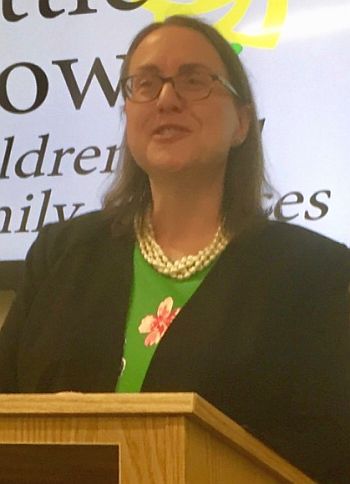
Corrine Hammons: Mitigating trauma.
The program leverages the principles of Dynamic Mindfulness, an established practice integrating movements designed to manage stress in the body, regulate breathing techniques – key to emotional stability – and center a person’s focus and attention.
In a statement, Little Flower Union Free School District Superintendent Harold Dean applauded the phased-rollout addition of the Transformative Life Skills and Dynamic Mindfulness program to Little Flower’s existing “battery of supports.”
“[This] will offer additional strategies to our staff, new and varied identification and coping mechanisms to our students, and new support pathways for our students’ families,” Dean added.
The first phase – the training of teachers employed by the Little Flower Union Free School District, a Special Act Public School – is already complete. This month, the rollout continues with training for “student ambassadors” and staff at the Wading River residential treatment center, as well as “family-engagement components,” according to Little Flower.
Little Flower President and CEO Corinne Hammons noted the “extensive trauma histories” of many Little Flower clients – particularly among its resident-student population – and agreed that the introduction of the forward-thinking program was a strong addition.
 “[Students] may have experienced domestic violence, sexual abuse, human trafficking, foster care transiency and involvement with the criminal justice system,” Hammons said. “Addressing these traumas and their impacts through mitigation strategies is vital for the social-emotional and academic wellbeing of our youth.”
At the FCA, the pilot Mental Health Navigator program will allow people with mental-health concerns to seek guidance and receive direct support from counselors who have faced similar hurdles – a unique and important effort “as we face an unprecedented post-COVID mental-health crisis,” noted Family and Children’s Association President and CEO Jeffrey Reynolds.
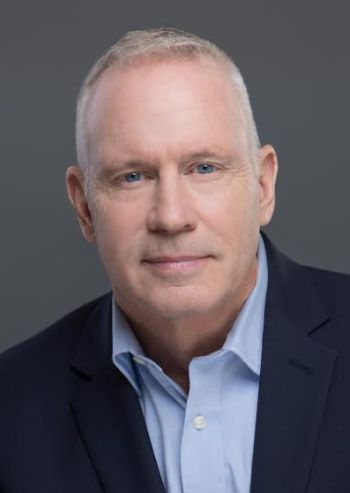
Jeffrey Reynolds: Close call.
“We understand that the people closest to the problems are also often closest to the solutions,” Reynolds said. “Those who have successfully navigated mental-health challenges in the past are uniquely poised to help support those who are struggling today.”
The Community Foundation grant will fund the recruiting, screening and training of “peers who have demonstrated resilience and willingness to help others,” the FCA said in a statement. The newly trained peers will be deployed into “community and hospital settings,” aiming to meet clients “where they are” – increasing the novel effort’s comfort factor and, ostensibly, fostering more positive results.
“We will deploy Long Islanders with lived experience into emergency rooms, crisis centers and other settings to ensure that we are reaching individuals who might otherwise be reluctant to seek help and creating the robust circle of support they need to heal,” Reynolds said.
Long Island Community Foundation Executive Director David Okorn said the foundation was proud to support the pilot program, noting “peers can be an integral part of an individual’s clinical-care team.”
“Through their own lived experiences, they remove stigma, model recovery and promote shared understanding and trust,” Okorn added.