By GREGORY ZELLER //
Confidence continues to rise among Long Island chief executives, according to the latest Marcum-Hofstra CEO Survey.
 That’s the big takeaway from the newest 12-month outlook on major socioeconomic topics, as outlooked by regional midmarket leaders and released Wednesday by accounting giant Marcum LLP and Hofstra University’s Frank G. Zarb School of Business.
Deep-diving this time into the role of Environmental, Social and Governance goals in business planning, the mid-June query of 250 CEOs (overseeing revenues of $5 million to $1 billion-plus) revealed a broadly optimistic view of regional and national business climates, including a sharp uptick in respondents with “very positive” outlooks – and nearly 40 percent of respondents sharing higher optimism overall.
The happy returns continue a 2023 pattern for the long-running series. Respondents showed more positivity in the first CEO survey of 2023, released in February, compared to their gloomier outlook in the final 2022 survey.
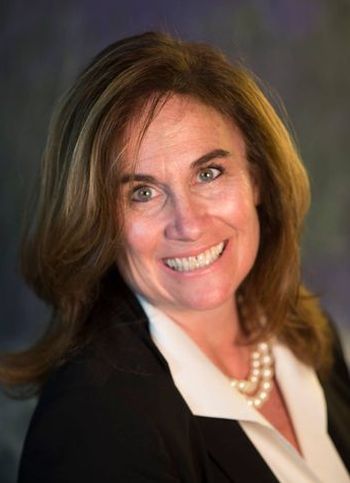
Janet Lenaghhan: Once in a generation.
In April, they stepped up long-term positivity again, despite fresh concerns about collapsed banks and potential financial crises.
This time around, the largest gains in optimism came in the Construction, Professional Services and Technology sectors – though CEO optimism dipped in the Healthcare and Retail sectors.
Officially, 12.4 percent of respondents rated their outlook as “very positive” (up from 9.8 percent in April) and more than a third (39.6 percent) placed themselves in the higher optimism range, up from 37.6 percent.
Reflecting those rosier long-term prospects, fears of a national recession are in steep decline. In that dismal November 2022 survey, 46.5 percent of respondents were “very concerned” about a potential recession – but now, only 25.4 percent are “very concerned” by the prospect.
And 15.6 percent of CEOs are not concerned at all about a recession, more than double the measly 6.3 percent brushing it off in November.
The latest quarterly review is not all giddy enthusiasm – 74 percent of responding CEOs are still at least somewhat concerned about a potential recession, for instance.
But it showcases “an undeniably resilient spirit among leaders in the business world,” according to Marcum Chairman and Chief Executive Officer Jeffrey Weiner.
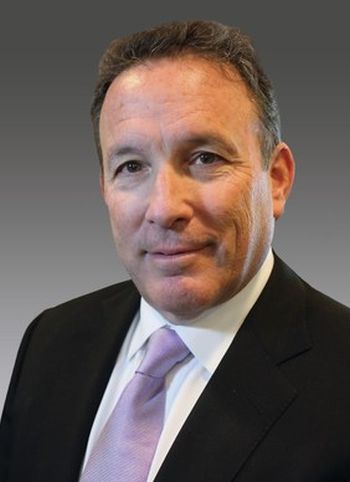
Jeffrey Weiner: That’s the spirit.
“While the optimism index is on the rise, it’s clear that these CEOs are not just optimistic but also keenly aware of the challenges ahead,” Weiner added. “From managing economic uncertainties and grappling with talent shortages to mitigating the impact of rising operational costs, they’re steering their organizations with a steady hand.
“It’s a testament to the adaptability and grit of businesses in a fluid landscape.”
Developed, conducted and analyzed by Zarb School MBA students (under the wing of Associate Professor Andrew Forman), 2023’s third Marcum-Hofstra CEO Survey leaned heavily into ESG issues, querying respondents about social activism and the importance of supporting political causes, among other topics.
According to the results, the lines between business and social activism continue to blur. Actively supporting political or social causes was important to 71.6 percent of respondents – while one-third (33.6 percent) labeled ESG causes a “central focus” of their business planning.
Most impressively, while 43.6 percent of responding execs said ESG goals were secondary to corporate goals, 45.6 percent said supporting an important cause was more important than its effects on the company’s bottom line.
Frank G. Zarb School of Business Dean Janet Lenaghan applauded “a generational change driven by young people who make decisions about what they buy and where they work based on a company’s ethical impact.”
Forman, whose classes cover marketing and international business, suggested the survey results open broader questions for students to consider – including whether it’s actually prudent for companies to focus resources “on the broader issues confronting their communities and society at large.”
“While many CEOs felt it was important for the companies to support political and social causes, their motives vary,” the professor added. “This provides a springboard for students to think critically about how broader concerns affect corporate decision-making.”