By GREGORY ZELLER //
Come on in, the water’s fine.
 That’s the promise of the Long Island Beach and Water Quality App, a unique public app designed by Stony Brook University’s School of Marine and Atmospheric Sciences to give users instant information on dozens of Long Island beaches and bodies of water.
Officially unveiled Tuesday, the one-stop-application is a sort of “Star Trek” tricorder for the water, providing real-time data about beach conditions, potentially dangerous algal blooms and much more: Is your favorite beach open for swimming? What’s the water temperature? Is clamming permitted here? How’s the fecal coliform bacteria doing today?

Chris Gobler: Aqua man.
The answers to these and many other questions are now readily available to anyone with an Internet connection, thanks to decades of research – and weekly water-quality monitoring – by SBU’s Gobler Laboratory (named for SBU Marine Science Professor Chris Gobler) and real-time updates from the New York State Department of Environmental Conservation, the NYS Department of Health and the Nassau and Suffolk county health departments, all funneled through the free LIBAWQA, which is available for both Android and iOS devices (just download the app and scan a QR activation code).
Self-billed as “the world’s first-ever all-in-one water-quality app for the public,” the comprehensive app covers conditions in more than 30 bays, harbors, estuaries and rivers, while revealing the open-or-closed status of “hundreds of Long Island beaches,” according to SBU. Volumes of valuable data are distilled into “good,” “fair” or “poor” rankings, creating the ultimate tool to help Long Islanders “enjoy the incredible beaches and water bodies” across the region, according to Gobler.
“Our goal was to make it easy to access beach and water-quality information, all at once,” the professor noted. “Whether you’re a beach lover, fisherman, bayman (or) swimmer, or (you’re) looking for scientific information about Long Island’s water-quality conditions, all of the relevant information is right at your fingertips with this app.”
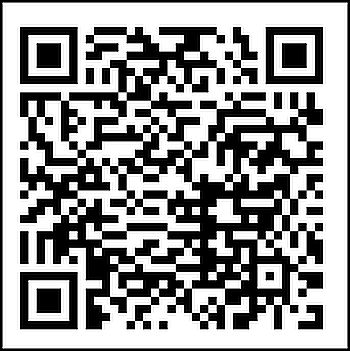
Code maker: After downloading the app, this QR code activates the LIBAWQA.
Gobler created the LIBAWQA in conjunction with SoMAS Professor Sung Gheel Jang, who assembled a team of scientists and students that leveraged publicly available data with geospatial information systems to create the intuitive, all-in-one programming.
“The production of this app demonstrates the ability of the Geospatial Center in the School of Marine and Atmospheric Sciences to offer imaginative and unique GIS and Remote Sensing-related solutions for students, faculty and the surrounding communities,” Jang noted.
While the app has clear appeal for beachgoers and water-sports aficionados, fellow scientists are pretty jazzed about it, too – for both its positive and negative capabilities.
“For decades, The Nature Conservancy has invested in protecting Long Island’s coastal ecosystems,” Kevin McDonald, The Nature Conservancy’s senior policy advisor, said in a statement. “This app will allow the public to better enjoy those ecosystems, specifically the beaches and shell-fishing grounds.
“It also makes clear there are many regions of Long Island that are not suitable for swimming, shell-fishing and/or fishing,” McDonald added. “Therefore, (it) is a clear demonstration that more work needs to be done to protect Long Island’s coastal ecosystems.”