
Fall forward: Welcome to Wednesday, dear readers, as we speed through the first full workweek of September 2022 – vacations are over, schools are open and the innovation economy is indeed gaining momentum.
That means the professional-networking circuit has sparked up. Witness our jam-packed online calendar of events – including BrandSLAM, our exciting pitch-a-thon/marketing improv coming Oct. 6 to LaunchPad Huntington. What’s a marketing improv? Glad you asked.

Book it: Add to your permanent collection on National Buy a Book Day.
Search party: It’s Sept. 7 out there – Google Commemoration Day, noting the 1998 founding of the search-engine giant by Stanford University PhD candidates Larry Page and Sergey Brin.
On the other end of the technological spectrum, National Buy a Book Day also turns pages – literally – every Sept. 7, in stark defiance of the e-book era.
Soup to nuts: Today is also National Acorn Squash Day, an autumnal celebration of what’s technically a summer squash, but either way goes great with caramelized walnuts (and makes a terrific roasted soup).
New England newbies: You can Google it or read it in a book (or just cry in your soup), but the City of Boston was founded on this date in 1630.
Established alongside Beantown were Watertown and Dorchester, Mass., at first their own separate cities, now part of Greater Boston.

Say “uncle”: American got a mascot on this date in 1813.
Great uncle: Derived from Upstate New York meat packer Samuel Wilson, “Uncle Sam” became the national nickname 209 years ago today, coined by the Troy Post.
Still baking: Now a staple of neonatal care, the baby incubator debuted on this date in 1888 at Stater Emigrant Hospital in New York City, keeping tiny preemie Edith Eleanor McLean – just 2 pounds, 7 ounces at birth – warm until she was ready.
All dolled up: Featuring the familiar shock of red hair and the trademark triangle nose, the famous Raggedy Ann doll was patented by New York City-based designer John Gruelle on Sept. 7, 1915.
Center stage: And sports television was forever redefined on this date in 1979, when ESPN – in full, the Entertainment and Sports Programming Network – started calling the shots.
The first program – broadcast live from a Connecticut studio to 1.4 million cable subscribers across the United States – was the channel’s flagship “SportsCenter,” which included a live studio audience (and no computer graphics).
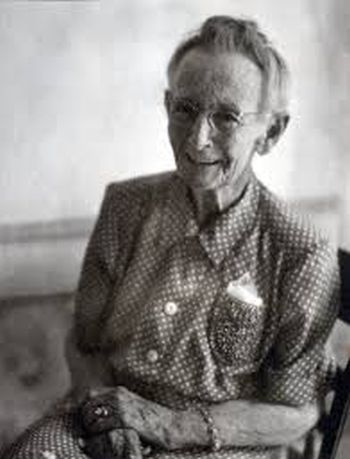
Young at art: Moses was nearly 80 before she started painting.
Late bloomer: American folk artist Anna Mary Robertson “Grandma” Moses (1860-1961) – a lifelong farmer and knitter until arthritis intervened at age 78, when she picked up painting – would be 162 years old today (and likely still creating).
Also born on Sept. 7 were Queen of England and Ireland Elizabeth I (1533-1603), the last of the House of Tudor’s five monarchs; American tinkerer Luther Crowell (1840-1903), a prolific inventor who created the flat-bottomed paper bag, among other innovations; American electrical engineer David Packard (1912-1996), who co-founded Hewlett-Packard; Welsh fashion designer Laura Ashley (1925-1985), who reintroduced 18th Century Romanticism to clothing and home furnishings; and American singer/songwriter Charles Hardin “Buddy” Holley (1936-1959), now performing holographically with Roy Orbison.
Just pretending: And take a bow, Christine Ellen “Chrissie” Hynde! The American musician – known best as the lead vocalist, guitarist and songwriter of Rock and Roll Hall of Famers The Pretenders – turns 71 today.
Share a Hymn to Her at editor@innovateli.com, where Day After Day, we’re happy when you just say “hi” (Don’t Get [Us] Wrong) – but your news tips are a true Message of Love and your calendar events are always the Talk of the Town.
 About our sponsor: The Long Island Business Development Council has helped build the regional economy for 53 years by bringing together government economic-development officials, developers, financial experts and others for education, debate and networking.
BUT FIRST, THIS
Radioactive element: A hefty National Institutes of Health grant will help Long Island researchers unravel the negative effects of radiation exposure – particularly its relation to the dreaded condition sepsis.
The five-year, $3.8 million grant will fuel the work of Feinstein Institutes for Medical Research co-principal investigators Ping Wang, Max Brenner and Monowar Aziz, who are digging deep into radiation’s effects on the human immune system. Their novel research is aimed at improving the treatment of radiation-injury patents – specifically, at better treating sepsis, which occurs when the body’s immune system triggers inflammation to help fight against infection, with out-of-control inflammation often causing multiple organ failures.
Sepsis and radiation overdoses go hand-in-hand – and considering realities like terrorism and nuclear power plant malfunctions, “the risk of massive radiation exposure is ever-present,” according to the Feinstein Institutes. “Radiation exposure can cripple the immune system, so there is a significant need to understand how this occurs,” noted Feinstein Institutes President and CEO Kevin Tracey. “The NIH support … offers a significant new opportunity to understand better the impact of radiation and the risks of subsequent immunosuppression and infection.”

Zero tolerance: A specific form of dementia may be affecting 9/11 responders with PTSD.
Dementia detection: A unique form of dementia may be targeting 9/11 responders, according to new Stony Brook University research.
Published last month in the Journal of Alzheimer’s Disease, a study of 99 World Trade Center responders used advanced 3D-imaging techniques to determine that those suffering both cognitive impairment – a possible dementia indicator – and post-traumatic stress disorder present brain “white matter” differently than responders with cognitive impairment but no PTSD. With the 21st anniversary of the heinous terrorist attacks set for Sunday, the science is suggesting that “a specific form of dementia could be affecting WTC responders who also have PTSD,” according to SBU.
The study – led by researchers affiliated with the Stony Brook WTC Health and Wellness Program – “is by no means conclusive” insofar as identifying a new form of dementia in WTC responders, though it does “support the view that responders with [cognitive impairment] have neurological changes consistent with neurodegenerative disease,” according to lead author Sean Clouston, an associate professor in SBU’s Department of Family, Population and Preventive Medicine. “Our findings do show that dementia due to PTSD is clearly different from non-PTSD dementia in this responder population.”
POD PEOPLE
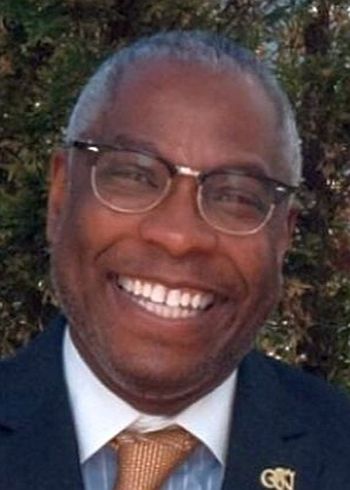
Episode 19: Timothy Sams, new thinking in Old Westbury.
University presidents, museum masters, campus cops, iconic executives, top ghosthunters, international talk-show hosts, NBA first-round picks – no telling who’ll show up next on Spark: The Innovate Long Island Podcast, where genius comes straight from the source. Try to keep up!
TOP OF THE SITE
Let’s get physical: Stony Brook University is welcoming another Nobel Prize laureate – honored for proving out Einstein – to its already all-world faculty.
The secret is out: Help us help you – the more free subscribers we get, the easier it is to keep bringing you these educational and entertaining newsletters. Tell your friends.
VOICES
The masters of the Long Island economy share their unique perspectives, best practices and brilliant business-building acumen in Innovate Long Island’s exclusive Voices library – a master’s course in regional innovation covering law, media, healthcare, education and so much more. Learn from the best.
STUFF WE’RE READING
Looking up: Despite valid recession concerns, U.S. job growth is off the charts. USA Today does the work.
Looking down: Why the wealthy are suddenly shopping at Walmart. Morning Brew fills its cart.
Looking ahead: With the long game in mind, NASA has scrubbed the Artemis 1 moon launch until October at least. Live Science aborts the countdown.
RECENT FUNDINGS
 + Bridger Photonics, a Montana-based methane-detection innovator, raised $55 million in funding. Beaverhead Partners made the investment.
+ Ascend Elements, a Massachusetts-based lithium-ion battery recycling and engineering innovator, received a $50 million investment from SK ecoplant.
+ Alloy, a New York City-based Identity Decisioning Platform for banks and fintech, raised an additional $52 million in funding led by Lightspeed Venture Partners, Avenir Growth, Canapi Ventures, Bessemer Venture Partners, Avid Ventures and Felicis Ventures.
+ JenaValve, a California-based developer and manufacturer of transcatheter aortic-valve replacement systems, raised $100 million in Series C funding led by Bain Capital Life Sciences, Andera Partners, Valiance Advisors and Gimv.
+ Olio Health, an Indiana-based workflow/collaboration platform for the post-acute care and population-health industries, raised $13 million in Series A funding led by Fulcrum Equity Partners and Mutual Capital Partners.
+ 98point6, a Washington State-based on-demand virtual primary-care company, raised $20 million-plus in funding. Backers included existing investors L Catterton and Activant Capital.
Like this newsletter? Innovate Long Island newsletter, website and podcast sponsorships are a prime opportunity to reach the inventors, investors, entrepreneurs and executives you need to know (just ask the LIBDC). Marlene McDonnell can tell you more.
BELOW THE FOLD (Classic Gameshow Edition)

Chippy: Insiders say it will take years for China to catch up with U.S. chip technology.
The price is right wrong: Unseen since the 1970s, price controls are back.
Jeopardy: Sensing trouble, U.S. regulators have banned Chinese microchip exports.
Family feud: Thirty years later, estranged Canadian brothers face off in a heated mayoral race.
Wheels of fortune: Please continue supporting the amazing organizations that support Innovate Long Island, including the Long Island Business Development Council – on an economic-development roll for more than five decades. Check them out.