
Welcome back to the show: Here we are, dear readers, picking up right where we left off before the long holiday weekend – knee-deep in invention and all manners of socioeconomic ingenuity.
It’s Wednesday on Long Island and around the world, and we’re hurdling the hump with another snappy innovation review. Let’s rock!
Hold it together: Today is May 29, and we’re opening with a true … staple? …. of office environments – National Paperclip Day, celebrating the humble page-binders that emerged about 160 years ago and still rank as one of history’s great creative hacks.

Tummy time: Do you have the stomach for World Digestive Health Day?
Gut instincts: It’s also the World Gastroenterology Organization’s World Digestive Health Day, shining an internal spotlight on the need for better gastrointestinal self-care, and the best ways to achieve it.
Not especially good for your digestive health (not terrible, mind you, though lardons are definitely a sometimes food) is National Coq Au Vin Day, a May 29 celebration of the delectable French dish combining braised chicken, fatty bacon, wine, mushrooms and garlic.
Try our new menu: The food definitely improved after the Middle Ages ended on this date in 1453 – an approximation for sure, though the Ottoman Empire did capture the City of Constantinople (modern-day Istanbul) 571 years ago today, ending the thousand-year rule of the Byzantine Empire and, according to historians, kicking off the Renaissance.
Rhode scholar: Enjoying its own renaissance, of sorts, was Rhode Island, which ratified the U.S. Constitution – and became the 13th state to join the Union – on May 29, 1790.
Say cheese: Following Rhode Island’s lead, Wisconsin became the 30th state admitted to the Union on this date in 1848.
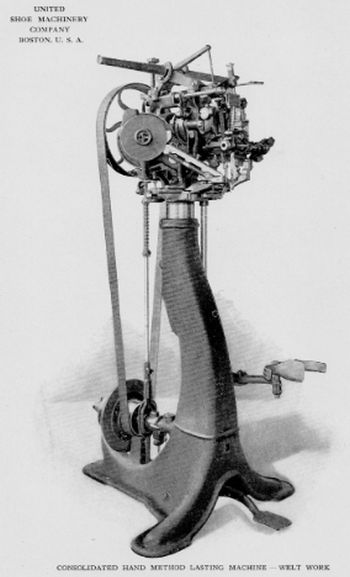
Built to lasting: Matzeliger shoed ’em.
Lasting impression: Also lacing up was Massachusetts-based inventor Jan Matzeliger, who changed the shoe-manufacturing industry forever on May 29, 1885, when he publicly demonstrated his shoe-lasting machine (increasing factory production from 50 to 750 pairs per day, by some counts).
Top of the world, ma! And it was this date in 1953 when Kiwi adventurer Edmund Hillary and his Sherpa guide, Tenzing Norgay, reached the highest point on Earth – the 29,035-foot summit of Mount Everest.
For those keeping score, Everest had turned back 10 major group expeditions (and two insane solo attempts) before the dynamic duo finally reached the top.
What you can do for your country: Thirty-fifth (and youngest) U.S. President John Fitzgerald Kennedy (1917-1963) – famous for confronting Communist aggression, establishing the Peace Corps, advancing civil rights, urging America to shoot for the Moon, bedding movie stars and dying in one of history’s most conspiracy theory-heavy assassinations – would be 107 years old today.

Service with a smile: Hope was a longtime USO standout.
Also born on May 29 were English inventor John Walker (1781-1859), who created – but did not patent – friction matches; American tailor, inventor, manufacturer and fashion business executive Ebenezer Butterick (1826-1903), who revolutionized the way Americans dressed; American photographer Doris Ullman (1882-1934), famous for her unflinching portraits of the people of Appalachia; American psychologist L.L. Thurstone (1887-1955), a pioneer of psychometrics and psychophysics; and British American comedian, actor, entertainer and producer Leslie Townes “Bob” Hope (1903-2003), among the first major Hollywood stars to entertain American troops overseas.
Danny boy: And take a bow, Daniel Robert Elfman! The American film composer, singer, songwriter and musician – who rose to fame as the frontman of New Wave band Oingo Boingo and went on to write some of Hollywood’s most famous scores – turns 71 today.
Send your best to the music man who energized Batman, Spider-Man, the Men in Black and Beetlejuice (among others) at editor@innovateli.com, where we orchestrate interesting features from your news tips and your calendar events always score.
 About our sponsor: At Nixon Peabody, we deliver sophisticated legal services to our clients and our communities by combining high performance, entrepreneurial spirit, deep engagement and an unwavering commitment to a culture of collaboration, diversity and humanity. Visit NixonPeabody.com.
BUT FIRST, THIS
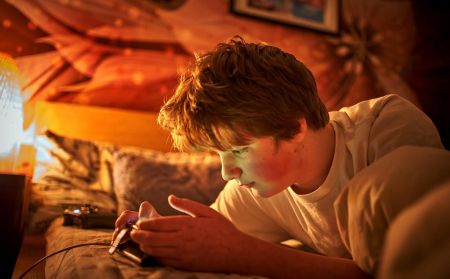
Eyes wide shut: Digital screen devices are costing kids sleep, according to an expert international panel.
Night watch: An international panel of experts led by a Stony Brook University professor has confirmed something you might already know – screens are keeping your kids up at night.
The panel, handpicked by the National Sleep Foundation and chaired by SBU Program of Public Health Professor Lauren Hale, examined 574 peer-reviewed studies on the sleep-related effects of smartphones, tablets and other digital screen devices. Its consensus: Not only does screen use impair sleep among children and adolescents, but certain content – specifically, “stimulating or upsetting material,” according to SBU – makes it worse.
To counter these effects (detailed this month in Sleep Health, the National Sleep Foundation’s multidisciplinary journal), the foundation suggests screen-use time limits and early, regular, relaxing and screen-free bedtime routines, among other slumber-friendly recommendations. “Our panel achieved consensus on the importance of reducing pre-bedtime digital media to improve sleep health, especially for children and adolescents,” noted Hale, also a professor in the Department of Family, Population and Preventive Medicine at SBU’s Renaissance School of Medicine. “We also identified the gaps in the literature and the need for future research.”
Target lock: Northwell Health’s R&D mothership has teamed with London-based scientists to map out future pharmaceutical treatments targeting psychiatric disorders.
In a study published May 22 by the peer-reviewed journal Nature Communications, researchers from the Manhasset-based Feinstein Institutes for Medical Research and King’s College London reveal “gene expression patterns” linked to common mental-health disorders – signatures unique to schizophrenia, depression and bipolar disorder, and key to identifying specific drug targets to battle those conditions. The scientists employed advanced transcriptome-wide association methods in studies co-funded by the National Institutes of Health and the United Kingdom’s National Institute for Health and Care Research.
By focusing on human endogenous retroviruses, which comprise about 8 percent of the human genome, the team discovered unique patterns associated with genetic risk for major psychiatric disorders, as well as “co-expression networks” connecting the retroviruses to well-established genes. “Our study suggests that some HERVs play a role in predisposing to psychiatric disorders,” noted Feinstein Institutes researcher Douglas Nixon, co-senior author of the Nature Communications paper. “This and future studies … could lead to potential new ways for treating psychiatric disorders.”
TOP OF THE SITE
Patented logic: Canon USA is an ongoing masterclass in intellectual-property law and the innovation-generating criticality of U.S. patents, according to Executive Vice President Seymour Liebman.
Now you know: Who? What? When? Why? Your questions are answered on Spark: The Innovate Long Island Podcast, where the region’s greatest innovators – CEOs, lawmakers, activists, athletes, entertainers and more – discuss past, present and future innovation. Get some real answers.
VOICES
The socioeconomic issues confronting you and your business aren’t getting any easier to comprehend or conquer – fortunately, we offer unique perspectives and best practices from experts in law, healthcare, media, social services, workforce development, technology and other key areas. Welcome to the amazing Voices Library.
STUFF WE’RE READING
Problematic: Allowing the NCAA to pay college athletes is a slippery slope. ESPN cashes in.
Symptomatic: This ferocious allergy season is nothing to sneeze at – but these tips might help. Vox blows hard.
Economic: A half-billion in the hole, your favorite ex-president/candidate/defendant has hocked a prized private plane. The Independent takes off.
RECENT FUNDINGS
 + ThinkLabs AI, a New York City-based artificial intelligence development and deployment platform, raised $5 million in seed funding co-led by Powerhouse Ventures and Active Impact Investments.
+ XGS Energy, a California-based geothermal energy technology developer, raised $20 million in Series A funding led by Valo Ventures and VoLo Earth Ventures.
+ Averlon, a Washington State-based cloud security pioneer, raised $8 million in seed funding led by Voyager Capital, Salesforce Ventures and Outpost Ventures.
+ Vaxess Technologies, a Massachusetts-based biotech developing skin-patch vaccines and therapeutics, raised $12 million in funding. Backers included RA Capital Management, Engine Ventures, GHIC and Mission Bio Capital.
+ Expressable, a Texas-based speech-therapy innovator, raised $26 million in Series B funding led by HarbourVest Partners.
+ CBiGroup, a NYC-based global fintech, raised $15 million in Series A funding led by Alpol Capital Family Office.
Like this newsletter? Innovate Long Island newsletter, website and podcast sponsorships are a prime opportunity to reach the inventors, investors, entrepreneurs and executives you need to know (just ask Nixon Peabody). Marlene McDonnell can tell you more.
BELOW THE FOLD (Exact Change Edition)
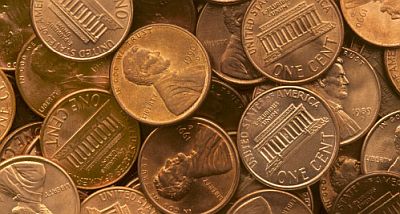
Mint condition: Turns out there a millions of good reasons to keep minting U.S. pennies.
Small change: How airport security recalculates the debate over eliminating the penny.
Big change: Why the EPA is paying local school districts to electrify their buses.
No change: The king of bad calls has “retired,” but MLB umpires are still awful.
Don’t ever change: Please continue supporting the fantastic firms that support Innovate Long Island, including Nixon Peabody, which is always evolving its legal services – but never wavers on its commitment to excellence. Check them out.