By GREGORY ZELLER //
Another next-generation genetic therapy for sickle cell disease has debuted at Cohen Children’s Medical Center.
 Just months after it became the first hospital in New York State to administer the cutting-edge gene therapy Zyntelgo, Northwell Health’s New Hyde Park-based pediatric hospital has become the first NYS facility to administer Lyfgenia, hailed by creator bluebird bio and medical industry insiders as a life-changing innovation for patients with sickle cell anemia, a group of disorders that attack and kill critical red blood cells.
Lyfgenia uses a patient’s own bone marrow to battle the nefarious disorders. Through a process known as gene insertion, the advanced therapy places a healthy adult hemoglobin gene in a sample of the patient’s bone marrow, then injects the modified marrow back into the patient.
Slowly, the body begins to produce healthy blood cells – and because it’s the patient’s own bone marrow being implanted, there’s no risk of rejection.
Northwell Health oncologist Jonathan Fish called Lyfgenia “a game-changer for people with sickle cell disease.”
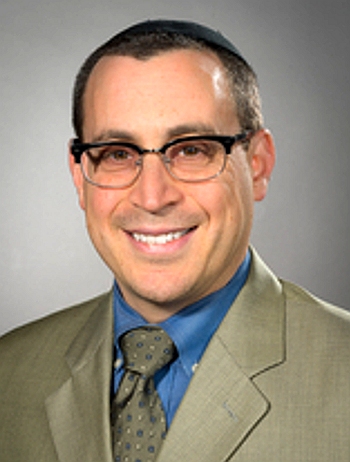
Jonathan Fish: Out in front of the “new era.”
“I’m honored to have been involved with this first treatment (at Cohen Children’s),” noted Fish, head of the pediatric hospital’s Department of Pediatric Hematology, Oncology and Stem Cell Transplantation. “This is just the first treatment of many to come, and Cohen is proud to be on the forefront of this exciting new era of medicine.”
The breakthrough therapy, which earned U.S. Food and Drug Administration approval in December 2023, also eliminates the need for a compatible bone-marrow donor, which can be difficult to nail down.
And it nixes post-procedure immunosuppressive medications, common pharmaceutical treatments that prevent the body’s immune system from mistakenly attacking healthy cells and tissues. Often prescribed as part of conventional bone marrow transplants, immunosuppressants come with a laundry list of potentially harmful side effects, ranging from headaches, hair loss and gastrointestinal dysfunction to hypertension, diabetes and osteoporosis.
Such complications are the last thing patients battling sickle cell disease need to deal with. And you can strike them all off the list with Lyfgenia – though the state-of-the-art treatment is not easy.
The multi-step process begins with collection of the patient’s stem cells. That’s relatively quick – but the laboratory process for turning those extracted stem cells into Lyfgenia can take months.
In the days before the actual transplant, the patient must undergo a course of chemotherapy – including its own well-documented slate of difficult side effects – to clear out cells in his or her bone marrow and make room for the Lyfgenia cells.
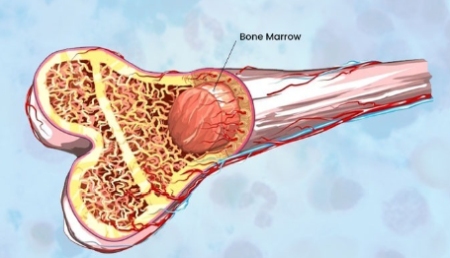
New and improved: Next-generation gene therapies overcome various difficulties associated with traditional bone-marrow transplants.
The Lyfgenia is then administered through intravenous infusion, and it can take up to eight weeks for the altered cells to do their thing. By eight weeks, however, the patient should be producing normal red blood cells and “cured of sickle cell disease,” according to Northwell Health.
The patient in Cohen Children’s landmark case, who actually received the Lyfgenia transplant on Dec. 17, is expected to be discharged later this month.
Charles Schleien, Cohen Children’s senior vice president of pediatric services, applauded the hospital’s “team of outstanding physicians, who worked for years to make this advancement possible.”
“Once again, Cohen Children’s Medical Center is making history and providing vital treatments for people in the area,” Schleien added. “Cohen is once again the first facility in New York to offer a groundbreaking genetic treatment, proving that we are at the forefront of this developing avenue of treatment.”