By GREGORY ZELLER //
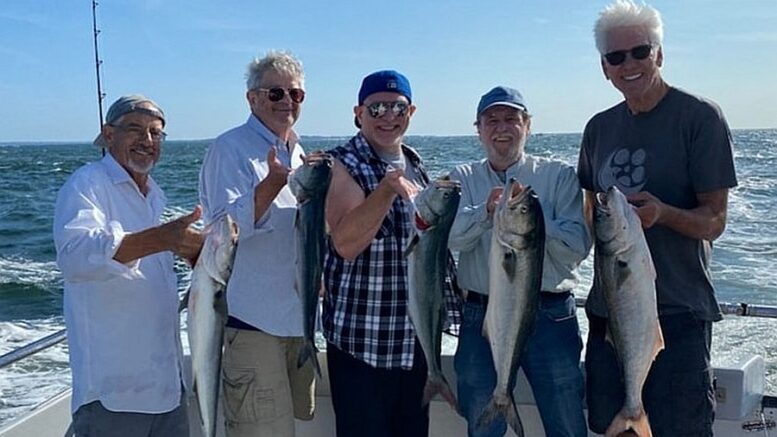
One of the oldest professions on Earth – some estimates say early humans began fishing for food 40,000 years ago – has hurtled into the 21st Century across Long Island.
 The Marine Program at the Riverhead-based Cornell Cooperative Extension of Suffolk County has launched the Electronic Vessel Trip Reporting project, designed to modernize the data-collection systems used by more than 240 for-hire, Island-based marine fishing permit-holders.
As with other commercial fishers, those recreational captains – operating charter and party boats hired by individuals and groups for recreational fishing trips – are burdened with a slew of reporting requirements. The eVTR system is built to simplify that reporting process, which includes information on the length of fishing expeditions, the numbers and types of fish caught and other critical data.
Those records have traditionally been listed and submitted to monitoring agencies on paper, but the state is now transitioning to electronic reporting – and the CCE is working to streamline that transition for regional recreational-fishing providers, according to CCE Suffolk Executive Director Vanessa Lockel.

Vanessa Lockel: Keeping LI’s recreational fishing fleet afloat.
“By helping to update their data-collection systems, CCE Suffolk will play a hand in building a more secure and efficient future for our fishing sector,” Lockel noted.
The eVTR project, which flows through the Atlantic Coastal Cooperative Statistics Program’s eTrips electronic reporting system, is funded by a $300,000 grant from the National Fish and Wildlife Foundation. It will primarily target recreational boats that hunt fluke, scup, black sea bass, striped bass, blackfish and bluefish within three miles of the Long Island shoreline.
That’s an enormous industry: Marine recreational fishing trips supported 5,739 full- or part-time jobs in 2017 (the last year for which figures are available) and contributed $473 million in sales, $209 million in income and $363 million in gross domestic income to the New York State economy, according to the CCE.
Decrying those lofty numbers, the industry has faced numerous challenges over the last decade, including stricter regulations on “keeper” sizes, per-trip haul limits and extended seasonal restrictions. Profit margins have been further challenged by increasing fuel and maintenance costs, and by declining patronage due to necessary fare increases.
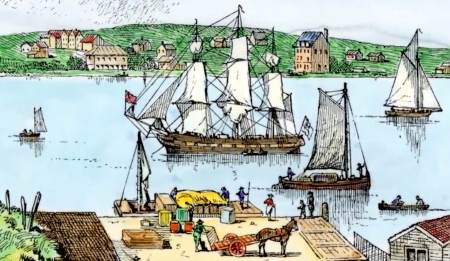
Fishing line: Long Island Sound is a historical hotbed of commercial and recreational fishing. (Source: DEEP Video/Long Island Sound Blue Plan)
In light of these challenges, the eVTR project will provide 150 iPads to participating fishers and offer free training and technical support on the eTrips system.
The ultimate goal, according to Lockel, is to help the drivers of Long Island’s recreational fishing fleet keep up with Albany’s modernization efforts – and maybe cut some costs along the way.
“Recreational fishing has long played an important role in the history, culture and economy of Long Island,” the CCE Suffolk executive director added. “But to remain competitive, our fishermen need to adopt modern technologies.”