By GREGORY ZELLER //
A Syosset-based civil rights organization is blasting “unequal resources” in Long Island school districts with different racial makeups – predictably, shortchanging districts with predominantly non-White populations.
 ERASE Racism on Monday released a detailed report analyzing educational resources available in 66 Long Island school districts with various racial compositions. Eleven were ranked as “intensely segregated” (meaning students were 90 to 100 percent non-White), 10 were “majority Black and Hispanic” (50 to 89 percent), five were “racially diverse” (40 to 60 percent White) and 40 were “predominantly White” (at least 70 percent).
The report, part of ERASE Racism’s Education Equity Initiative and unambiguously titled “Unequal Resources for Long Island Students Based on Race,” contains several disturbing disparities. For instance, “intensely segregated” districts average roughly $10,000 less in annual revenues than “predominantly White” districts.
ERASE Racism also calculates an average of one guidance counselor per 1,226 students in “intensely segregated” districts – as opposed to one guidance counselor per 356 students in “predominantly White” districts – along with higher teacher-turnover rates, dramatically limited AP-class opportunities, the highest fiscal-stress scores and “much higher average environmental-stress scores” in “intensely segregated” districts.
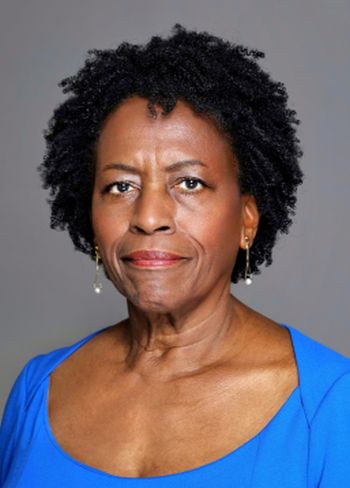
Elaine Gross: Stark differences.
It can be easy to overlook such disparities in a region where “educational success (is) based on the rankings of the most successful public schools,” noted ERASE Racism President Elaine Gross.
But that glosses over the truth – and discounts “the vast majority of the region’s schools and students,” according to Gross.
“We sought instead to understand how equitably educational resources are allocated across school districts,” the president said Monday. “We found that the differences in resource allocation are stark, depending on a district’s racial composition.”
And the situation is getting worse: According to the report, the number of “intensely segregated” districts has grown across Long Island, with the 11 “intensely segregated” districts counted in the 2019-20 school year more than doubling the five counted in 2003-04.
It all equals a “startling conclusion,” according to circa-2001 nonprofit ERASE Racism, which includes in its damning report several pages of proposed actions for school and government officials to consider.
“This must be addressed by state, county and local authorities,” Gross said.