By GREGORY ZELLER //
Twenty-two years later, 9/11 continues to exact a cruel toll: Stony Brook University scientists are tracking early-onset cognitive declines in first responders.
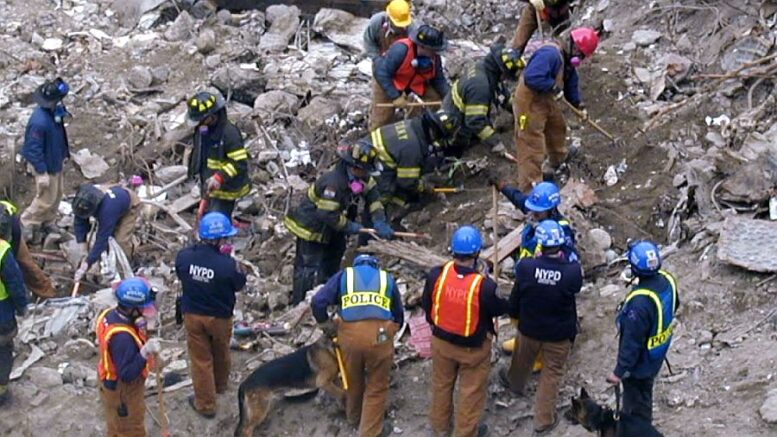
 This week’s memorials and tributes shined a spotlight on the fateful terrorist attacks and their aftermath, but the Stony Brook WTC Health and Wellness Program is always on the case. Led by internationally recognized infectious-diseases expert Benjamin Luft, the program currently monitors roughly 13,000 World Trade Center responders – and mounting data suggests those heroes are now battling neurological attacks from within.
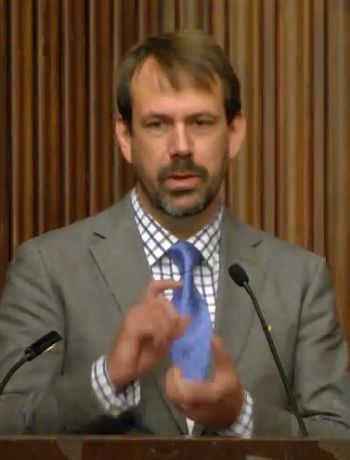
Sean Clouston: Proof positive.
Numerous scientific papers published in the last several years by SBU researchers dive deep into multiple traumas plaguing 9/11 first responders. The latest: a study published in August in the Journal of Geriatric Psychiatry and Neurology examining post-traumatic stress disorder and related early-onset cognitive decline in 700 WTC responders.
That follows a 2022 study published by the journal Molecular Neurobiology tracking brain inflammation common to WTC responders and a 2021 study in the journal Psychological Medicine highlighting new approaches to detecting PTSD symptoms – eschewing self-reporting for artificial intelligence-driven software that studies language patterns to detect current (and predict future) PTSD cases.
Other scientists are developing AI programs that can identify and predict psychological symptoms based on facial expressions – another important next-generation tool, as mild cognitive impairment (or worse) rises precipitously in 9/11 responders, compared to non-responders of the same age.
All of this long-term 9/11 cognitive monitoring dates back to 2020, when SBU first noted a link between WTC responders and early-onset dementia and the National Institute of Health’s National Institute on Aging awarded a five-year, $7.9 million grant to fund what SBU billed as “the first and only current cognitive-monitoring study of WTC responders.”
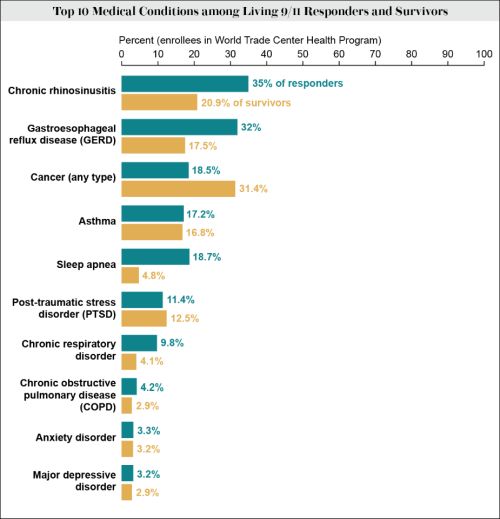
Top trauma: Anxiety disorders and PTSD rank among the top chronic illnesses suffered by 9/11 responders and survivors. (Source: Scientific American)
Sean Clouston, an associate professor in the Renaissance School of Medicine’s Department of Family, Population and Preventive Medicine and head of the NIH-funded study, was one of 14 authors collaborating on a paper published in March by the Alzheimer’s Association journal Diagnosis, Assessment and Disease Monitoring, linking Ground Zero exposure to the prevalence of neurodegenerative proteins in the brain.
According to Clouston, the evidence is irrefutable: 9/11 responders share common risks for early-onset, often exacerbated brain dysfunction – and the clock is ticking on finding new ways to help those heroes.
“The exposures [around] 9/11 seem to have changed the brain in a way that we can identify using both cognitive testing and bloodwork,” Clouston told Innovate Long Island. “But more research is needed to identify any treatments that could be used to improve outcomes as responders age.”