By GREGORY ZELLER //
Stony Brook University is part of an international team of institutions working to construct emergency shelters for refugees across war-torn Ukraine.
 The collaborative project – co-funded by the Office of Naval Research, the National Science Foundation and Poland’s National Science Centre – unites researchers from SBU, Ukraine’s Kyiv National University of Construction and Architecture and Poland’s Bydgoszcz University of Science and Technology on an essential humanitarian mission: create sustainable, rapid-construction shelters for Ukrainian families displaced by Russian invaders.
According to the United Nations High Commissioner for Refugees – a UN agency mandated to protect war refugees and forcibly displaced communities – there were nearly 4 million displaced people living in Ukraine in November. Another 6.8 million refugees have crossed into neighboring countries including Poland, Hungary and Moldova, the UNHCR notes.

Alexander Orlov: Saving lives with sustainable solutions.
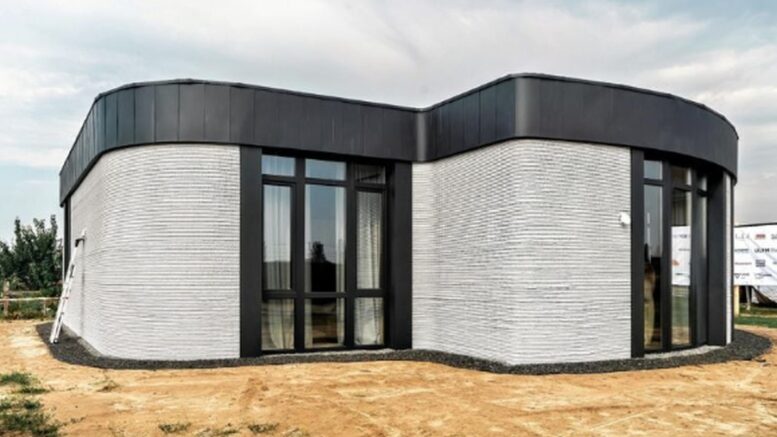
To help these homeless populations, the international collaboration will leverage advanced 3D-printing technologies, repurposing concrete and waste materials strewn across the warzone – and found in abundance in the United States and Poland – for the quick construction of emergency housing.
While providing much-needed shelter for the refugees, the international effort also holds significant promise for the $2 trillion-plus U.S. construction industry, according to SBU Department of Materials Science and Chemical Engineering Professor Alexander Orlov, including “the potential to develop exciting breakthroughs on how to turn construction waste into a sustainable solution.”
“It can also save countless lives of Ukrainian refugees who can benefit from rapid printing of shelters to house displaced families,” added Orlov, who’s heading up the international collaboration.
Stony Brook’s primary role is to assess sample materials and their potential for 3D-printing (also known as additive manufacturing) solutions, with faculty members working to create “a flexible platform to develop new materials that can be deployed in Ukraine,” according to the university.
In addition to rapid construction times, other potential benefits for the construction industry include increased sustainability – primarily through reduced cement consumption, as researchers develop new building substances incorporating less expensive and more ecologically sound materials.
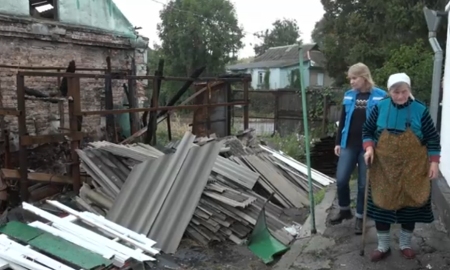
Shelter shock: With more than 11 million driven from their homes, the displaced Ukrainian population now represents the largest European refugee emergency since WWII.
According to the National Resources Defense Council, cement production is the world’s third-largest source of industrial air pollution. Additive manufacturing also reduces the need for manual labor – another sustainability bonus for global construction interests.
Marija Krstic, an assistant professor of practice in SBU’s Department of Civil Engineering who’s analyzing the challenges of incorporating agricultural and industrial waste into concrete for 3D-printing purposes, predicts significant gains for Ukrainian refugees in need of emergency shelter – and, eventually, for everyone else.
“This research will address challenges in building resilient and sustainable infrastructure by using novel, inexpensive and energy-efficient solutions,” Krstic added.