By GREGORY ZELLER //
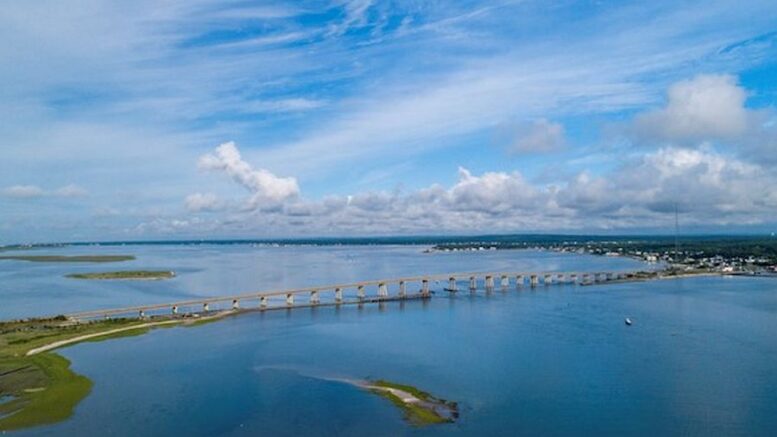
An international organization on an oceanic rescue mission is holding up Shinnecock Bay as a dual example of pristine ecology and hard work.
 Mission Blue, a California-based nonprofit focused on the protection of worldwide oceans, has named Shinnecock Bay off Long Island’s South Shore a “Hope Spot” – a pristine ocean region that stands out for its cleanliness, efforts to restore its natural condition or both.
The designation places Shinnecock Bay in a league with the Galapagos Islands, the Sargasso Sea and other international zones where ocean waters shine, according to Mission Blue’s strict parameters. Founded in 2010 by National Geographic Explorer-in-Residence Sylvia Earle, Mission Blue has now designated a network of 140 Hope Spots off 69 countries, covering about 22.4 million square miles of ocean waters.
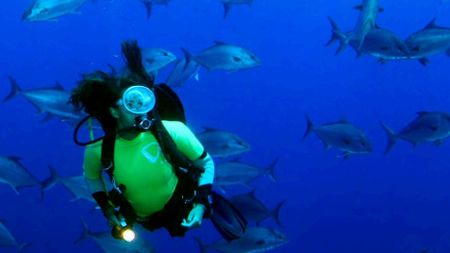
Hope floats: Mission Blue has now designated 140 Hope Spots around the globe.
Shinnecock Bay is one of only a handful of Hope Spots along the U.S. East Coast (including three in the Northeast) and the first in New York State. And significantly, it’s “the only one near a major metropolitan region,” according to the Stony Brook University School of Marine and Atmospheric Sciences.
The SoMAS has been the spearhead of an intense restoration effort focused on the roughly 9,000-acre estuary, a living laboratory of salt marshes, intertidal flats, seagrass beds and open water.
Among other innovative efforts, the school led the creation of hard clam “spawner sanctuaries” in western Shinnecock Bay – a key effort that has helped exacerbate dangerous brown tide and red tide algae blooms and helped restore populations of “forage fish” such as anchovy and menhaden.
Earle – a marine biologist, oceanographer, explorer and author who was the first woman to serve as chief scientist of the U.S. National Oceanic and Atmospheric Administration – applauded Shinnecock Bay’s high marks as especially impressive, considering the estuary sits merely 76 miles from New York City.

Ellen Pikitch: Inspirational message.
“What a concept, in the shadow of one of the most densely populated parts of the planet,” Earle said. “While New York conjures up visions of skyscrapers and crowded streets, it is a great ocean state with a significant coastline, a rich maritime heritage and growing opportunities to view ocean wildlife from the shores and in the water.”
That, obviously, is a great plug for Long Island – and a welcomed reward for a decade of restorative and scientific work led by SoMAS scientists Ellen Pikitch, Christopher Gobler and Bradley Peterson.
The Hope Spot distinction “is the result of meticulous work and proof that the Shinnecock Bay Restoration Program has succeeded in bringing the bay back to the healthier state it was in many decades ago,” according to Pikitch, the SoMAS endowed professor of ocean conservation science and director of SBU’s Institute for Ocean Conservation Science.
“Shinnecock Bay is arguably the healthiest bay in New York State,” Pikitch added. “Our work demonstrates that people can reverse the damage done through nature-based, scientifically guided restoration.
“We hope and expect that designation of Shinnecock Bay as a Hope Spot will inspire others to take action to restore other places to their original beauty, biodiversity and health.”