By GREGORY ZELLER //
A decade of laboratory research and hands-on experimentation has literally given Shinnecock Bay new life.
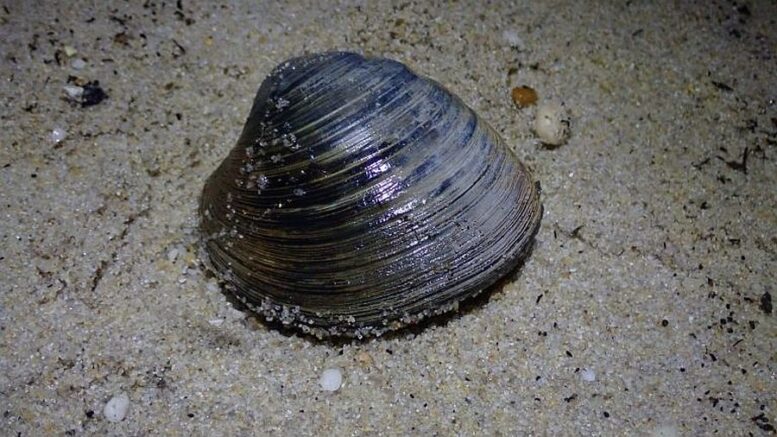
 Scientists from Stony Brook University’s School of Marine and Atmospheric Sciences are trumpeting their efforts to revive a “collapsed” hard clam population – the devastating loss of a keystone organism that significantly weakened the ecological health of the entire Shinnecock Bay estuary.
As recently as 2011, the bay’s health seemed beyond recovery. Local landings of the hard clam, the dominant filter-feeding bivalve in all New York estuaries, had all but ended, creating a trickle-down effect that virtually eliminated regional seagrass and increased annual occurrences of harmful brown tides.
But a new paper published Tuesday in the scientific journal Frontiers in Marine Science details how SoMAS researchers effected a 1,700 percent increase in the estuary’s hard clam landings and resuscitated critical seagrass meadows.
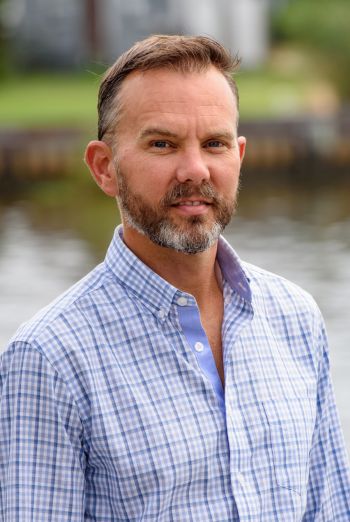
Chris Gobler: Spawner sanctuaries were just right.
The “novel restoration approach” – known professionally as the Shinnecock Bay Restoration Program – took a holistic tact to understanding the constrained clam populations and other causes of the estuary’s declining water quality. Early experiments determined that adult clams were increasingly rare in the bay, decimating the odds of successful reproduction.
Through a comprehensive combination of funding sources, scientific collaborations and partnerships with local government and industry – focused primarily on the creation of hard clam spawner sanctuaries – the restoration effort not only wiped away the brown tides, but returned Shinnecock Bay to its “20th Century glory,” according to SBU.
Stony Brook University Endowed Chair and Professor of Marine Science Chris Gobler, the paper’s lead author, marveled at the turnaround, noting the estuary’s hard clam landings had declined 99.5 percent between the ecologically sound 1970s and environmentally troubled 2011.
“When an estuary experiences a loss of filter-feeding bivalves, the ecosystem-wide effects can be enormous,” Gobler said Tuesday. “We knew that a key to recovering this ecosystem would be to re-establish the hard clam population in Shinnecock Bay.”
With the nonprofit New York City-based Laurie Landeau Foundation providing the bulk of the long-term rescue mission’s financial support, the SoMAS forged partnerships with the New York State Department of Environmental Conservation, the Town of Southampton Trustees and the Independent Baymen’s Association of Southampton, identifying areas best suited for spawning and creating “no-take” zones where clam harvesting was banned.
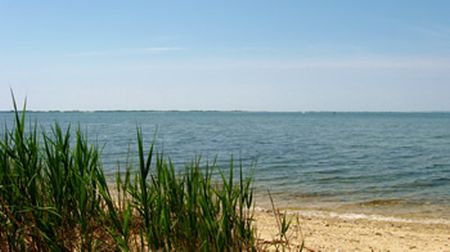
Clean living: Shinnecock Bay has been restored to its 20th Century health.
“The spawner sanctuaries amounted to goldilocks zones,” Gobler noted. “They were far away enough from ocean inlets so the spawn or larvae would not be flushed into the Atlantic Ocean, but not so far away from clean ocean water that the adult clams would perish due to poor water quality.
“Being able to use science to identify the ideal site for locating the spawner sanctuaries was a key to success for this program,” he added.
The effort included the planting of more than 3 million adult clams between 2012 and 2017, a massive shot in the shell that quickly increased both clam populations and harvests – a bit of instant gratification that actually exceeded scientists’ highest hopes.
Researchers also developed a new DNA-based method to track spawning patterns, demonstrating that improved clam densities were migrating from the eastern half of the bay to the western half.
All told, the decade-long restoration effort is worthy of “global distinction,” according to SoMAS Endowed Professor of Ocean Conservation Science Ellen Pikitch, and a “win-win for the environment and the economy,” according to SoMAS Associate Director of Shellfish Restoration and Aquaculture Mike Doall.
“Not only has the health of the ecosystem recovered, but it has helped resurrect a once thriving hard clam fishery,” Doall said in a statement, “benefitting the livelihoods of baymen and restoring an important aspect of Long Island’s maritime history.”