By GREGORY ZELLER //
A St. Joseph’s College professor is going to Mars. At least, virtually – though her adventure will pave the road for future astronauts actually trekking where no humans have gone before.
 This fall, Tetyana Delaney, a biology professor at the Patchogue-based college, will boldly go to Moscow, where she’ll voluntarily enter six months of isolation as part of an eight-month mission uniting NASA and Russia’s Institute for Biomedical Problems (part of the Russian Academy of Sciences).
The experiment is designed to examine crew members’ behavioral health and record how they respond – both psychologically and physiologically – to isolation, confinement and other stressors likely to confront participants in manned Mars missions.
Welcome to Project SIRIUS (for Scientific International Research In a Unique terrestrial Station), which will lock away two teams of six specialists and monitor their progress. Delaney has been selected to join the backup crew, which will experience the same training and rigors as the primary crew.
Exactly when NASA will be blasting a human crew toward the next planet over – somewhere between 33.9 million and 250 million miles away, depending on each planet’s relative position in its solar orbit – is up in the air, so to speak.
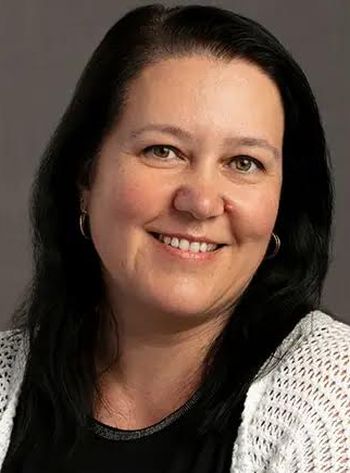
Tetyana Delaney: Favorite Martian.
China currently has four manned Mars missions on the board, and other countries have at least thrown their hats into the ring; private Dutch organization Mars One said in 2012 it would land humans on Mars by 2023 and establish a colony there, but after raising tens of millions of dollars in private donations, the company re-entered reality and aborted its interplanetary ambitions in 2019.
NASA’s Moon to Mars directive also has its sights set on the red planet. A manned NASA mission seems increasingly likely sometime around the end of this decade, though no specific mission or date has been announced.
In the meantime, Project SIRIUS will explore that strange, old world virtually. Its prime directive is to ensure that once that a NASA Mars crew is selected, it will be psychologically prepared for a months-long journey through the void, weeks (or months) of difficult and confining work on the alien world, and another long voyage home.
Delaney, a watersports enthusiast and St. Joseph’s College faculty member since 2006, is scheduled to join SIRIUS 21 in November. She essentially applied for the program on a lark – her son-in-law learned about it while researching scientific-collaboration opportunities and her family encouraged her to go for it – only to discover she checked off all the right boxes.
“This entered my life unexpectedly,” the scientist noted. “A ‘bench biologist’ being selected as part of a Mars mission – it’s just an honor.
“I’m glad to help all of humanity to reach Mars, if I can,” she added.
 The daughter of two PhDs (Mom was a microbiologist, Dad an electrical and mechanical engineer), Delaney grew up in Kyiv, the capital of Ukraine and one of Europe’s most important scientific, industrial and cultural centers.
Science, needless to say, was in her blood. After spending her childhood in her mother’s lab at the Institute of Microbiology and Virology – “They had a huge animal facility, so I loved to play with all the lab animals” – Delaney earned a master’s degree in immunology and a PhD in molecular biology and biotechnology.
“I didn’t know any other life,” she noted. “In socialism, you live with the people with whom you work – so everybody who lived in my nine-story building had a PhD and worked in one or another field of science.”
Her NASA connections actually stretch back to her childhood, when her mother contributed to a NASA project focused on plant diseases.
“If anything went bad in space, like spoiled tomatoes or spoiled potatoes, they would send it to my mom’s team,” she said. “They would study the bacteria.”
Besides her impeccable scientific standing, Delaney speaks Russian, a primary SIRIUS qualification. All told, her background made for an ideal curriculum vitae for Project SIRIUS managers – in assembling its mission specialists, NASA sought “highly motivated” U.S. citizens ages 30-55 who were proficient in both English and Russian and had the right academic credentials.
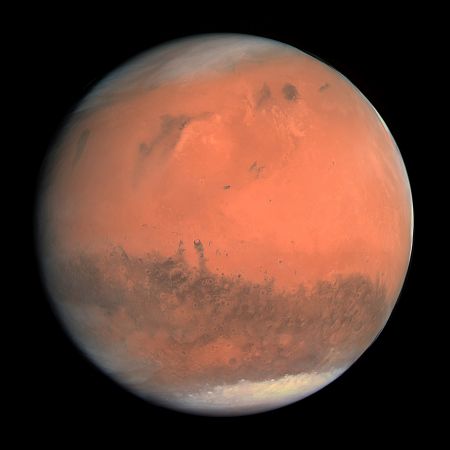
Seeing red: Delaney’s exploits will pay off on future manned Mars missions.
Just as important, candidates had to be ready, willing and able to travel to Mother Russia, commit to months of inescapable isolation and stare down the same challenges astronauts are expected to face on their long Martian journey.
Delaney, 50, is more than ready, up to and including the possibility of being bumped up to the primary training crew, if necessary. An actual interplanetary voyage doesn’t seem likely – “NASA thinks the actual mission of going to Mars might happen around 2029 or 2030,” she noted – but a chance to contribute to the success of a future Mars mission is “amazing.”
“Who wouldn’t want to go, or at least try to be part of a Mars mission?” she asked. “We as biologists think about those sequences and what we can do, and here’s an opportunity to somehow be a part of that.
“I feel the complete support of the whole St. Joseph’s College community at this point,” Delaney added. “I feel like this is a mission for all of us.
“Nobody can do it alone.”