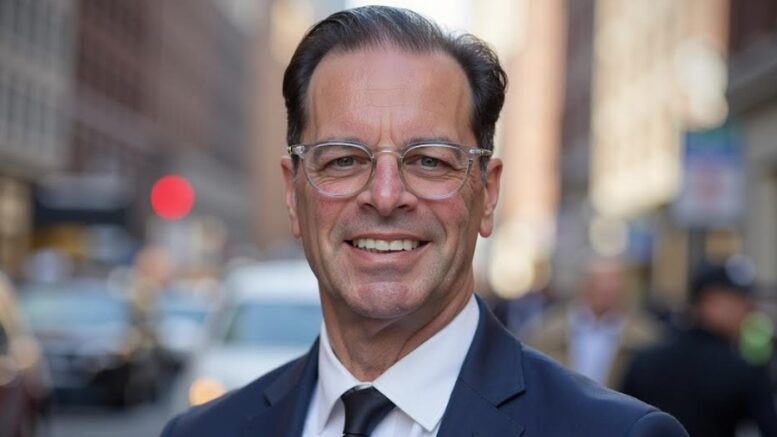
As a unified voice for proud professionalism and irreproachable ethics, the Commercial Industrial Brokers Society of Long Island has been elevating the regional real estate industry – specifically, RE transactions across the commercial sector – since 1992. Its secret sauce has been a smart combination of individual involvement (as opposed to firm-focused memberships), mentoring programs, educational efforts and charitable contributions, with a long line of strong and thoughtful leaders at the helm. That responsibility now passes to freshly minted 2025-2026 President Ralph Benzakein, a senior vice president at global commercial real estate advisory Cresa who takes the torch from 2023-2024 Co-presidents David Pennetta and Ted Stratigos. A member of the Society of Industrial and Office Realtors and a U.S. Green Building Council Leadership in Energy and Environmental Design accredited professional, Benzakein steps in at a tenuous time for commercial real estate, with hybrid models and “smart” mixed-use development presenting myriad challenges … and fantastic opportunities for the regional innovation economy.
 School of hard knocks: I am a high school graduate who never sought higher education. I would do it differently today.
The scenic route: I entered the commercial real estate industry later than most, at the age of 42, following many years in the airline and cruise industries. I also spent a brief period at an Internet startup that ultimately went under.
Finding his way: During the demise of that startup, as a backup plan, I obtained my real estate license, though I soon realized that residential sales were not my calling. I accepted an opportunity to work as a salesperson with Newmark, and after gaining experience I joined Cresa Long Island as a partner, where I have spent most of my real estate career.
Occupied territory: My work as a corporate real estate advisor has been incredibly fulfilling, as it allows me to focus exclusively on corporate representation, advocating for the needs of occupiers.
Know your customers: I find it rewarding to assist companies in making real estate decisions that align strategically with their business plans. I believe that particular perspective comes from having spent years in other businesses.
Moving on up: One of the first steps I took when I entered the industry in 2000 was becoming a member of CIBS. After about a decade, I joined the Board and later served two years on the Executive Board.
High society: The most impressive thing about CIBS is that, in a relatively short period of time, a group of competitors was able to band together to create educational programs and a code of ethics and was then able to expand into hosting networking events and charitable fundraisers.
Growth mode: CIBS has become a cornerstone of Long Island’s commercial real estate industry. It’s grown into a tightknit group where brokers and associates can collaborate, learn and support the local community while making the industry stronger. Our members have also formed specialized communities, such as CIBS W (our growing women’s group) and our Future Gen group, which mentors and unites our younger members.
From the top down: Over the years, CIBS’ leadership has fostered collaboration, established ethical standards and championed educational programs to enhance industry expertise. Its leaders have consistently driven innovation and camaraderie, ensuring the organization’s lasting impact on Long Island’s business landscape.
Get “smart”: One of our significant challenges is the difficulty towns face in updating zoning restrictions to encourage smart developments, such as Midway Crossing and projects around the Nassau Hub.
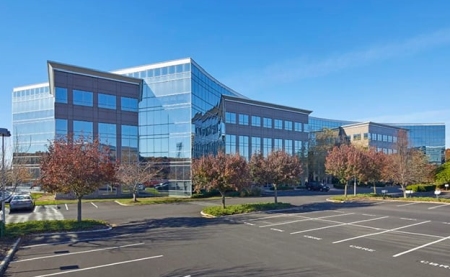
Can I see you in my office: On the ropes since the COVID pandemic, Long Island office spaces may enjoy a reprieve in 2025.
Office space: Another major hurdle remains the return to the office, as companies continue to navigate hybrid work models, which are reshaping demand for traditional office spaces. Recently, though, the pendulum has begun to swing slightly back toward a return to the office.
Big year ahead: On the development side, there’s growing interest in mixed-use projects and transit-oriented developments. At the federal level, policies introduced by the new U.S. President may impact financing, tax incentives and infrastructure investments, which could ripple into our local market. On the state side, any new statutes, particularly around zoning or tax abatements, will likely influence how projects are planned and executed.
Innovation Island: Despite the challenges, exciting opportunities lie ahead, with Long Island well-positioned for growth in logistics, industrial spaces and modernized work environments.
It takes a village (or a town): My hope is that Long Island communities will collaborate with developers to bring more smart, sustainable development to the region. Too often, communities oppose almost any form of development without recognizing that well-planned, mixed-use projects and multifamily housing can strengthen the tax base and help preserve the character of the neighborhoods that Long Islanders cherish.
Interview by Gregory Zeller