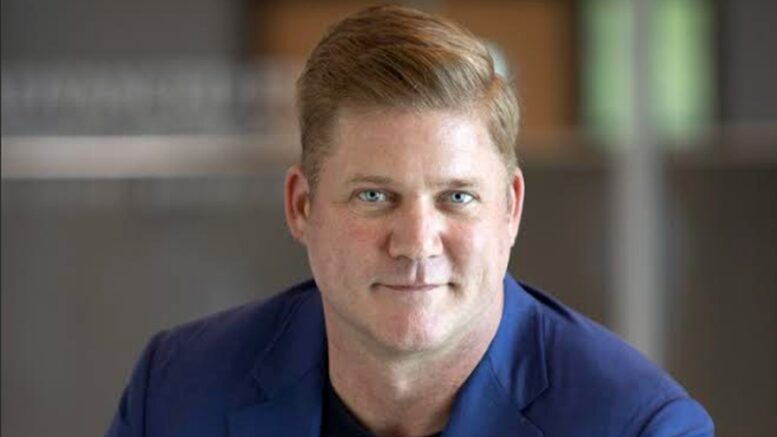
A biotechnology startup with close ties to Stony Brook University and ambitious sustainability goals is poised for greatness. Welcome to SWFTLabs, which has obtained an exclusive patent license agreement from the Research Foundation for the State University of New York allowing it to commercialize a unique “nutrient recapture” process created by company Chairman and Chief Scientific Officer Benjamin Hsiao, an oft-honored former DuPont researcher now serving as a distinguished professor of chemistry at SBU. The proprietary tech uses functionalized nanocellulose fibers to turn organic waste into next-generation fertilizers, biodegradable packaging, state-of-the-art water-filtration materials and other specialty biomaterials that can reduce reliance on plastics and otherwise promote sustainability. That represents a quantum leap for the environment and all manners of industrial processes, according to SWFTLabs cofounder and CEO David Clausen, an insurtech veteran with a long entrepreneurial history and an insatiable scientific curiosity. Clausen cites a modest SWFTLabs goal – improve life for every human on Earth – and says that with the patent license in hand, the 2017 startup is ready to rock.
 Insurtech intro: InsurTech emerged in the early 2010s as a wave of startups began applying data analytics, mobile platforms and [artificial intelligence] to modernize a centuries-old model built on manual underwriting and rigid risk pools.
It’s everywhere: Today, the industry is moving toward real-time, usage-based and embedded insurance, where coverage is seamlessly integrated into everyday digital experiences. The future will be defined by autonomous, adaptive ecosystems powered by AI and machine learning – delivering hyper-personalized, parametric and on-demand coverage with intuitive user experiences.
Coast to Coastal: I launched Coastal Insurance Solutions in 2003 after building my first insurance website, driven by a desire to help people through smarter technology. Coastal specializes in luxury and high-value home and flood insurance, connecting qualified buyers with leading carriers through digital marketing and advanced underwriting platforms.
Super why: I was the kid constantly asking why. “Why is the sky blue, Daddy? But why?” That curiosity never went away. I’ve always been driven to understand how things work – and, more importantly, how to make them better, faster and more efficient. That same spirit fuels everything I do today at SWFTLabs.
Starting young: My entrepreneurial roots actually go back to age 14. I borrowed my family’s old Honda lawnmower, turned it into a “business” and started mowing lawns around the neighborhood, earning $80 to $100 a week, which was a fortune for a teenager 30 years ago. I loved the sense of independence, the hard work and seeing tangible results.
Growing into the role: Since then, I’ve ventured into multiple sectors – from agriculture to insurance to aviation – but that same foundational mindset remains: work hard, stay curious and create value. (And yes, I still cut my own lawn.)
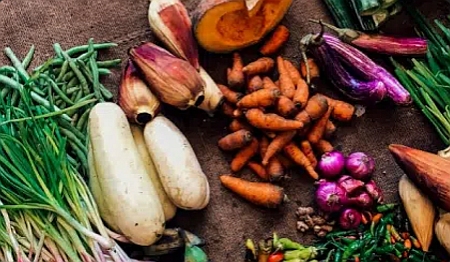
Organic opportunity: One-third of all food produced around the world is wasted each year — but it could be transformed into a powerful renewable resource.
Such a waste: Organic waste includes any biodegradable material derived from plants or animals – everything from food scraps and agricultural residues to grass clippings and manure. Globally, about one-third of all food produced (roughly 1.3 billion tons) is wasted each year. In the U.S. alone, that’s about 40 million tons, valued at over $160 billion annually.
Looking up: When this waste decomposes, it releases greenhouse gases, volatile compounds and nutrient overloads that fuel algal blooms. Yet, if we upcycle it properly, organic waste becomes one of the planet’s most powerful renewable resources.
Circular logic: SWFTLabs is on a mission to transform global waste streams into renewable, high-value materials. Using our patented, zero-waste nitro-oxidation process, we upcycle organic waste into carboxylated nanocellulose fibers and nutrient-rich fertilizers – closing the nutrient loop and enabling a truly circular bioeconomy.
Transformer: Our NOP technology is a game-changer. It transforms organic waste into highly functional, next-generation biopolymers, cellulosic fibers, nanofibers and fertilizers. These materials are not just innovative – they’re capable of replacing, reducing and even remediating plastics, petroleum-based products, PFAS “forever chemicals” and microplastics. It’s a platform technology with uses across industry.
Legacy: Professor Hsiao is a legend. He’s ranked in the world’s top 0.1 percent of materials scientists, with more than 65,000 citations and an H-index of 138. Many colleagues consider him the godfather of nanocellulose. Beyond his brilliance, he’s wonderful to work with – humble, generous and an incredible mentor driven by a genuine desire to do good for the world. I’m proud to call him a close friend and honored to sit beside him as a co-founder of SWFTLabs.
Friends in high places: We enjoy our partnership with Stony Brook University. It serves as a great example of how academia and industry can collaborate to solve global challenges, foster innovation and create local jobs. We just celebrated our partnership with a ribbon-cutting event at the CEWIT building in SBU’s Innovation Park.
Today, financing. Tomorrow…: Our next big leap is securing our first global partnership to begin the path toward financial sustainability. Our goal is bold but simple: to improve the lives of every human being within the next decade by unlocking nature to create a more sustainable world for tomorrow.
Interview by Gregory Zeller