


By ROBERT B. CATELL //
New York is at the center of climate ambition in the United States.
 Our region has always been at the forefront of the research and development of new energy and climate technologies aiming to begin a low-carbon future and address the global issue of climate change. However, this ambition can only get us so far when we have a shortage of completed projects.
Industry leaders are always asking important questions about the future of energy and the direction we need to go. The true question should be, “What can we put into service, at scale, on time and at a price people can afford?”
Climate progress will come from equipment that is manufactured, permitted, financed, connected to the grid and operated. The hard part is building the road.
I have spent more than six decades working around New York’s energy system, first as an engineer and utility executive and now as chairman of Stony Brook University’s Advanced Energy Research and Technology Center Advisory Board. I have watched bold ideas become infrastructure and others stall before reaching customers.
That experience has taught me that the energy transition needs a delivery test. Every major proposal should answer three questions: How many useful megawatts will it produce or save? How many months will it take to reach service? And what will it do to the monthly bill?
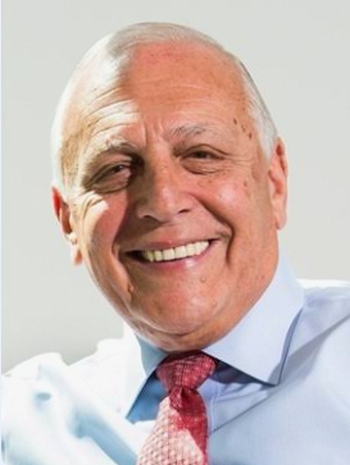
Robert Catell: Ideas are nifty, but action matters most.
Megawatts, months and bills. Without them, much of the climate agenda remains a presentation.
New York is electrifying transportation and buildings while attracting power-hungry industries. Artificial intelligence, data centers and semiconductor manufacturing are creating new demand. The New York Independent System Operator projects that large-load projects could add 2,567 megawatts of demand by 2035. As heating and transportation become more electric, statewide winter demand could grow by 14,000 megawatts by 2040.
Meanwhile, dependable generating plants are aging or retiring. New York’s grid operator has warned that reliability margins are declining because new supply has not kept pace with plant deactivations.
A queue full of proposed projects is not the same as electricity in the system. The grid cannot run on announcements or unavailable nameplate capacity.
A delivery test should not preserve the status quo. It should make us replace it faster, honestly and transparently. Wind, solar, storage, nuclear, geothermal, cleaner fuels, transmission and efficiency should compete and collaborate. We should be ambitious and humble because no single resource solves every problem.
In energy, time is a climate variable. A perfect project arriving 12 years late can do less good than a good project operating in four. Yet permitting, siting and interconnection often reward endurance over urgency. Transmission lines, substations and essential infrastructure can become the most delayed pieces of the transition.
Faster decisions do not mean weaker scrutiny or less public input. Agencies can conduct reviews simultaneously, establish deadlines and explain publicly when those deadlines slip. Developers should involve communities early so local knowledge can shape outcomes. Officials should stop counting announcements as progress. A project is credible only when it has financing, permits, equipment and a realistic construction schedule.
 Finally, monthly bills. Climate policy will not survive if families experience it only as a higher utility payment. Affordability must be an engineering and policy constraint from the beginning.
That means measuring advertised costs against full system costs, including transmission, backup, storage, financing and delays. It means rewarding efficiency and flexible demand, because the cheapest megawatt is often the one we do not need at the most expensive hour.
It also means protecting lower-income customers and requiring companies creating extraordinary new loads to bear their fair share of infrastructure costs.
The challenge is implementation, not ambition – and the test is whether “implementation” becomes a discipline rather than another theme.
In November, when Stony Brook’s AERTC convenes the Advanced Energy Conference in Manhattan, its agenda will examine the same collision of rising demand, grid modernization, emerging fuels, finance, community trust and affordability.
The most productive outcome would not be consensus around one technology. It would be agreement on a tougher standard for all of them that focuses on megawatts, schedule and impact on our electric bills.
Industry leaders’ collaboration shows that we can gather around a common theme. Our next contribution should be to make delivery prestigious and to celebrate the shortened interconnection study, the resolved community objection, the upgraded substation and the first day a project reliably serves customers.
The energy transition will be won in those unglamorous victories. New York, a region that understands big ambition and stubborn infrastructure, is the place to start.
Robert B. Catell is chairman of the Advisory Board of the Advanced Energy Research and Technology Center at Stony Brook University. He is the former chairman and CEO of KeySpan Corp., the former chairman of National Grid’s U.S. operations and the former chairman of the National Offshore Wind Research and Development Consortium.





Be the first to comment on "Climate progress requires action, and that starts in NY"