
By ALLISON SINGH //
As a lawyer, I’m not deeply concerned about artificial intelligence. But as someone who cares about history – especially Long Island history – I’m very concerned.
 The law is equipped to handle some of the legal challenges wrought by AI. We’ve got the right of publicity, for instance, to stop AI replicas of a person’s voice or likeness.
This law has been with us since the 1950s. Its most famous case involved the distinctive voice of Bette Midler, who in 1988 successfully sued Ford Motor Co. for using a voice remarkably similar to her own in a car commercial.
The facts mirror Scarlett Johansson’s recent dispute with OpenAI. Both companies asked a famous actress to lend her true voice to a project, both received a firm “no” in response and both used the best (albeit illegal) alternative: a fake Midler and a fake Johansson.

Allison Singh: History belongs to the victors.
Ford lost and OpenAI pulled the soundalike voice. You could say the more things change, the more they stay the same, and our precedent-revering courts would be quite pleased with that assessment.
Plain old copyright infringement, meanwhile, can be invoked to stop the unauthorized use of protected works to “train” AI models – several famous authors, including John Grisham and George R.R. Martin, recently sued OpenAI for doing just that.
Let’s not forget that “learning” from the Internet is what we do each time we search online. None of us have the capacity to remember and process as much as an AI bot, but the rules should be the same whether the searcher is human or not – paywalls, licenses and other protections cannot be circumvented without consequence.
Where it gets a little more complicated is when AI models begin to generate content from this learning – referred to as “generative AI.” The U.S. Copyright Office has already settled the question of ownership of AI-generated images and text by limiting the definition of “author” to humans (though legal challenges abound).
As such, generative AI is a tool used by humans to create. That is the framework, and since it relies on humans, it will always be incomplete.
That leads to my real concern: The AI models cannot train on information that does not exist digitally, and whatever is generated will therefore be lacking.
Many people suffer from the illusion that all of human history has been recorded online, but the truth is that history is a reflection of power, access and resources.
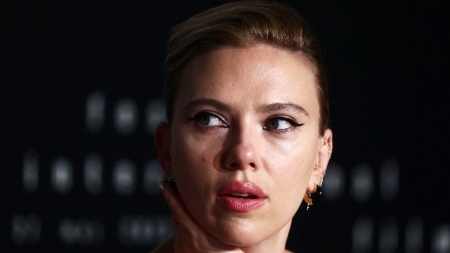
(Scarlett) letter of the law: Johansson spoke up against OpenAI.
For instance, in some cultures, history is still preserved orally – stories that will never see the light of a blue screen. In other cultures, only the predominant narratives are published and reinforced by everything that comes after.
I will never forget visiting The Long Island Museum in 2019 and learning that slavery was a big part of Long Island history. That chapter never made it into my history books, but the Long Island Museum intentionally changed that – type “slavery on Long Island” into Google, and it isn’t a coincidence that most entries are dated post-2020.
An AI bot learning from online resources in 2018 would be much different than one learning today, even though this history is more than 200 years old. We’ve got a lot of catching up to do when it comes to these lesser-known, and often hidden, chapters of history.
For the past several years, Long Island’s Robert David Lion Gardiner Foundation has been awarding grants to local historical societies, museums and universities to digitize regional history. This was very forward-thinking of the foundation – so much local history is found in journals, letters and manuscripts, and unless these records are recorded in digital form they will eventually disappear, and our understanding of history will continue to be uninformed.
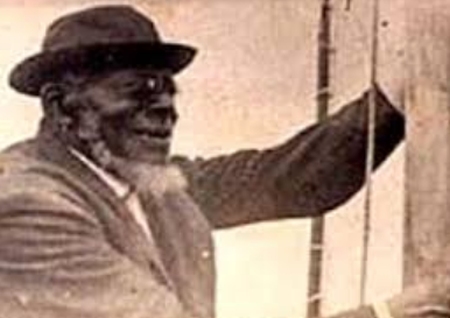
Jupiter ascending: Historians are struggling to share the story of Jupiter Hammon, the first published African American poet, who was born into slavery on Long Island.
I recently spoke with a member of Preservation Long Island, a 501(c)3 nonprofit dedicated to preserving the region’s cultural heritage, about their efforts to fill in the historical gaps at the Joseph Lloyd Manor house in Lloyd Harbor. One of the enslaved persons at the home, Jupiter Hammon, was America’s first published African American poet, and there are piles of documents waiting for historical analysis to bring this story to life – but without a grant and a willing scholar, it will not happen.
Such is the fragile nature of history. To many, that’s just fine. But those without access to power usually have a very different take on life in their time than the “official” version we get from the wealthy and powerful.
These counter-narratives can be viewed as threatening and divisive. But if AI is going to make us smarter, it needs the whole story. Otherwise, what it gives us will truly be “artificial.”
Allison Singh is of counsel and a member of the Corporate and Intellectual Property groups at Riverhead-based Twomey, Latham, Shea, Kelley, Dubin & Quartararo LLP.