By GREGORY ZELLER //
A comprehensive volunteer effort to restore regional oyster populations is paying dividends in Manhasset Bay.
 Backed by the National Fish and Wildlife Foundation and the Long Island Sound Study Futures Fund – grantmaking wing of the Long Island Sound Study, a partnership of federal and state agencies, user groups and volunteer organizations in New York and Connecticut focused on restoring and protecting the massive waterway – Cornell Cooperative Extension of Nassau County has successfully populated a developing oyster reef in the western Long Island embayment.
The Manhasset Bay oyster-seeding effort dates back to 2022, when the Town of North Hempstead passed a resolution to work with regional environmentalists on a multiyear plan to restore the local oyster population.
From there, CCE Nassau – a 501(c)3 nonprofit affiliated with the nationwide Cooperative Extension land-grant system, a union of county, state and federal partnerships administered in New York State by Cornell University – began working with volunteers from various regional organizations to develop customized training resources and education materials.

Mariann Dalimonte: Great cause.
In July, CCE Nassau supplied three Port Washington-based groups with juvenile oysters spawned in a Southold shellfish hatchery, aiming to create “community oyster gardens.”
The juvenile oysters were cultivated by volunteers from the Manhasset Bay Yacht Club, the Port Washington Estates Association and Residents Forward, a nonprofit group dedicated to environmental stewardship of the Port Washington peninsula. The volunteers cared for the maturing oysters by inspecting and cleaning their cages and keeping the underwater gardens clear of natural predators – including mud crabs, sea nettles and anemones, carnivorous subsurface plants that feed on tiny plankton and oyster larvae.
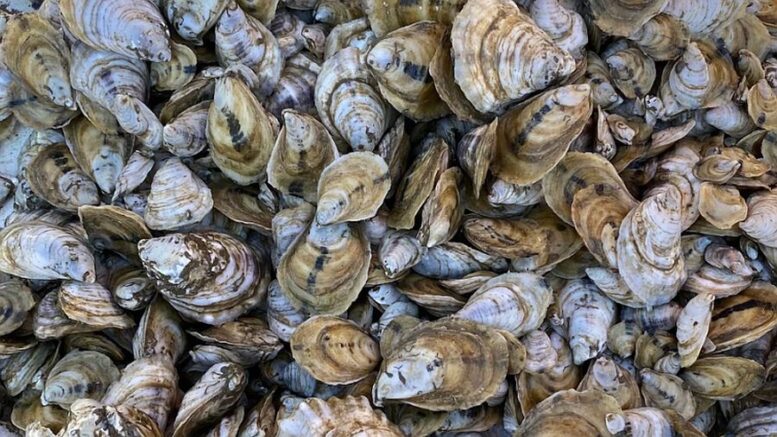
Their combined efforts led to the Oct. 21 delivery of more than 12,000 maturing oysters to the Manhasset Bay reef – less a win for Long Island seafood lovers than a victory for regional maritime ecosystems.
Oysters – bivalve molluscs that live in brackish marine environments – don’t only taste good grilled with butter, they’re natural water-quality champions. According to the National Oceanic and Atmospheric Administration, a single oyster is capable of filtering harmful algae from up to 50 gallons of water per day.
North Hempstead Town Councilwoman Mariann Dalimonte, who introduced the Town Board resolution sparking the town’s involvement in the Manhasset Bay oyster-seeding plan, applauded the multifaceted effort to bring back local oyster populations threatened by regional water-quality woes.
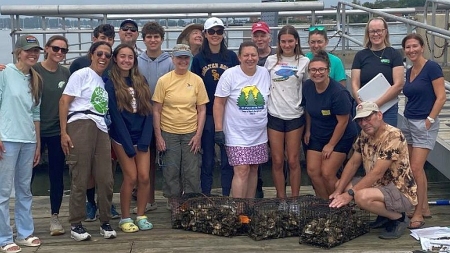
Seed fun: Happy volunteers deliver the bivalve goods on the shore of Manhasset Bay.
“I am so thankful for Cornell Cooperative Extension of Nassau County, Residents Forward and everyone who volunteered for the oyster garden project these past few months,” the councilwoman said. “It was wonderful to see so many people coming together for a great cause, to improve (the) water quality of Manhasset Bay.
“I cannot wait to carry this momentum forward and expand the program next year.”
The partners behind the seeding effort have plenty of local support for another community-garden go, according to Residents Forward Executive Director Patricia Class.
“Residents Forward looks forward to helping expand the Port Washington Oyster Garden program into 2025 and beyond,” Class said in a statement.