By GREGORY ZELLER //
Earth Day is not what it used to be, in amazing and terrible ways.
 Though an overwhelming majority of U.S. citizens recognizes climate change’s scientifically undeniable existence, causes and risks, current national leaders have encouraged Americans to pay no attention to that existential crisis behind the curtain, sparking an ugly national divorce from reality.
Climate change is a line in the sand now. Democrats largely embrace the science and Republicans mostly buy whatever the White House – and a lapdog U.S. House of Representatives – is selling.
Most damning of all: 23 percent of all Americans just don’t worry about it.
Certainly, this is not what U.S. Sen. Gaylord Nelson had in mind when he founded Earth Day in 1970. With then-nascent sciences identifying ozone-layer holes and other ecological ramifications of human industrialization, Nelson envisioned a national “teach-in” encouraging industries and citizens to board the environmentalism train.
For most of the last six decades, the idea was widely embraced by Democrats and Republicans alike. President Richard Nixon, who created the Environmental Protection Agency in 1970, signed a plethora of clean air, clear water and endangered-species protection laws; President Ronald Reagan wisely noted that “preservation of our environment is not a liberal or conservative challenge, it’s common sense”; George H.W. Bush branded himself “the environmental president” and was the first POTUS to label climate change a major federal priority.
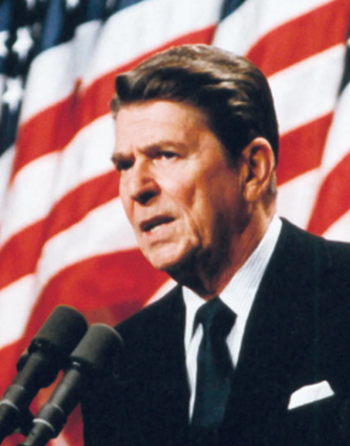
Ronald Reagan: Conservation conservative.
Earth Day, meanwhile, steadily spread beyond American borders and now reigns as the world’s largest day of ecological action, with more than 1 billion participants in 190-plus countries – textbook American Exceptionalism, leading by example.
But today’s America is exceptional for very different reasons.
With the rest of the Western world picking up the carbon-reduction slack, a scientifically illiterate President of the United States insists climate change is a “scam” and – in just 18 months – has taken or proposed more than 460 actions that directly threaten the environment, the climate and human health.
Scientific reality is not lost on most of The People: Those aforementioned Democrat/Republican battle lines notwithstanding, roughly 7 in 10 Americans believe global warming is real and 60 percent agree it’s primarily caused by human activity.
Those beliefs haven’t stopped a Big Coal-backed White House from appointing an EPA administrator who crows about deleting environmental regulations, even as an army of multidisciplinary experts calculates hundreds of thousands of premature American deaths, millions of preventable asthma attacks and billions of dollars in additional public-health costs – all resulting directly from EPA Administrator Lee Zeldin’s “greatest day of deregulation our nation has seen.”
Such backward thinking can make Earth Day seem trite, at least domestically. But it actually makes Earth Day in the United States “more important than ever,” according to Citizens Campaign for the Environment Executive Director Adrienne Esposito.
“We have an administration that’s hostile to the environment,” Esposito told Innovate Long Island. “So the objective (of Earth Day) is to remind each congressional representative and U.S. senator that every constituent cares about clean air and clean water and clean beaches.
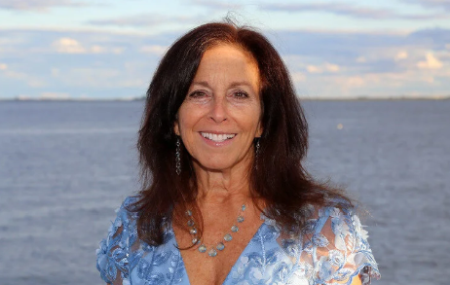
Windfall: Offshore wind has already paid dividends for Long Island energy consumers, according to Citizens Campaign for the Environment Executive Director Adrienne Esposito.
“It’s not a right-wing issue, not a left-wing issue,” she added, echoing Reagan. “It’s a public-health issue.”
It’s also an economic issue, with governments, corporations and universities around the world gratefully welcoming boatloads of scientific talent – and billions of investor dollars – sailing away from the United States, while Americans struggle with skyrocketing fuel costs.
“America is taking a step back from being a global leader in new renewable technologies,” Esposito noted. “It’s sad and it’s going to be expensive.
“The price of fossil fuels is going up and is subject to geopolitical circumstances, as we can all see,” she said. “When the cost of natural gas peaked in January and February, thanks goodness we had 130 megawatts of wind power going into the Long Island grid.”
Those megawatts were courtesy of South Fork Wind, an offshore windfarm situated east of Montauk Point that began feeding the Long Island grid two years ago. On Monday, Esposito and other environmentalists joined regional labor and energy leaders for an Earth Week celebration of performance data generated by America’s first commercial-scale offshore-wind project.
“The South Fork Wind farm, in January and February, was supplying much cheaper power than [regional] fossil-fuel power plants,” Esposito noted. “Which means having that wind farm was stabilizing rates.”
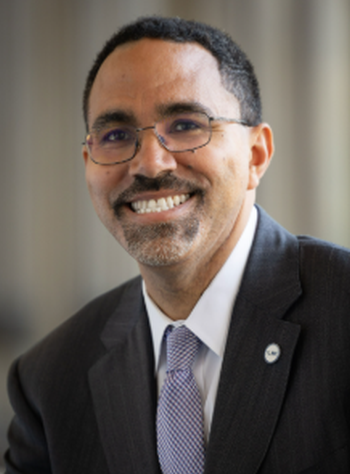
John King Jr.: Sustainable SUNY.
The Farmingdale-based CCE is not the only Long Island entity embracing Earth Day’s enduring message. Farmingdale State College promoted sustainability Tuesday at an Earth Day Festival that, among other things, trumpeted the college’s innovative Ram Rides bike-share program, while SUNY Old Westbury marked the occasion with two volunteer cleanups of campus-wide trails (the first on April 21, the second scheduled for April 28).
Hofstra University, meanwhile, hosted a full slate of Earth Day programming on April 14, welcoming regional environmentalists for explorations of pressing ecological issues, emerging technologies and more sustainable pathways – discussions the university hopes “will encourage students to think local and global about environmental and sustainability issues,” according to J Bret Bennington, chairman of Hofstra’s Department of Geology, Environment and Sustainability, “and to act at any scale they can.”
And Stony Brook University’s Center for Service Learning and Community Service is hosting its annual Earthstock celebration this week, dotting the SUNY flagship’s sprawling campus with interactive events and educational programs.
The politics of Earth Day may have shifted through the decades, according to SUNY Chancellor John King Jr., but the underlying environmental message has not.
“College students want to ensure that their academic institutions advance climate sustainability academically and operationally, and SUNY is delivering on these aspirations,” King said in a statement. “SUNY campuses …are focal points for research on how to address climate change and embrace green technology.”