
By DEBORAH MAYO //
In communities across New York, people living with anxiety, depression and other serious mental health conditions navigate a healthcare system that isn’t keeping up with their needs.
 The consequences are devastating. In New York City alone, someone dies by suicide every 16 hours. Traditional treatments like medication and talk therapy haven’t been enough – and too many people are left to suffer in silence.
It’s time to change that.
America is in the midst of a mental health crisis. At least one in five U.S. adults lives with a mental illness. If ever there was a time to modernize how we treat mental health disorders, it’s now.
That means investing not only in innovation, but in streamlining access. The regulatory framework for approvals must evolve with the science, so lifesaving compounds aren’t trapped behind obsolete red tape.
New, evidence-based therapies that show real promise for people who haven’t responded to existing treatment are emerging. These options aren’t fringe or experimental – they’re rigorously tested, FDA-reviewed and developed under the highest medical safety standards.
Treatment resistance affects between 20 and 60 percent of people with psychiatric disorders. That’s not just a problem for individual patients – it’s a systemic failure that leads to higher hospitalization rates, increased suicide risk and rising healthcare costs that can be up to 10 times higher than those of other patients.
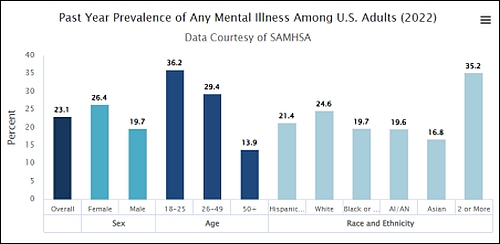
Common ground: Roughly 20 percent of American adults live with some form of mental illness. (Source: National Institute of Mental Health)
Families, caregivers, providers and entire communities bear the weight of that failure. Financially, medically and morally, the cost of inaction is too high.
That’s why access and timing are so critical. For someone battling a serious mental illness, even a few months can be the difference between recovery and relapse – or between life and death. If new, FDA-approved treatments become available and New York’s regulatory environment isn’t prepared to guarantee access, real people will pay the price.
We should be laying the groundwork now to ensure communities here in New York won’t be left behind. That means more than updating clinical guidelines. It requires a coordinated plan. State agencies and lawmakers must work together to establish predictable pathways for bringing new therapies to market, so they aren’t stalled in layers of bureaucracy or legislative debate.
Providers should be given early education and training on how to safely and effectively integrate new treatments into care, so they’re ready the moment patients ask for help. At the same time, policymakers must ensure equitable access by expanding insurance coverage, investing in community-based clinics and making sure rural, underserved and high-risk populations aren’t the last to benefit. This is how we close treatment gaps and begin delivering care that reflects the needs of all New Yorkers.
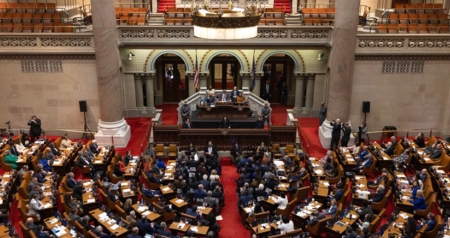
Step on it: Newer, better mental-illness treatments exist — but the New York State Legislature’s approval process is notoriously slow.
New York has the infrastructure and expertise to lead the way. But leadership means more than reacting to crises after they’ve deepened. It means anticipating problems before they become tragedies. Too often, innovative treatments arrive only to be stalled by the slow pace of government approval. That cannot be the case here. We need to move from a reactive approach to a proactive one.
People are asking for help. We have a responsibility not just to listen, but to act.
New York has long been a leader in healthcare. Now, we can prove it again – not with words, but with decisive steps to modernize our processes and bring lifesaving treatments to those who need them most. Progress is long overdue, and lives are on the line.
Deborah Mayo is president at Living Hope for Mental Health, a Stony Brook-based nonprofit that promotes mental health and wellness, and a former member of the New York State Behavioral Health Services Advisory Council.