By TOM MARINER //
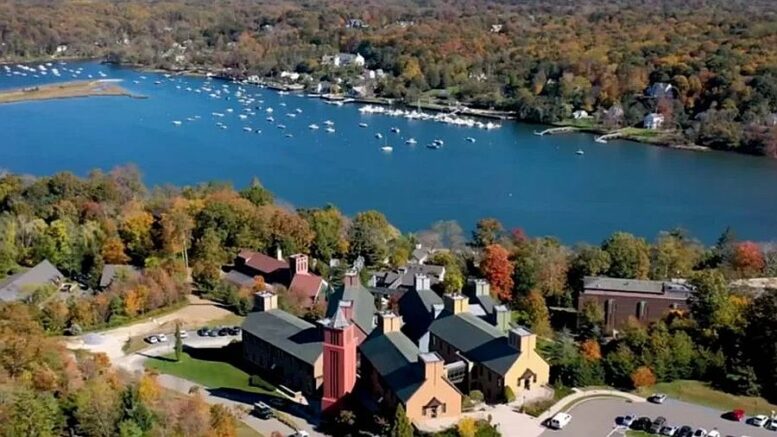
Through 132 years, eight Nobel Prizes and a body of research that’s literally unmatched around the world, one thing has never changed at Cold Spring Harbor Laboratory: fantastic leadership.
 The lab has always been blessed with the very best biologists and other scientists, driving research forward. But always, a stellar leader has set the course, including many busy scientists who continued their own world-class investigations while directing CSHL’s day-to-day operations – not only creating an atmosphere conducive to great science, but in many ways changing the way scientific accomplishments are reached.
The lab’s very first director was Bashford Dean, who ran the North Shore waterfront’s initial “Biolab” from 1890-91 before handing the reins to Director Herbert Conn, who’d run things for six years total. The lab (which wouldn’t officially be known as “Cold Spring Harbor Laboratory” until 1968) was off to a fine start – but things really changed in 1898, when Charles Davenport took over.
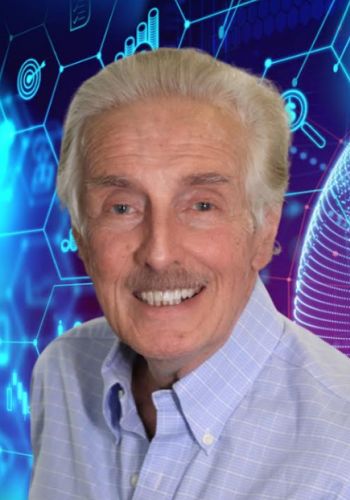
Tom Mariner: Cold facts.
Turning the tables on pre-Mandelian science – which was based largely on observation – Davenport introduced experimentation and quantitative biology to the mix, setting an aggressive, hands-on tone that infuses CSHL to this day.
In 1933, Director Reginald Harris innovated the Symposia on Quantitative Biology, which would focus on applying chemistry, physics and math to biology problems – an annual gathering of top scientists that ran uninterrupted until 2019, when COVID paused the in-person gatherings (published symposia are still produced yearly).
It was at the 1953 symposium when a late addition to the speaker roster, James Watson, famously presented DNA’s double-helix structure, a discovery credited to Watson and English molecular biologist Francis Crick. Watson, of course, ended his career in disgrace, though his contributions to science – including his quarter century as CSHL director and president – cannot be overstated.
But of all of the laboratory’s fantastic leaders, perhaps none is as impressive as its current director, Bruce Stillman. Born in Australia, the biochemist and world-renowned cancer researcher has been laboratory director since 1994 and CSHL president since 2003, following 25 years directing the lab’s Cancer Center – as hands-on as scientists (and laboratory directors) get.
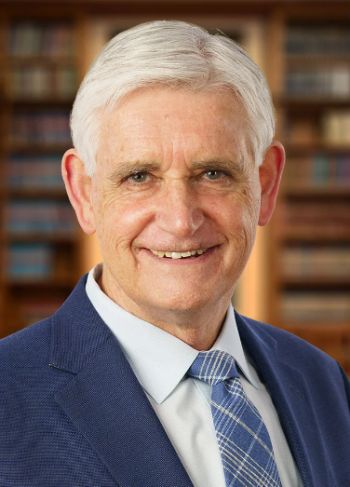
Bruce Stillman: Leading by example.
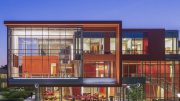
As you might expect, Stillman has been a true innovator. The facility’s fantastic Hillside Laboratories – a $100 million complex representing CSHL’s largest expansion in its then-119-year history – opened in 2009 under his watch.
He also helped establish the Simons Center for Quantitative Biology – which opened in 2014 thanks to a generous gift from longtime laboratory boosters Marilyn and Jim Simons – and in 2015 led his famous Stillman Lab into a new collaboration with Northwell Health designed to speed new cancer-treatment discoveries from laboratories to patients, with an increasing emphasis on clinical trials.
Stillman’s also found time to fundamentally change how scientific articles are published by partnering with Yale University and the British Medical Association to create medRxiv, which preprints health-science articles awaiting peer approvals for full publication in top scientific journals.
Stillman, like so many of his CSHL predecessors, is a very hardworking man – lending credence to the brilliant and timeless suggestion (by Benjamin Franklin and others) that if you want something done, you should ask a busy person to do it.
Tom Mariner is the executive director of Bayport-based Long Island Bio.