
By GREGORY ZELLER //
’Tis the season to be worried, according to the latest Marcum-Hofstra CEO Survey, which laments cybersecurity threats, a possible recession and other economic concerns heading into the New Year.
 The fifth survey of 2022 and 16th in the long-running Marcum-Hofstra series, which dates back to 2019, was conducted in November by the national accounting and advisory services firm and Hofstra University’s Frank G. Zarb School of Business. It questioned 269 mid-market CEOs of companies with revenues between $5 million and $1 billion-plus.
Most of the respondents are under loads of pressure. Many feel ill-prepared for looming cyberthreats; others bemoan the unavoidable reality of passing on inflation-based costs to customers.
Zarb School of Business Dean Janet Lenaghan feels their pain. Inflation is hard on multinational conglomerates, too, and cyberattacks on utilities and Fortune 500 enterprises make headlines – but these challenges are especially hazardous for middle-market firms, the dean noted.

Janet Lenaghan: Navigating risks.
“Major hacking episodes involving government or global companies get a lot of attention, but the risk to mid-market companies is just as serious, perhaps even higher, because they may lack the budget and expertise to protect themselves,” Lenaghan said. “Like inflation and the supply chain, increasing cybersecurity threats are another unpredictable economic variable CEOs need to navigate.”
These are choppy waters indeed. Less than one-third of respondents (31.8 percent) rated their company as well-prepared for any possible cybersecurity threat in the foreseeable future; 58.1 percent said they’re adequately prepared but could be doing more.
A further 10 percent said their company was behind on its anti-breach efforts.
Nearly three-quarters of CEOs (72.1 percent) said inflation was impacting business operations, with more than a third (36.8 percent) saying those costs were filtering down to customers – up from 33.4 percent in the most recent Marcum-Hofstra survey, conducted this summer and released in September.
An overwhelming majority of respondents (89.9 percent) were at least “somewhat concerned” (or worse) about a recession in 2023, but that’s actually an improvement – in September, roughly 94 percent feared a coming recession.
Among the most concerning results involved current employment trends. Roughly half of respondents (47.7 percent) have curtailed or frozen hiring, or plan to, while nearly 10 percent anticipate laying off employees in 2023.
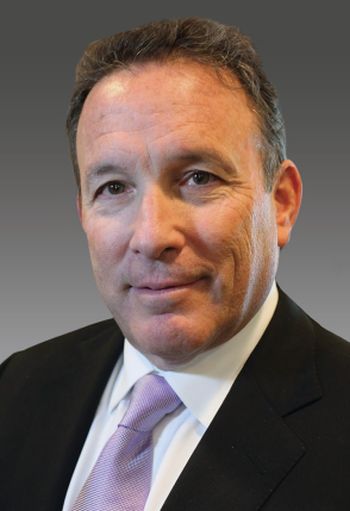
Jeffrey Weiner: Confidence level.
Despite those sour predictions, four out of five CEOs remained positive in their overall business-environment outlook, with exactly 80 percent rating their outlook 5 or higher (on a scale of 1 to 10) and about a third (32.7 percent) rating their outlook as an 8 or higher.
The silver lining, according to Marcum Chairman and Chief Executive Officer Jeffrey Weiner, is that the index of CEO optimism “has been remarkably steady throughout the five survey periods of 2022,” averaging about 6.5 in January and around 6.4 at the end of November.
“This suggests that CEOs have business planning well in hand and are confident in how they are approaching their markets,” Weiner said Tuesday.
Worth noting, the chairman added, was the increasing optimism in the services sectors – including financial services, healthcare and hospitality – although CEOs in the construction trades, manufacturing, distribution and retail sectors were “less sanguine.”
“Hopefully, they are leveraging their resources,” Weiner said. “Not only to drive efficiencies in the current inflationary environment, but to invest in technology, staffing, training and strategic analysis to position themselves for the near- and long-term future.”