By NANCY PAK //
The COVID pandemic dramatically reminded us of the role cookie snacks and other comfort foods play in confronting disruptions to our traditional social connections – and there are more lessons on the way.
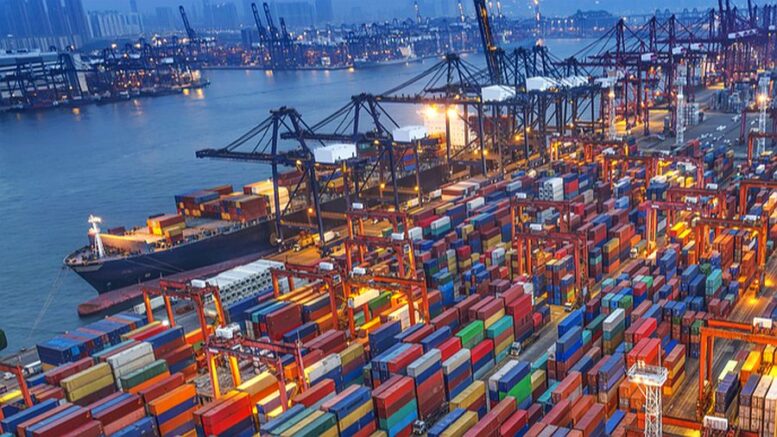
 The coming year will remind us that our nation’s food and beverage supply chains require immediate attention. Published reports suggest that even the cream cheese we depend on for our bagels has been affected by supply-chain issues.
How could 21st Century America suffer from such a predicament? Substituting butter on a bagel? I don’t think so!
A mid-year McKinsey report began to lay out part of the problem: The pandemic dramatically shifted how and where we get our food, causing significant upheavals in the predictive algorithms of where, when and what types of food need to be delivered to market.
For a supply system that depends on a stable and predictive environment, COVID has been anything but. Those supporting the restaurant industry found millions of dollars in food orders cancelled overnight; supermarkets raced to replace empty shelves. As consumers hunkered down to wait out the lockdown, this was a historic and unprecedented mismatch of supply and demand.
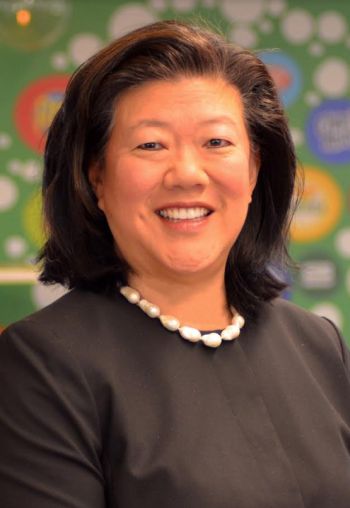
Nancy Pak: Business model makeover.
At Tate’s Bake Shop, we recognized early on that consumers would be in pursuit of comfort snacks during unsettling times. Having our favorite snacks to share – even if over zoom – made things feel more normal.
In fact, experts recommended “virtual happy hours” to keep socialization intact while social distancing became part of our collective behavior. Against that backdrop, we quickly realized that the need for cookies was only going to increase – and moved pro-actively.
While we figure out how to socialize safely, there is still work to be done with regards to the supply-chain challenges. In 2022, COVID variants could very well continue to rewrite our rules for public assembly, and one fallout from that uncertainty will be the need for the food supply chain to rebalance production, storage and transportation, and introduce new products.
The pendulum swings may be far less dramatic in 2022 than what we saw in March 2020, but there’s little doubt the food industry will need to consider new and innovative ways of stabilizing their business models – and the supply chains that support them.
One key element in confronting the challenge: the food industry’s emerging appreciation that a partial solution to the trucking industry’s driver shortage is to give trucking firms access to real-time customer data. Better logistics forecasting and smarter fleet deployment – right place, right time – are key, ensuring the industry can quickly respond as conditions warrant.
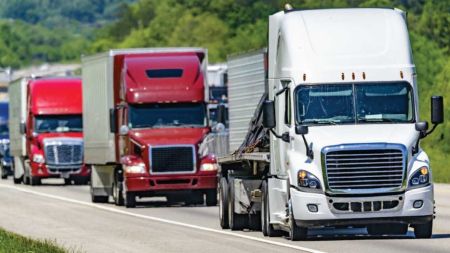
Keep on trucking: Producers must help freight companies better manage their resources, according to Tate.
More and smarter digital technology will not be limited to the trucking industry. It’s already used by the food industry to track required health and safety documentation, but COVID has dramatically reminded the food industry that evolving technology innovation can and should be used to better connect with inventory, consumer demand and rapidly changing market conditions.
Analysts also report that Washington now recognizes the nation’s food supply chain needs to be stable and predictive if we are to eliminate supply-chain hiccups.
This past summer, the U.S. Department of Agriculture announced a $4 billion appropriation to support food production, distribution and the expansion of market opportunities for producers; a portion of those federal dollars are specifically earmarked for the increase of cold storage, which will greatly benefit poultry and meat suppliers seeking to even out demand’s ebbs and flows.
History has taught us that the American food industry has consistently been among our national economy’s most productive, innovative and agile sectors. While COVID has stressed its various components, the industry has the tools at hand to identify and implement solutions that can confront whatever the pandemic hurls our way in 2022.
And when we conquer that challenge, we can sit back and quietly acknowledge our victory with a very satisfying cookie.
Nancy Pak is the chief executive officer of Westhampton Beach-based Tate’s Bake Shop, a subsidiary of Illinois-based Mondelez International.