By TOM MARINER //
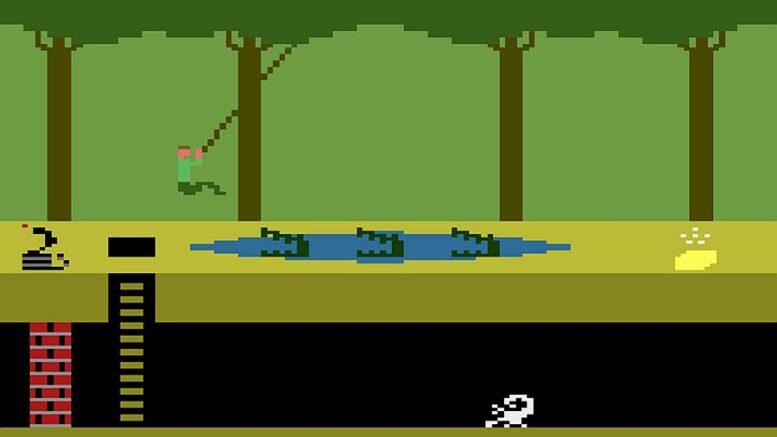
“Pitfall!,” the chart-topping 1982 videogame smash that spent 64 weeks atop the software charts, celebrated its 40th anniversary this spring.
 The birthday brought to mind memories and useful lessons involving the game, its creator and the game console it helped make famous – many of the memories and lessons revolving around Long Island.
Today’s videogames depend on impossibly complex and realistic graphics, played on computers with millions of times the power inside that classic Atari 2600, the platform of the original “Pitfall!” game, which was stored in a clunky cartridge.
Most games for the 2600 platform were developed by programmers employed by Atari. But a team of four programmers – now possessing the secrets of cartridge-based videogames – broke off from Atari in 1979 to form Activision, the first independent videogame-development studio. Atari sued, but ultimately lacked the proper protections to stop outsiders from producing games that played on Atari’s proprietary consoles.

Tom Mariner: Man of Activision.
Among Activision’s founders was “Pitfall!” author David Crane, and among their first releases was the breakthrough 1982 adventure-game hit.
One of the reasons “Pitfall!” was so successful was it was designed to take advantage of the Atari console’s inherent capabilities. Most the game consoles of that time, including the 2600 and Mattel’s Intellivision, played games consisting of generic backgrounds and a few “sprites,” or movable color patterns, moving somewhere on a 525-horizontal-line screen.
But here came “Pitfall!,” consisting of 254 “scenes” that could be accessed by “solving” the previous screen. It featured a running and jumping man (one sprite) who could pick up treasures (more sprites) and grab ropes (further sprites) to avoid alligators, quicksand, rolling logs, fire, rattlesnakes and other obstacles (so many sprites!).
The running man, it turned out, ran straight to Long Island: He played a part in a Mattel development contract that came to Hicksville, home of General Instrument Microelectronics.
In addition to the Intellivision chip set inside some of Mattel’s most popular sports games, many of the chips that went into the game cartridges produced by various manufacturers – including several knockoffs of “Pitfall!” – came from General Instrument Microelectronics.
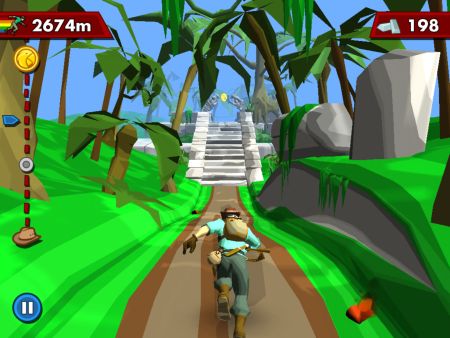
You’ve come a long way, baby: Not your daddy’s “Pitfall!”
Business was great until one morning, when I got a frantic call from the fellow we sent to supervise assembly of cartridges in Puerto Rico.
He was mortified: Warner Communications, which had purchased Atari, was suspending all videogame manufacturing. Their “dog ate my homework” excuse was that the teenage males who were the industry’s main buyers had matured and no longer wanted that entertainment modality.
In reality, Warner and the rest of the U.S. videogame industry failed to read the tea leaves – or to innovate the basic technology. Overseas, meanwhile, computer and graphic-chip developers like Nintendo kicked it into gear, and the rest is history.
In short, Atari’s definition of the industry disappeared. A stark lesson to learn – and not even Pitfall Harry, the stalwart hero of one of history’s most commercially successful videogames, could save them.
Tom Mariner is the executive director of Bayport-based Long Island Bio.