By TERRY LYNAM //
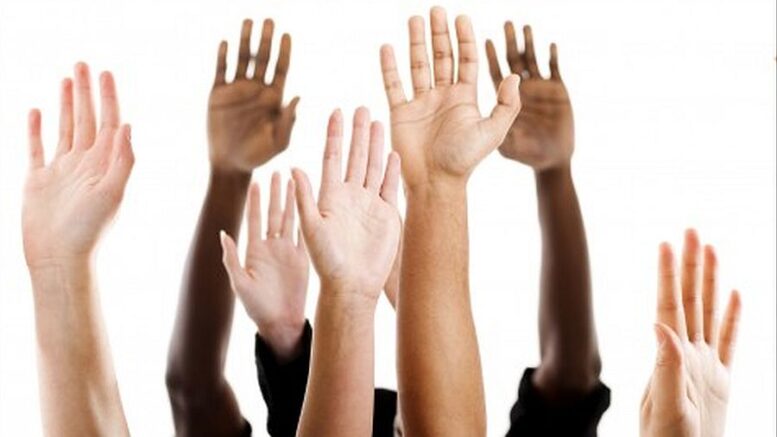
The focus on systemic racism has never been more intense in the United States, with daily news coverage of former Minneapolis police officer Derek Chauvin’s murder trial and severe scrutiny of proposals to restrict voting access in 43 states.
 Racial inequality can be found in many areas of society, but the drive for solutions is gaining traction among healthcare leaders like never before. Speaking recently about racial and ethnic health disparities, Northwell Health President and CEO Michael Dowling noted, “Because it has been so evident with COVID in how these communities were disproportionately affected, it is going to be very difficult for any innovative organization not to put this at the top of its priority list.”
It’s no secret that health inequities in communities of color have existed for generations, but the severity of the problem was laid bare by the coronavirus pandemic. Blacks and Hispanics were about three times more likely to be hospitalized with COVID-19 than whites, and about twice as likely to die, according to data from the U.S. Centers for Disease Control and Prevention.
Yet, whether it’s a lack of access or a personal choice, those who are at highest risk of contracting the virus are lagging behind in getting a COVID-19 vaccination. Of the more than 109 million Americans who’d received at least one dose of the coronavirus vaccine as of April 7, the CDC – with race/ethnicity known for about 55 percent of the vaccinated – reported that 65.3 percent were white, 10.7 percent were Hispanic and 8.4 percent were Black.
The numbers are only slightly better in New York State. Of those receiving at least one vaccine dose as of April 7, the state reports that 76 percent were white, 13.3 percent were Hispanic and 10.2 percent were Black. Of the more than 1 million receiving at least one dose in Nassau and Suffolk counties, 84 percent were white, 10.4 percent were Hispanic and 6 percent were Black.
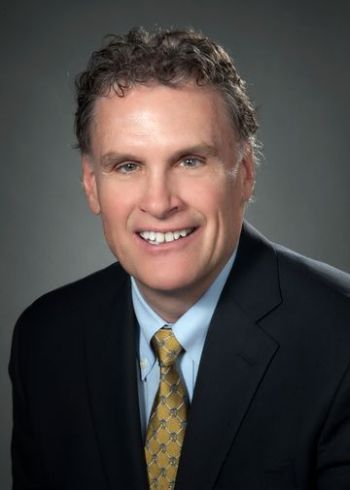
Terry Lynam: Balancing act.
Now that the state has relaxed eligibility restrictions, the hope is there will be fewer obstacles to getting minority communities vaccinated. In an effort to reach high-risk communities, Northwell Health established Health Equity Task Forces in both Nassau and Suffolk counties, bringing together human service organizations, healthcare providers, church pastors and other local leaders to collaborate on efforts to overcome vaccine hesitancy. They are sharing information with local residents and setting up vaccination sites at churches, community centers, colleges and other locations within close proximity to areas hardest hit by the pandemic.
When it comes to COVID-19 or chronic diseases in general, the bottom line is that people of color face the highest risks. The reasons are many, but the biggest drivers are socioeconomic – access (or lack thereof) to medical care, healthy food, safe housing, quality education, safe transportation and good jobs.
Genetics, gender and lifestyle – whether we drink, do drugs, smoke, exercise, eat healthy, etc. – all influence how long we’ll live. But studies show that the best indicators of life expectancy are our ZIP codes. According to 2019 research by the New York University School of Medicine, 56 of the nation’s 500 largest cities are home to people who can expect to live 20 to 30 fewer years than other Americans – including neighbors living mere blocks or miles away.
So, what can we do to narrow the life-expectancy gap? Healthcare providers and government agencies seem intent on finding solutions, especially considering the extraordinarily high death rates from COVID-19 within minority communities.
Earlier this year, the American College of Physicians issued a report outlining recommendations to address disparities in coverage, access and quality of care: expanding Medicaid and insurance marketplace subsidies, funding language-assistance and patient-navigator services and supporting physician-workforce programs in underserved communities.
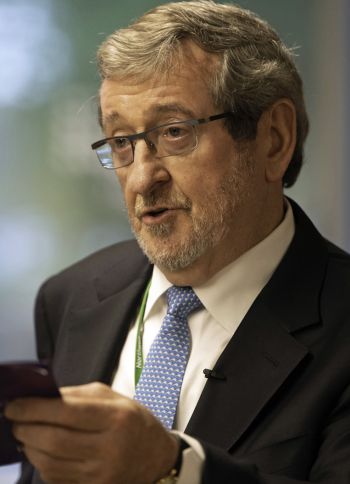
Michael Dowling: Definitive position.
As part of its community and population health efforts, Northwell has established relationships in 11 underserved communities throughout the metropolitan area, including Hempstead, Uniondale, Roosevelt, Freeport, Bay Shore and Central Islip.
Not surprisingly, access to good jobs, housing, education, nutritious food, outpatient care and behavioral-health services are usually top of mind for most community leaders.
The healthcare system will be focusing on these communities “continuously over the next couple of years,” according to Dowling, “providing more healthcare access, promoting more wellness and prevention, but also dealing with employment, housing and education issues – and then being a catalyst to get other industries to work in concert with us.”
“It can’t be left up to the hospitals and health systems alone.”
Government and society in general, the CEO says, have to recognize that “health” goes far beyond the delivery of medical services.
“Ill health is the absence of a job,” Dowling says. “It’s being afraid to walk down the street because of gangs and gun violence.
“If you want to improve these underserved communities, you have to define ‘health’ much more broadly than the way we usually talk about it,” he adds. “You have to look at all of these socioeconomic issues through the prism of health and get other players working in the same direction in these communities.”
Terry Lynam is a communications consultant and former senior vice president/chief public relations officer for Northwell Health.