By LAURA HARDING //
Governor Kathy Hochul’s proposed New York Housing Compact represents a courageous first step in tackling the core challenge of housing on Long Island and across New York.
 It proposes solutions that will benefit all Long Islanders by increasing housing options. It begins to address the needs of our most vulnerable populations and it starts to tackle the exclusionary zoning that is at the heart of Long Island’s standing as one of the 10 most racially segregated regions in the nation.
More specifically, the New York Housing Compact calls for 800,000 new homes across the state over the next decade. It includes local participation requirements and incentives to achieve housing growth in every community, so that every part of the state is a partner in solving this urgent crisis. (About 16 percent of the housing would be on Long Island.)
Far too often, affordable housing has been placed in already overburdened Black and Latino communities. It is time for localities everywhere to provide the needed range of housing, including affordable housing.
It is important to note that, under the plan, if localities are unable to meet the specified goal, they can design a housing provision plan for a lesser percentage and receive an exemption from the state for up to six years to meet the goal. Municipalities that have already taken steps to increase housing can also receive credit for their previous or current work.
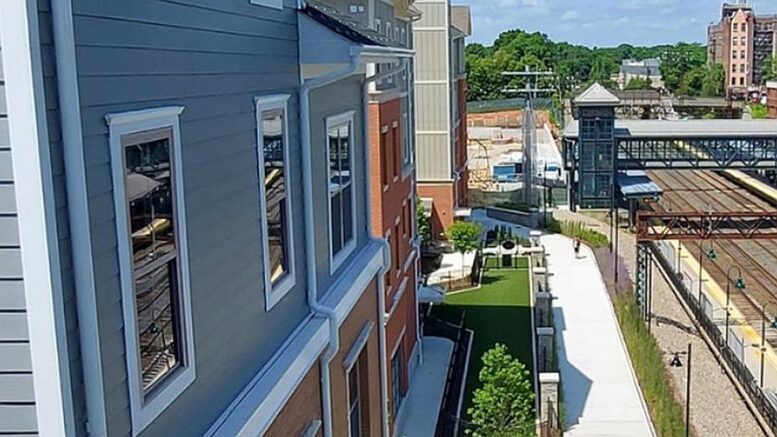
The New York Housing Compact also requires municipalities with Metropolitan Transportation Authority rail stations to locally rezone for minimum average density. And when combined with other state aid, the plan provides for support for infrastructure needs such as wastewater treatment, groundwater protection and other environmental improvements and protections.

Laura Harding: Now or never.
The plan thereby offers welcome relief to parents, essential workers, young professionals, business owners and seniors on Long Island, where a large majority of Long Islanders say that they want more housing options, including affordable and environmentally sustainable choices.
ERASE Racism acknowledges the localities on Long Island that have already taken steps to build affordable housing and Transit-Oriented Development. But we also recognize that many localities spend more time seeking to maintain the exclusionary zoning that is at the heart of Long Island’s racial segregation – to the detriment of all community members.
It was announced earlier this month, for instance, that two long-running housing-discrimination cases against the Town of Oyster Bay will move forward. A lawsuit against the Town of Islip is also moving forward, alleging racial discrimination through land-use restrictions that prevented a proposed 58-unit apartment complex, including affordable and senior housing.
The proposed New York Housing Compact, as is the case inevitably with statewide proposals, does not represent everything ERASE Racism would have wanted. We would like to have seen more overt affordability mandates built into the plan, more specific infrastructure funding, a commitment that provisions will be made to use the U.S. Department of Housing and Urban Development’s proposed Affirmatively Furthering Fair Housing rule (once finalized) to decrease segregation across Long Island, and more enforcement of laws that are already in place.

Detail-oriented: The governor laid out her New York Housing Compact in Patchogue earlier this month.
We also know that progress begins with a first step, and this plan is an important and vital one that deserves our full support.
The lack of affordable housing on Long Island is an issue for seniors seeking to downsize and remain in their communities, essential workers unable to live where they work, young professionals seeking to live on their own and build a life on Long Island, and low-income wage-earners, to describe just a few. As a result, as more jobs become available on Long Island, too many remain unfilled due to the lack of affordable housing.
The time to act is now, and the New York Housing Compact is the plan to support.
Laura Harding is an attorney and the president of Syosset-based ERASE Racism.