By TOM MARINER //
Long Island has long been home to pioneering technology firms, but few illustrate the region’s role in global innovation as clearly as Symbol Technologies.
 Symbol evolved from a scrappy startup into a global leader in data capture and wireless communications, passing through the hands of Motorola Solutions before becoming a cornerstone of Zebra Technologies.
This major-league trek – including a 1999 National Medal of Technology and Innovation, among many other accolades and achievements – would not have happened without the foresight of two Long Island physicists, who founded Symbol in 1973.
Jerome Swartz, a physicist and electrical engineer, and Shelly Harrison, a physicist with expertise in lasers, each recognized that emerging laser and scanning technologies could revolutionize commerce by automating data capture through barcodes. Swartz, sometimes introduced as the “father of the handheld barcode scanner,” brought the technical vision; Harrison contributed critical business leadership.
Tom Mariner: Deciphering Symbol.
During Symbol’s early years, they cultivated a culture of aggressive innovation. They invested heavily in research and development and secured patents that would become foundational to modern retail and logistics.
Symbol’s first significant footprint was its Bohemia facility, which housed engineering and assembly operations. By the mid-1980s, the growing firm relocated its headquarters to Holtsville, building out and modernizing an old Grumman facility overlooking the Long Island Expressway – the new “One Symbol Plaza.”
Even after Symbol’s 2007 acquisition by Motorola, and Motorola’s eventual sale of its enterprise unit to Zebra Technologies in 2014, Holtsville remains a vital R&D and operations hub. Zebra continues to employ hundreds of engineers at the Holtsville site, making it one of the largest technology employers on Long Island.
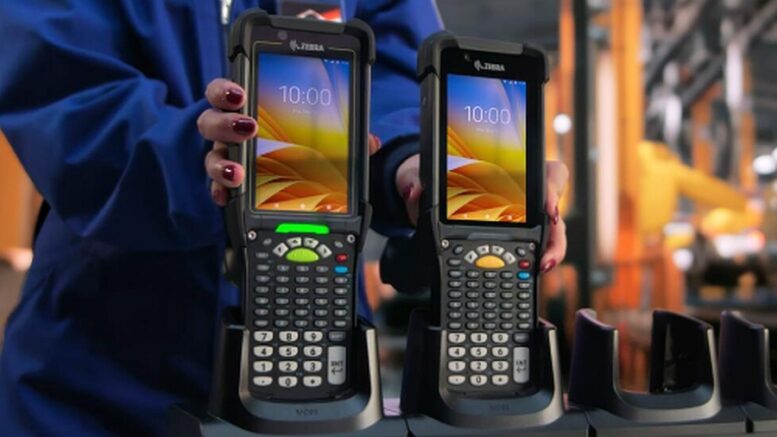
Symbol’s contributions to modern data capture and enterprise mobility are difficult to overstate. Among its most significant product breakthroughs is the handheld, ruggedized barcode laser scanner, which became ubiquitous in supermarkets, warehouses and hospitals worldwide.
Long before WiFi was household language, Symbol developed early wireless local area networks for enterprises, laying the groundwork for today’s LAN-based wireless enterprise mobility solutions. And the MC9000-series universal handheld computer, built for warehouses and other logistical operations, became a big hit, with more than 5 million units sold.
 Symbol’s remarkable ascent was slowed in the early 2000s by a major accounting scandal. The U.S. Securities and Exchange Commission charged the company with inflating revenues through “channel stuffing” and other fraudulent practices. The scandal implicated top executives, including CEO Tomo Razmilovic, who abruptly fled the United States in 2002 and resettled in Sweden to avoid prosecution. He remains a fugitive.
Swartz resigned from the board. Investors lost billions in market value. And Symbol had to pay large settlements to resolve charges. The company’s once-sterling reputation for technological leadership was badly tarnished, and Long Island felt the brunt of the consequences.
Following the scandal and restructuring under new leadership, Symbol cut thousands of jobs. The Motorola acquisition and subsequent sale to Zebra further consolidated operations.
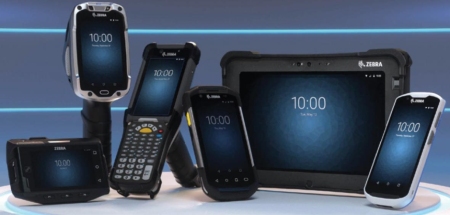
Mobile health: Zebra’s mobile-computing expertise is rooted in Long Island innovation.
If there was a silver lining, it’s that multiple Long Island industries were gifted with experienced executives and technical talents who supercharged other burgeoning tech firms.
“Symbol was a very special way for me to spend close to 30 years of my career,” notes Judy Murrah, CEO of Stony Brook-based Applied DNA Sciences, who rose through Motorola Solutions’ executive ranks while the Chicago-based conglomerate operated Symbol. “I was educated as an engineer, worked in the selling and buying and implementing sides of an IT, and learned more than I ever thought I would.”
The $3.9 billion acquisition by Motorola’s Enterprise Mobility unit in 2007 expanded Symbol’s global telecommunications reach but marked the end of the company’s run as a standalone Long Island entity. Seven years later, when Zebra Technologies purchased Motorola’s enterprise business for $3.45 billion, Zebra inherited both the Holtsville facility (rechristened One Zebra Plaza) and Symbol’s legacy – and discovered remarkable synergy.
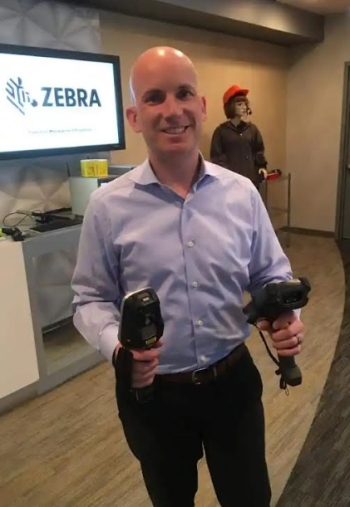
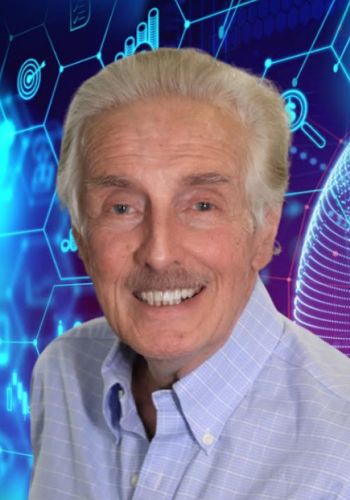
Tom Bianculli: Company man.
Symbol brought mobility, scanning and wireless expertise; Zebra complemented with printing, radio-frequency identification and consumables dominance. And their customer bases overlapped heavily in retail, healthcare, logistics and manufacturing.
Zebra could now deliver end-to-end visibility and tracking solutions – turning data capture into actionable intelligence, across the entire supply chain.
Extending Symbol’s legacy are Long Island-based leaders like Tom Bianculli, Zebra’s chief technology officer, who kicked off his 27-year career at Symbol and was steadfast through the Motorola and Zebra transitions.
Bianculli is responsible for shaping Zebra’s corporate technology vision, with an eye on artificial intelligence, robotics and edge AI computing. He’s been a key advocate for Long Island’s ongoing role in Zebra’s innovation ecosystem – and he’s also a bit of a visionary.
Under his guidance, Zebra has expanded into areas like autonomous mobile robotics (including partnerships with Amazon’s warehouse technologies), real-time player-tracking in sports and advanced machine vision.
From its founding by Swartz and Harrison to its seamless integration into Zebra Technologies, pioneering technologies have narrated Symbol’s story – and leaders like Bianculli have helped shape global commerce, while ensuring that international rivers of innovation flow through that plaza off the LIE.
Tom Mariner is the executive director of Bayport-based Long Island Bio.