By GREGORY ZELLER //
An island blessed with a pantheon of leading universities is adding another.
 And like Stony Brook University, Hofstra University, Adelphi University and the other jewels of Long Island’s academic crown, this new university has been here all along.
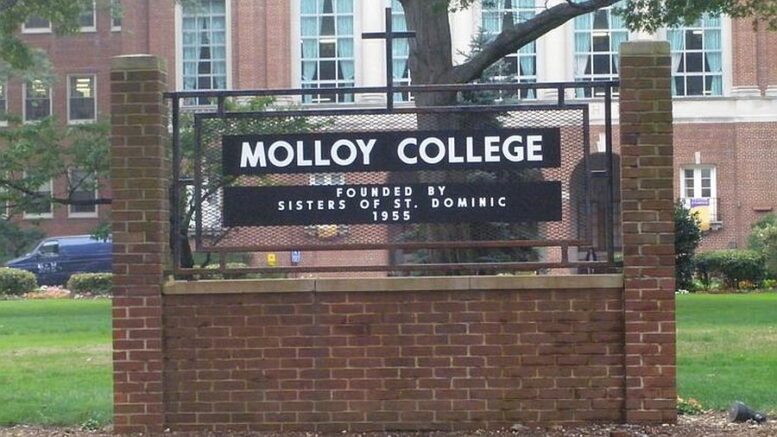
Rockville Centre’s Molloy College announced Thursday that the New York State Department of Education’s Board of Regents has finally approved the school’s rebranding as Molloy University. The new designation is set to take effect after the college’s Class of 2022 completes its May 24 commencement exercises.
More than a simple name change, granting the circa-1955 institution the “university” title checks off some significant boxes. Although the official line between “college” and “university” tends to blur, colleges are usually smaller and more focused on undergraduate education, while larger universities are distinguished by graduate, post-graduate and research opportunities.
Founded 67 years ago by the Sisters of Saint Dominic of Amityville, Molloy has “had the academic scope and breadth of a university for years,” noted Molloy College President James Lentini. Officially, the school met the “university” requirements in 2018, when it created new schools of nursing, business, the arts and education and crossed off graduate-program quotas.
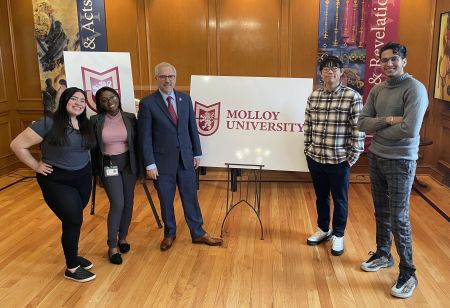
Proper introductions: Molloy College President James Lentini and friends unveil the new Molloy College logo.
But antiquated Department of Education language prevented the official name change, until the Board of Regents snipped that red tape earlier this year.
With the hurdle cleared, the long-overdue “university” title will help Molloy expand its student pool, improve the visibility of its graduate programs and promote the post-graduate success of Molloy students, the school said Thursday.
“Universities are typically defined by their post-graduate master’s and doctoral programs, which we already have, as well as a commitment to serve a unique mission, which we have done since our founding,” Lentini noted. “Our ethically based, professional education … will continue to give our students and graduates the launching pad that they need to thrive and succeed.”
In addition to rebranding the independent Catholic college as a “destination university,” the new title will help the Rockville Centre institution “construct a targeted approach to securing extramural funding,” including “external federal funding for research,” Molloy said in a statement.
Lentini, the former senior vice president for academic affairs at Michigan’s Oakland University who took Molloy College’s reins in 2020, said such funding initiatives would help cement Molloy’s position as a cornerstone of the Long Island innovation economy.
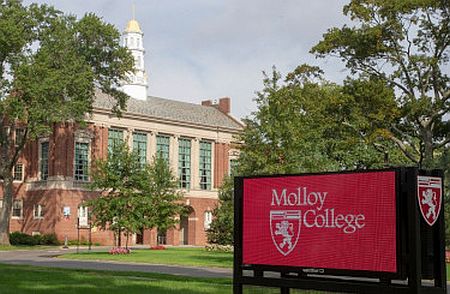
The more things change: Molloy’s mission of study, spirituality, community and service will remain unchanged.
“Our status as a university will open new doors and expand our work with the public, private and not-for-profit sectors,” Lentini told Innovate Long Island. “[Molloy University will] find collaborative and technology-based solutions to our most urgent challenges, including healthcare, green energy and maintaining our strength in retaining our brightest minds on Long Island.”
While nothing official has been announced, the university-in-waiting – which already offers a multitude of graduate programs, including 23 master’s degree programs, multiple post-master’s certificates and doctoral programs in nursing, nursing practice and education – is certainly anticipating a significant academic expansion.
In addition to “new degrees,” Molloy University will grow to include new “pathways of study [including] a growing list of certificates, badges, degree-completion opportunities and other programs delivered in person, online and in blended formats,” Molloy said Thursday.
As a university, Molloy – which currently enrolls roughly 4,800 undergraduate, graduate and doctoral students – will also remain “steadfast in its commitment” to the Four Pillars of Dominican Life (essentially: study, spirituality, community and service) that have characterized the school since its earliest days.
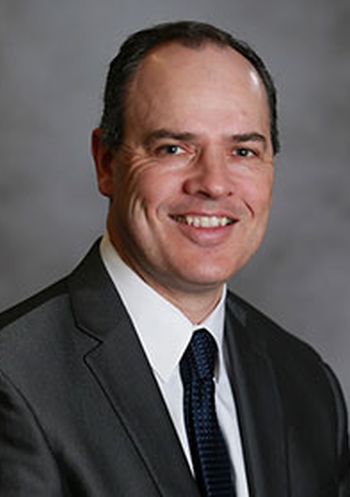
Edward Thompson: At your service.
“Molloy was founded for the purpose of service, and we gauge our success on that metric,” noted Molloy College Vice President for Advancement Edward Thompson, adding the school’s “dedication to a Catholic-inspired perspective on education” has helped it stand out in a region where the New York Institute of Technology, Long Island University, SUNY Old Westbury and a stable of excellent colleges – including Farmingdale State College and St. Joseph’s College – set a high academic bar.
“It is a key component of who we are and who we will be in the future,” Thompson added.
The freshly minted university “will also embrace new opportunities to collaborate with philanthropists and partners who embrace its mission to support academic and community-engaged efforts,” with particular focus on education, business development, art, science and other key social categories, Molloy added.
Noting “the new opportunities before us,” Molloy College Board of Trustees Chairman John McEntee trumpeted “a historic milestone moment for our institution.”
“Molloy has grown and evolved consistently since its founding,” McEntee said. “Over the last six decades, we have added post-graduate programs at the master’s and PhD levels, expanded programs across business, arts and sciences, education and nursing, and grown our reach from Rockville Centre to New York City.
“We look forward to the future now more than ever.”