
By PHIL ANDREWS //
Long Island’s entrepreneurs are leveraging technology like never before. From launching new ventures to adopting cutting-edge digital strategies, we are embracing innovation and leading with a vision that lifts the entire community.
 For the 3.6 million Black-owned U.S. businesses – which collectively generate more than $40 billion in payroll – artificial intelligence tools are breaking down barriers and driving growth that would be otherwise impossible.
That’s why I’m deeply concerned about some proposals in Albany, including the RAISE Act. While undoubtedly well-intentioned, the bill could prevent New York from leading in AI by imposing strict rules and an impossible-to-navigate liability regime that holds developers legally responsible for things out of their control.
Right now, open-source AI models are an incredible resource for smaller companies and developers to build custom solutions, attract investment and bring ideas to market. For Black and minority entrepreneurs developing or building on these open-source models, the RAISE Act’s risks are disproportionately high.
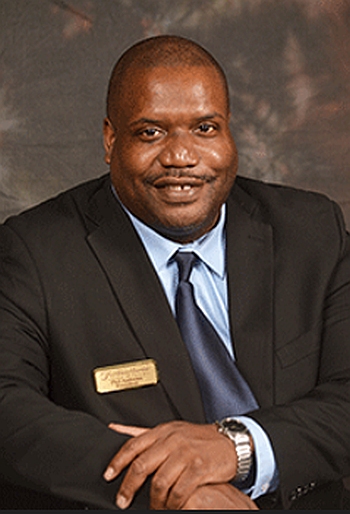
Phil Andrews: RAISE awareness.
A recent Intuit QuickBooks survey reveals that 84 percent of Black business owners already use AI to help run their businesses. That figure is encouraging and should tell lawmakers something important: The future of AI isn’t just happening in Silicon Valley, it’s happening on Main Street, right here on Long Island.
It’s integrated into day-to-day operations to support business owners and streamline customer service. It helps local shops, restaurants, professional services and product developers compete, expand and thrive.
That same QuickBooks survey revealed that 82 percent of Black-owned small businesses hold a patent, trademark or copyright. We are creators. Builders. Pioneers. But when a bill like the RAISE Act holds developers liable for foundational models created by others, it sends a chilling message.
Open-source AI has become vital for founders of all backgrounds without access to the same resources as larger tech firms. It levels the playing field. With foundational models, startups can create tailored tools, develop culturally competent solutions for specific markets and unlock entirely new categories of business. Whether it’s automating administrative tasks, refining customer engagement or optimizing marketing strategies, AI built on open models is a force multiplier for smaller firms.
The Long Island African American Chamber of Commerce has been working with its membership to offer insights on leveraging AI to effectively build their brands, efficiently manage operations and keep in touch with customers. I’m encouraged by Gov. Kathy Hochul’s recent initiatives to diversify the AI talent pipeline and to ensure underrepresented startup founders have access to capital.
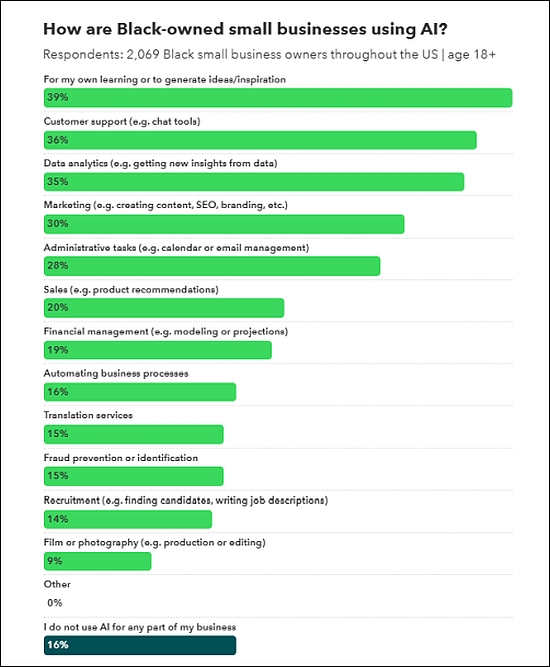
Intelligence personified: Black business owners use AI in various ways. (Source: Intuit QuickBooks 2023 Black History Month Survey)
But legislation like the RAISE Act has the potential to undermine those efforts.
Instead of creating a system where only deep-pocketed companies with armies of lawyers can afford to operate, lawmakers should focus on forging an environment that supports responsible innovation across the board. That means encouraging open-source development, supporting experimentation and applying guardrails where there’s real evidence of harm – not hypothetical risks.
The bottom line is this: Our entrepreneurs are already proving what’s possible with AI. We’re using it, improving it and sharing it with our communities. AI helps us do more with less. It bridges gaps and enables even the leanest operations to compete with major players.
We don’t want a free pass. We want a fair shot. That means policies that support responsible innovation, not ones that smother it under the weight of red tape.
Well-designed AI regulations should be a bridge to economic empowerment, not a barrier to entry. Let’s make sure the future of technology includes everyone – especially those who have been left out for far too long.
Phil Andrews is president of the Long Island African American Chamber of Commerce.