By ALLISON SINGH //
When it comes to stealing from Long Island’s indigenous people, much of the focus has been on land – much less on the theft of intangibles like ideas, creative expressions and even names.
 Non-indigenous people have enjoyed the spoils of such thefts for many years, from root beer to life-saving medicines. So, how can further thefts be prevented? Do intellectual property laws play a role, or do we need a new system altogether?
These are important questions and very difficult to answer. But Chenae Bullock, a Shinnecock Indian Nation tribal member and descendant of Long Island’s Montauk Tribe, has a few thoughts on this.
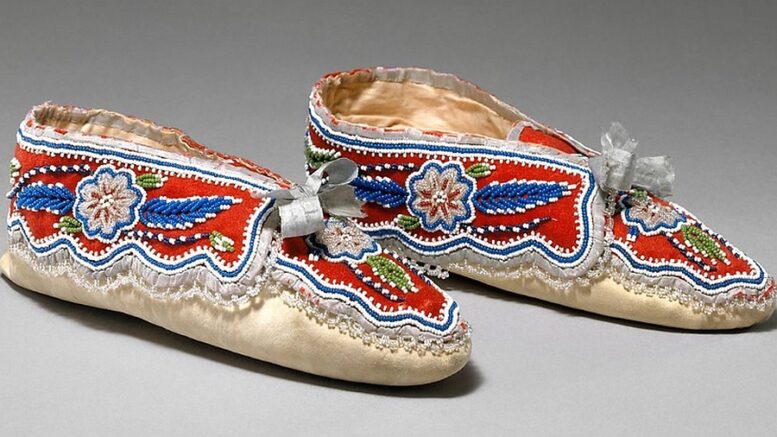
Bullock is the founder and CEO of Moskehtu Consulting, a Georgia-based cultural and heritage consultancy that addresses the global urgency of social and environmental change by bridging gaps between Native American communities and regional organizations. She notes that misappropriation of indigenous culture has become so normalized that we often don’t even see the crime anymore – consider moccasins, for instance, or Urban Outfitters’ “Navajo” product line.

Allison Singh: Indigenous infractions.
When sued for trademark infringement, Philadelphia-based Urban Outfitters had the audacity to defend its use of the Navajo name by suggesting the tribe waited too long to assert its alleged rights: The nation brought the lawsuit in 2012, though Urban Outfitters had sold its “Navajo print flask” and “Navajo hipster panties” since 2001.
The Navajo nation owns multiple trademark registrations with the U.S. Patent & Trademark Office and opposes all “Navajo” applications filed by third parties. It ultimately reached a settlement with Urban Outfitters.
Leveraging the intellectual property system works in the trademark arena, but copyright and patent law are not always an easy fit.
For one thing, copyright requires creative expression be fixed in a tangible medium – in other words, written down, recorded or digitized, anything but oral. So, how do you copyright a story passed down orally for generations, or identify a single creator for a spiritual song or cultural beading design?
Most troubling, what happens when the copyright term expires and the work falls into the public domain, never to be protected again? Patent law is equally vexing, with its reliance on the date of invention and originality based on prior art searches.
Bullock offers an answer. “Indigenous people should not have to use the colonizer’s system to protect what is theirs,” she says.
Rather, indigenous groups should establish their own rules for protection, and the colonizers should respect those rules. The challenge, according to Bullock, is that ancestors never contemplated such ownership or theft, so there are no existing rules or guidelines.
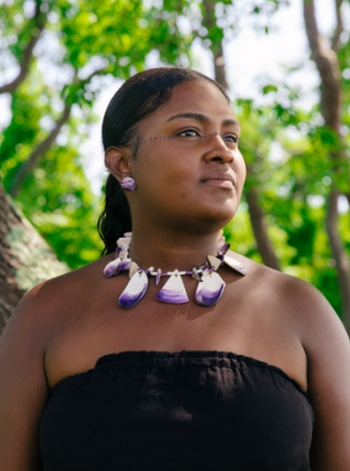
Chenae Bullock: Self-determination.
(I would add that, in this case, only the colonizer views creativity and innovation as things to be exploited and commercialized – so grafting a system based on those priorities onto an indigenous culture seems like yet another injustice.)
Earlier this year, the United Nations approved the Treaty on Intellectual Property, Genetic Resources and Associated Traditional Knowledge, a landmark document designed to protect indigenous peoples’ rights. A nation that signs the treaty must require national patent applicants to disclose the source of any “traditional knowledge.”
What happens next, nobody knows. Does disclosure bring ownership rights for indigenous cultures – perhaps even licensing revenue? Or should patent applications based on traditional knowledge be rejected based on that fact alone? These specifics will be addressed as the treaty signatories (as of May, all 30 members of the UN’s World Intellectual Property Organization) amend their patent systems in the coming years.
There’s no question that “traditional knowledge” is extremely valuable – that’s why the colonizers want it, after all. Without Shinnecock whaling techniques, would European settlers have been able to fund the growth of the nation? How many lives were saved by the herbal medicines of Levi Phillips, the Wampanoag “Medicine Man of Long Island” who walked from Queens to Montauk with a satchel of home-grown remedies over his shoulder?
Bullock’s call for a system of rules rooted in indigenous cultures has merit, but for now, it doesn’t look like illegal appropriations are going to stop. Protections based on the colonizers’ tools only leaves indigenous cultures vulnerable to continued exploitation.
Allison Singh is of counsel and a member of the Corporate and Intellectual Property groups at Riverhead-based Twomey, Latham, Shea, Kelley, Dubin & Quartararo LLP.