By GREGORY ZELLER //
Stony Brook University has rolled out an ambitious campus-development plan designed to meet the surging university’s student-housing needs – and simultaneously address regional workforce-housing demands.
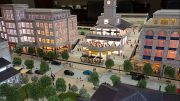
 The State University of New York flagship has unveiled a new Mixed-Use Residential Development initiative, which envisions a comprehensive, village-style residential/retail district on the university’s West Campus – featuring student housing, price-controlled workforce housing (specifically for university staffers and Stony Brook Medicine residents), retail shops, dining options, dedicated parking and other private amenities, all within a sustainable-energy infrastructure.
Spearheaded by the Stony Brook Housing Development Corp., the project aims to enrich student life and enhance the overall campus experience while strengthening workforce recruitment and retention programs at the university and beyond – a “thoughtful, integrated approach to campus planning that brings together student and workforce housing, shared amenities and sustainable infrastructure,” according to SBU Chief Sustainability Officer William Herrmann.
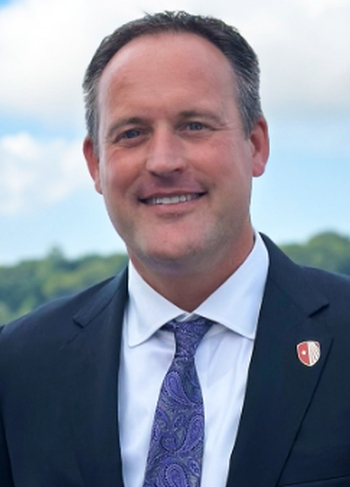
William Herrmann: Thinking it through.
The idea of public-private housing on the Stony Brook campus is nothing new; university officials first floated the idea (and a similar RFQ) in 2016. Since then, other student-housing efforts – including the 310-bed Tabler Building project, slated to open by the Fall 2027 semester, and the long-awaiting Seawolves Village undergraduate housing complex – have made significant progress.
But with residence halls still bursting at the seams – and regional workforce-housing health in critical condition – the university is dusting off its public-private plans.
The new mixed-use initiative is in its earliest stages – the Housing Development Corp. just this week issued a new Request for Qualifications seeking to identify development partners capable of delivering on SBU’s unique mixed-use needs, sustainability requirements and wide-ranging strategic goals.
And no official price tag has been attached to the latest initiative, nor does it have a specific timetable – though the new RFQ, circulated Wednesday, cites an “initial phase” of 800 to 850 beds “designed for occupancy by Fall 2029.”
Those Phase 1 beds would be inside apartment-style student housing – three- and four-bedroom units with central air conditioning and full kitchens – and would basically cover current unmet student-housing demands, which SBU estimates around 850 beds.
University-related workforce housing and “other components” – including ground-floor retail and dining spaces – would be included in subsequent phases, according to the RFQ.
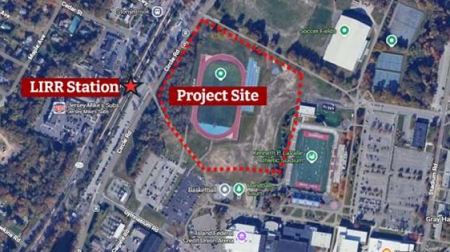
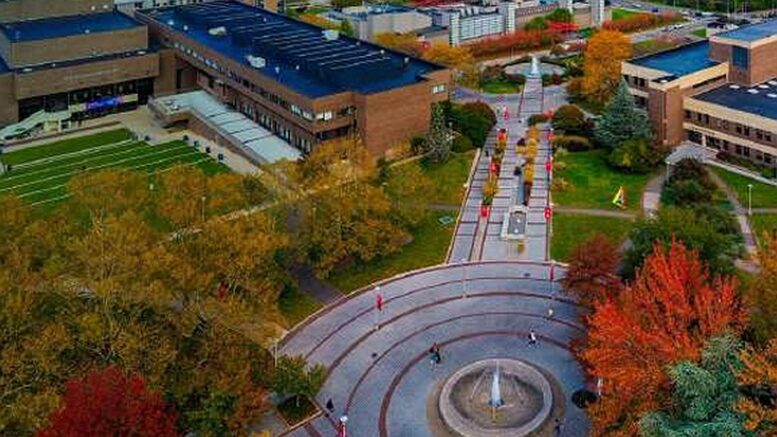
Location, location, location: The West Campus location — close to mass-transit options — adds to the Mixed-Use Residential Development’s vibrancy.
By integrating energy-efficient, all-electric building systems and scalable clean-energy solutions consistent with New York State climate and decarbonization mandates, the initiative also intends to advance SBU as a regional sustainability leader – all while “position(ing) Stony Brook for continued growth,” according to Herrmann, who also serves as the university’s vice president for facilities and services.
“Housing is foundational to student success and to the long-term strength of the university,” the chief sustainability officer added. “The district is strategically located near mass transit and designed to foster a vibrant, walkable, college-town gateway with a main-street feel that supports our academic mission (and) strengthens community.”