By GREGORY ZELLER //
Stony Brook University is heading Down Under for a new climate-change collaboration with National Science Foundation support and global implications.
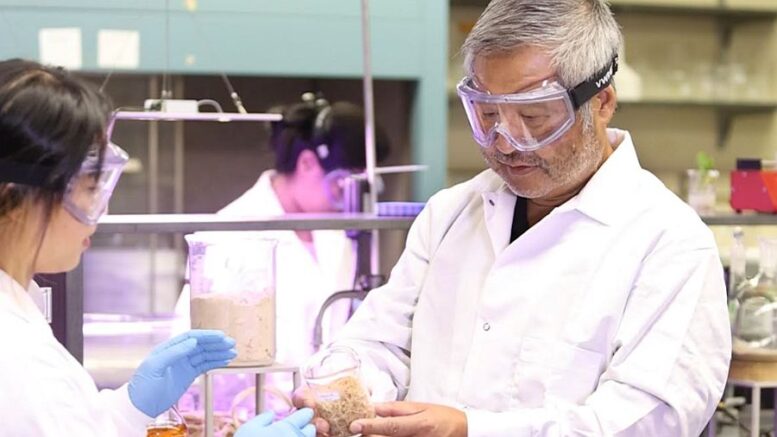
 Led by SBU Distinguished Professor of Chemistry Benjamin Hsiao and University of Queensland (Australia) Chemical Engineering Professor Darren Martin, scientists intend to create new agricultural fertilizers from renewable biomass – an ecological and sustainable alternative to conventional fertilizers, which are both unsustainable and environmentally harmful.
Under the auspices of a $570,000 NSF Convergence Accelerator Program award, the two universities will demonstrate a new kind of “nanocellulose-enabled bio-nanofertilizer,” advancing a zero-waste technology based on the science of biomass feedstocks.
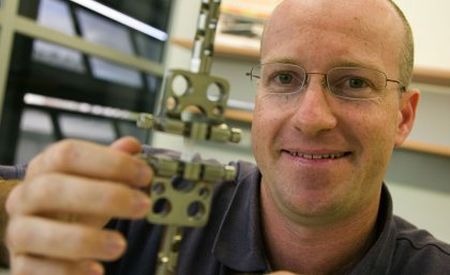
Mass effect: Renowned University of Queensland Chemical Engineering Professor Darren Martin is throwing his biomass on the pile.
(Crash course in 21st Century agriculture: “Feedstocks” are renewable biomass resources that are used directly as a fuel or converted to fuel or another product, such as packaging materials. Common biomass feedstocks include municipal waste, algae, agricultural and forestry residues and dedicated energy crops.)
The researchers hope to develop a low-cost and sustainable fertilizer that improves crop yields while repurposing massive amounts of global biomass waste. Bonus: the elimination of chemical fertilizers, which increase greenhouse-gas emissions and commonly pollute groundwater.
Ultimately, the work could mitigate everything from air quality to coastal erosion while reducing plastic waste and increasing food-water security – an ambitious slate of goals requiring excellence across multiple disciplines, according to principal investigator Hsiao.
 “This work will require the expertise of chemists, engineers, sustainability experts and scientists from other disciplines,” the distinguished professor noted. “We believe we can assemble a great workforce to perfect this technology that has great promise and will eventually impact agricultural practices worldwide.”
Uniting the far-flung innovators from SBU and the University of Queensland – where Martin has emerged as a global leader in the study and commercialization of polymer nanocomposites and renewable nanomaterials – is the primary function of the Convergence Accelerator Program, according to Erwin Gianchandani, the NSF’s assistant director for technology, innovation and partnerships.
And the creation of environmentally and economically sustainable materials and products “is critical to our future,” the assistant director added.
“The production and use of materials today are not sustainable for our planet and human health,” Gianchandani said in a statement. “The use-inspired solutions … we are investing in today will advance the circular design of materials and manufacturing processes to reduce pollution and waste.”