By SCOTT BURMAN //
Mark Twain’s most famous misquote – that reports of his death were “greatly exaggerated” – can also apply to shopping malls.
 It’s true that many malls have shut down, particularly in the years following the COVID-19 pandemic, but any statement about the overall health of malls must acknowledge that many are thriving – and others are being revived by modern business models aimed at elevating the overall shopping experience.
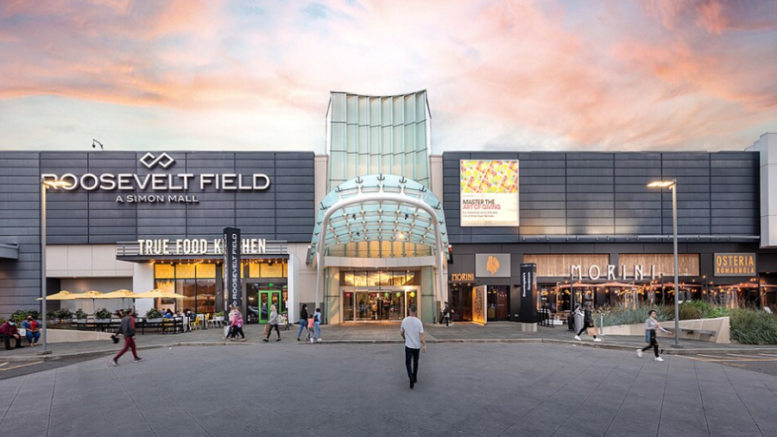
As reported in March by The New York Times, Indiana-based Simon Property Group’s Roosevelt Field mall enjoys a 96.3 percent occupancy rate. The success of this venerable Class A mall is credited to local consumer income and a balanced array of retail, experiential and dining opportunities – tenants include luxury retailers Louis Vuitton, Burberry, Hermès and Rolex, and the mall’s storefronts are in high demand, commanding $1,250 per square foot.
The report goes on to say that much of the recent success and innovation has been driven by Gen Z. The Times cites the Ipsos Consumer Tracker, which points out that 58 percent of shoppers ages 18 to 34 say they shop at malls at twice the rate of adults over 55.
Illinois-based Cushman & Wakefield tracks more than 50 mall-redevelopment projects across the United States, ranging from minor renovations to multi-billion-dollar overhauls. The global commercial real estate firm is also optimistic about the future of malls, including Class B malls such as The Shops on Broadway, Green Acres Mall and the Shops at SunVet – provided they meet the changing demands of today’s consumer.

Scott Burman: Malls of America.
According to Cushman & Wakefield, “Transforming B malls into experiential spaces can attract younger demographics and re-engage shoppers. This could include entertainment venues like escape rooms, virtual reality experiences (and) live music or food-and-beverage experiences such as craft breweries or celebrity chef-driven food halls.
“By opening spaces, adding green areas, outdoor-facing stores and lifestyle features, developers can create more inviting environments that appeal to today’s consumers.”
Other commercial publications, including CoStar and Retail Dive, also point out opportunities found through redeveloping and repositioning Class B malls on Long Island and in other markets around the nation.
Outdated indoor shopping malls present an opportunity to not only rethink retail experiences, but to redevelop inherently valuable land parcels. On Long Island, existing mall sites have built-in advantages, such as easy access, scale, visibility and proximity to population centers. These advantages have not disappeared just because the shopping center model has evolved.
While many of Long Island’s coastal villages enjoy bustling downtowns with a mix of attractions, most of our inland communities do not have walkable shopping and dining districts. Here’s where reimagined retail can play a role.
These new concepts will invite neighbors and visitors to traverse a new kind of Main Street, where people can spend the day shopping, dining, playing or attending curated indoor and outdoor events and exhibitions. This next generation of centers will not be defined by how much people buy, but by how often they gather – and the sense of community the centers foster.
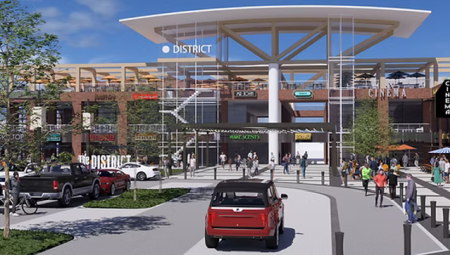
Something for everyone: The reimagined Shops on Broadway will include an appealing mix of retail, dining and entertainment attractions.
For Gen Z, which grew up with smart phones and social media, brick-and-mortar shopping is something of a novelty. The prevalence of remote work and online shopping have motivated Gen Z to get out for “IRL” sensory experiences. Retailers and restaurateurs are further enticing these (and younger) consumers with Instagrammable interiors and displays ripe for selfies.
It’s no different for young families. Parents are looking for activities for their kids, as well as entertaining things to do in their “adult time.” Mall strollers of all ages want a multitude of choices and places to congregate, regardless of the season or weather.
Following this model, the reimagined Shops on Broadway seeks to bring all these components to its open-air, 70-acre parcel. In addition to a variety of retailers and services connected by walkways and wide plazas, the Shops will include The District, a multi-level entertainment hub with a diverse selection of dining options, experiences and services.
Over the generations, Long Island has witnessed and responded to tremendous changes, from its agricultural and maritime roots through its aerospace-industry leadership to its current prominence in biotechnology, life sciences, education, healthcare and professional services. Throughout the decades, the Island has demonstrated resilience and an ability to respond to a changing economic climate, keeping it high on the list of desirable places to live, work and savor leisure time.
The evolution of the modern shopping center will add new shared spaces and reinvigorated community amenities – and add vibrancy for our children and grandchildren to experience in real time.
Scott Burman is the founder and president of Burman Real Estate.