By FRANK PICCININNI //
We have spent the better part of the last century treating nature like a construction project.
 Straighten the rivers. Contain the wetlands. Mow the meadows. Fill the dunes with houses and cover the soil with chemicals to keep the lawn “perfect.”
We’ve convinced ourselves we can engineer our way into a stable and beautiful landscape if we just control every square foot.
But nature is not a machine. It’s a living system that repairs and balances itself, one that’s been running longer than our species has existed. Every time we replace its processes with our own, we take on all the upkeep, all the risk and all the cost. And it rarely works for long.
Here on Long Island, the illusion of green uplands and coastal beauty hides a deeper collapse. In parks, backyards and even nature preserves, invasive species – Japanese barberry, English ivy, burning bush, Tree of Heaven – often replace native plants that once did the heavy lifting.
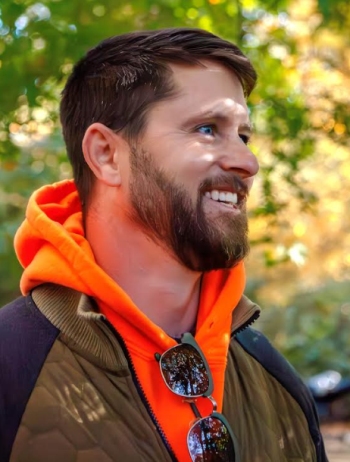
Frank Piccininni: Au natural.
These native plants filtered water, fed pollinators, held nitrogen in the soil and anchored dunes and streambanks. Without them, we’re seeing algal blooms in the bays, fewer fish in our nets and fewer fireflies on summer nights.
At first, these invasives may seem harmless. Some are sold in local garden centers, and often marketed as attractive, low-maintenance landscaping options.
But their spread disrupts the balance that keeps our environment healthy. Native plants evolved alongside local wildlife, forming food webs and natural cycles. When they are lost, the effects ripple outward – fewer pollinators, fewer birds and weaker, more vulnerable soils.
Think of nature as a Jenga tower. Every native species, every intact habitat, every free-flowing stream is a block in the structure. We have been pulling those blocks out – one here, three there – for decades. At first, nothing much happens. But over time, the whole tower sways.
The thing is, we can put the blocks back. Every native tree we plant, every invasive we remove, every wetland we reconnect steadies the structure.
The best part is we do not need new technology to fix this. We often need less of our technology in the wrong places. The most resilient systems on Earth are the ones we have not overdesigned – the salt marsh that absorbs storm surge without a seawall, the meadow that filters runoff without a storm drain, the forest that cools the air without a power grid.
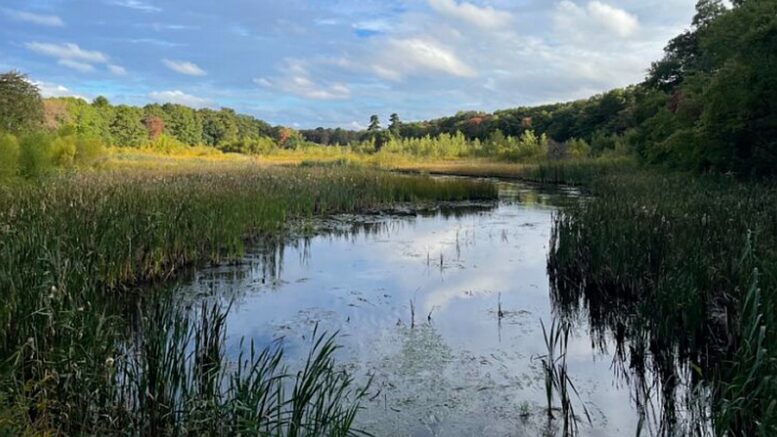
 We have already seen the proof. When the dam at Stump Pond in Blydenburgh Park failed, it did not trigger a crisis – it triggered a recovery. Meadows returned, native plants filled in and wildlife followed.
The same happened at West Brook, freed after a century-plus of artificial flooding. Wetlands flourished almost immediately. No million-dollar rebuilds, no endless maintenance contracts – just nature doing its work, once we stepped aside and offered nothing but gentle stewardship.
Unfortunately, our approach to environmental decline often doubles down on control.
When algae and muck build up in still-water ponds, the instinct is to add more chemicals. But a natural pond that supports wildlife cannot be treated like a swimming pool. These quick fixes do not address the real problem and can make things worse.
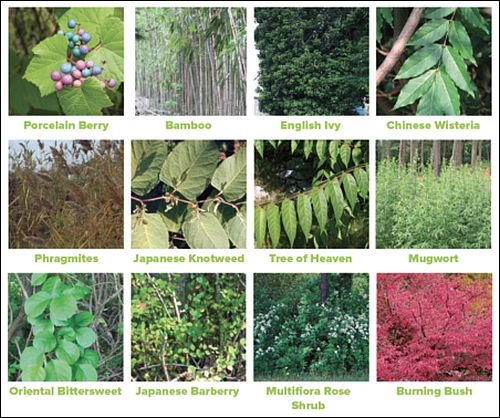
Angels with dirty faces: Meet the “dirty dozen” of Long Island invasive species. (Source: The Long Island Conservancy)
There are natural alternatives that are cost-effective and long-lasting. Some methods use specific strains of soil bacteria to digest waste, remove excess nitrogen and phosphorus, and restore balance from the water’s surface to the sediment layer. These approaches go after the cause, not just the symptoms.
We have been taught to wait for big policy changes, grant programs and “shovel ready” projects to fix what’s broken. But ecological repair doesn’t start in a committee room. It starts with an actual shovel. It starts in your yard, on your block, across your neighborhood.
You don’t have to wait for the government to rewild your corner of the world. Start small. Pull out the invasives in your flowerbed. Plant a native oak, serviceberry or beach plum. Leave the leaves in fall so overwintering pollinators have shelter. Convert a patch of turf into a meadow.
Talk to your neighbors, swap seeds, compare notes. Restoration spreads fastest when it’s visible and contagious.
Stewardship is not about doing less. It’s about doing the right things and letting nature lead. Once you make room for it, it takes over the heavy lifting.
Nature is not broken – it’s been ignored. The tower still stands. We just have to start putting the blocks back.
Environmental attorney Frank Piccininni is the co-founder and vice president of the Long Island Conservancy and the president & CEO of Spadefoot Design & Construction.