The 5.7 million American adults living with bipolar disorder are about to get some major-league help: a nationwide coalition of expert institutions designed to collectively evaluate patients and determine the right treatment options (including clinical trials). That’s no mean feat; matching medicines and therapies to individual bipolar-disorder patients is historically difficult, and one of the main challenges facing researchers like Anil Malhotra, co-director and professor of the Feinstein Institutes’ Institute of Behavioral Science. Earlier this year, the vice chairman for research in the Donald and Barbara Zucker School of Medicine at Hofstra/Northwell’s Department of Psychiatry earned a $3.4 million grant to initiate new clinical trials leveraging repetitive transcranial magnetic stimulation-based therapies; now, the renowned researcher will co-lead the new national hub out of Northwell Health’s Queens-based Zucker Hillside Hospital – hopefully “connecting even more members of our communities to the care they need,” he says.
 Disorder description: Bipolar disorder is a chemical imbalance in a person’s brain that causes dramatic shifts in a person’s mood, energy and ability to function. People with bipolar disorders often experience intense emotional states, or mood episodes, that can last days to weeks.
Brains of the operation: At the Institute of Behavioral Science, I help oversee our researchers who are looking at new ways to diagnose and treat mental-health disorders including bipolar disorder, schizophrenia affective disorders, post-partum depression and many others. We are looking at ways to blend novel clinical trials and technology to not only better understand mental-health conditions, but find alternative, more effective ways to treat them.
First responders: Additionally, our early-treatment and care programs for patients suffering from first-episode psychosis are used as national models of best practice research.
Always a challenge: Oftentimes, people with bipolar disorders are unable to find the right fit with certain medications and therapies. It is important to give those patients access to the newest treatments and trial options.
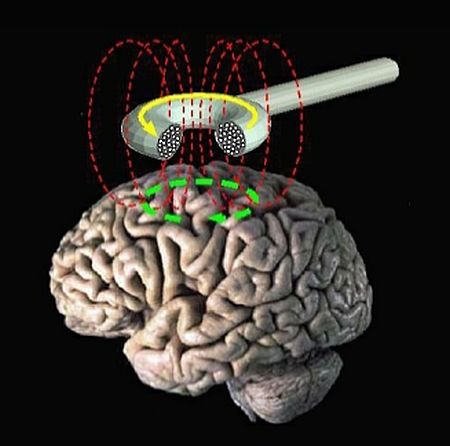
Coil, and re-coil: Repetitive transcranial magnetic stimulation is in play at the Institute of Behavioral Science.
Repetitive transcranial what-now? Repetitive transcranial magnetic stimulation uses an electromagnetic coil placed against a patient’s head. The coil delivers repetitive magnetic pulses that stimulate nerve cells in the brain that influence mood and depression. It’s been used to help treat people with depression and obsessive-compulsive disorder.
The double-blind shall lead: We were recently awarded $3.4 million to study the use of rTMS for a new study looking at non-pharmacological treatments for schizophrenia and associated disorders. Our double-blind, randomized clinical trial will study if rTMS improves social cognitive performance of people living with schizophrenia over the course of five years.
There’s the hub: We have been selected to be the Clinical Coordinating Center for the BD2 Integrated Network, part of the Breakthrough Discoveries for Thriving with Bipolar Disorders Foundation. We will be responsible for coordinating all of the clinical activities of the seven sites within the network: Zucker Hillside Hospital, Brigham and Women’s Hospital-McLean Hospital (in Massachusetts), University of California Los Angeles, Johns Hopkins University (in Maryland), the Mayo Clinic (in Minnesota), the University of Michigan and UTHealth Houston.
Central role: [Zucker Hillside] is only clinical hub for this project. Our priorities are to ensure that each of the sites is able to recruit and assess patients with bipolar disorder in a systematic and comprehensive fashion.
All together now: This ($6.1 million BD2) funding … allows us to be part of a larger national research hub. We will evaluate patients together, collectively sharing data and other resources to then be able to offer the best treatment and clinical-trial options.
Interview by Gregory Zeller