By MICHAEL H. SAHN //
Taking a cue from Marshall McLuhan, social media has become the message.
 The pervasive use of social media is both good and bad. The positives include enhanced connectivity among diverse groups and communities, immediate access to
information and research, and direct user feedback, among other relationship-building opportunities.
The negatives, however, are ugly: addictiveness, cyberbullying, the distortion of reality, the lightning-fast spread of disinformation and the promotion of hate – all leading to increased depression and anxiety among users and real harm to children.
Combining these platforms with artificial intelligence and content-generating chatbots exacerbates the power and effects of social media – and contributes to its lack of transparency.
A compelling illustration of social media’s harmful effects on children was painted at a Congressional hearing in January, when Meta CEO Mark Zuckerberg – after finishing his testimony – apologized to parents seated behind him for the role Meta and other social media platforms play in driving children to commit suicide.
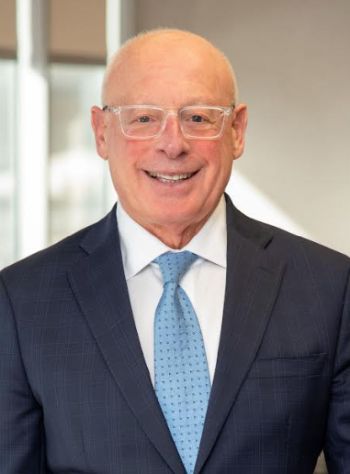
Michael Sahn: Social call.
To address these issues, courts, lawmakers, educators and policymakers are grappling with new regulations. Viewpoints vary depending on political, economic, legal and social outlooks and beliefs. The bottom-line debates are how to balance free speech with the obligation to protect society, and who should make the big decisions on social media content.
For instance, the U.S. Supreme Court is considering the legality of statutes that Florida and Texas have enacted limiting the ability of social medial platforms to decide what content they will allow. Ultimately, the court must decide how far states can go in regulating social media content without violating the First Amendment – and whether social media platforms have editorial discretion and control similar to other media, like newspapers.
It’s worth noting that the goal of these laws is to ensure that social media companies do not unfairly censure conservative or right‐wing political content, thereby promoting liberal viewpoints. But despite these political overtones, the court’s decision is important because many states have adopted laws regulating online and social media content to protect certain groups – especially children – or have established commissions to study impacts and recommend new laws.
New York State Sen. Jack Martins (R- Mineola) has introduced a law that would make it unlawful for minors to use social media without parental consent. His law also makes it illegal for social media companies to allow minors to create their own accounts, among other restrictions on the use of these platforms.
Martins says his proposal is meant to protect children from the “dark side of social media,” and there is some precedent here: New York previously adopted the Hateful Conduct Law, which requires social media companies to police their sites for hate speech and provide ways for users to complain about content that humiliates or provokes violence against minority groups.
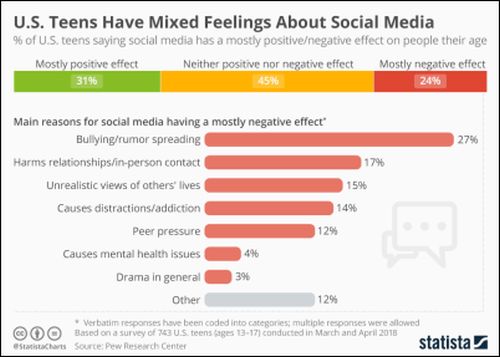
The bad, the ugly: American teenagers have strong opinions about the good and bad sides of social media. (Source: Statista/Pew Research Center)
Conservative groups have challenged the Hateful Conduct Law, leading to a federal court decision that it violates the First Amendment. However, while ruling for the plaintiffs, the court acknowledged the concept articulated by Supreme Court Associate Justice Oliver Wendell Holmes, who noted that free speech does not allow a person to yell “fire” in a crowded theater, potentially causing a panic or instigating a riot.
Notably, New York State school districts must, by law, develop and implement policies to protect students from social media threats and teach proper use of the medium to prevent bullying and harassment. Federally, U.S. Sen. Richard Blumenthal (D-Conn.) has proposed the Kids Online Safety Act, which would mandate the protection of minors and disable algorithms that make social media addictive.
There’s no doubt that too many restrictions could preclude the free exchange of ideas. But controlling social media is a priority for the future – left unchecked, the consequences are just too dangerous.
The heat is on social media. And we need to find a balance that achieves the benefits of these platforms, while protecting the vulnerable from the negatives.
Michael H. Sahn, Esq., is the managing member of Uniondale law firm Sahn Ward Braff Koblenz Coschignano PLLC, where he concentrates on zoning and land-use planning, real estate law and transactions, and corporate, municipal and environmental law. He also represents the firm’s clients in civil litigation and appeals.