By TOM MARINER //
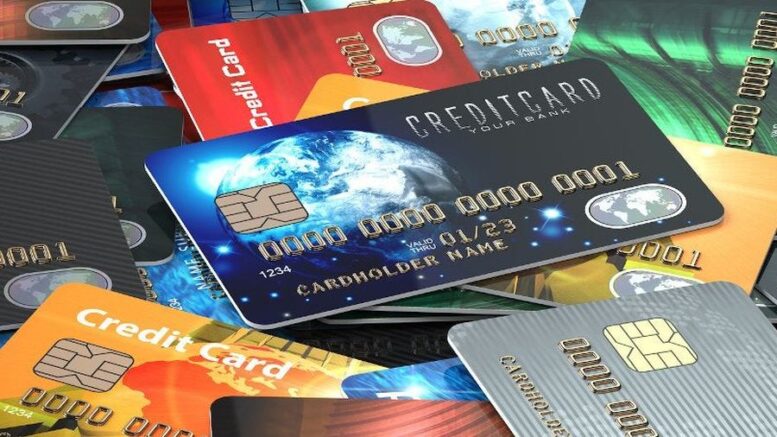
Today, it couldn’t be easier: Wheel your cart to the checkout, stick your debit card into the reader, punch in your PIN and done. The merchant is paid directly from your account.
 In years past, it was little more involved. The merchant would use a credit card imprinter, rolled over raised numbers on your card, to create a slip of carbon paper the store had to submit – like, actually hand-deliver or send through the mail – in order to get paid.
The journey from yesterday’s carbon copies to today’s electronic scans and instant approvals crossed right over Long Island, or close enough: It actually stopped by Robert Moses’ one-time home on Fire Island’s Gilgo Beach.
The house sits on a strip of sand about 3.9 miles off the South Shore, with a deck that looks north all the way to the Long Island Sound and south to the Atlantic. At the time, all you could see of Manhattan was the very top of the World Trade Center’s massive twin towers, peaking over the curvature of the Earth.
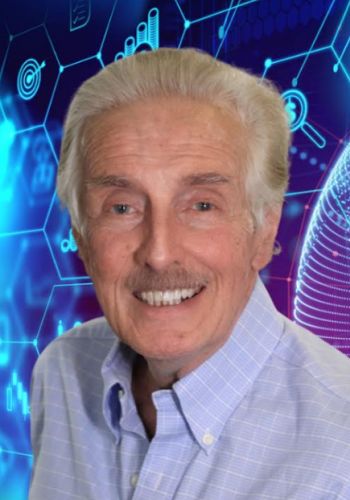
Tom Mariner: Card shark.
There was a pedestrian tunnel under Ocean Parkway – Moses had insisted on it – leading to Gilgo Beach, still famous for surfing, among other things. When I lived and worked in the house the master builder had previously occupied – located the end of a street that begins with the Gilgo Beach Inn – my neighbors would tell me stories about limousines delivering presidents and kings to the residence, back in the day.
Back on Long Island, it was a short drive north on the Wantagh Parkway to Hicksville, where we had developed the largest selling single-chip microcontroller, the PIC, and started shipping them – about 6 billion to Microchip Technology, the successor to Hicksville’s General Instrument Microelectronics.
The team that developed the PIC was headed by Frank Gruppuso, who also helped Texas Instruments convert its microcontrollers to the CMOS process (for “complementary metal–oxide–semiconductor,” a quantum leap for integrated circuits).
Gruppuso left General Instrument and joined the then-nascent, now-defunct SmartCard International as vice president of engineering. They had an outrageous idea that someone could squeeze electronic intelligence into the Visa family of credit cards – a crazy notion, so naturally they called me.
The big-picture concept was a tiny computer that could digitally scan a credit card and allow a merchant to authorize a purchase, with enough veracity to stand up to scrutiny when the Visa accounts were settled. The Internet that now connects everyone and everything was not yet everywhere Visa wanted to be; SmartCard International needed a solution that could quickly and securely authorize purchases wherever they happened.
We used the TI microcontroller, mounted on a tiny board that included a keyboard, a display and an interface to the eight-part contacts that now reside on the front of all our credit cards (at the time, very early in their development). For the reader, we created a cover that looked like a Visa Credit Card, creating a prototype that was roughly the shape and width of a modern card – but a quarter-inch thick, stuffed with electronics.
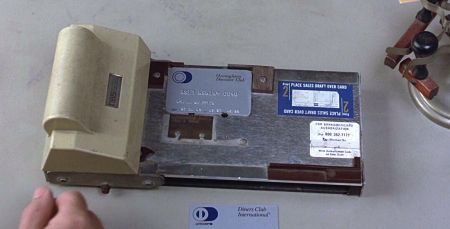
Fundamental reading: The classic credit card reader left an indelible imprint on society.
There were still a few point-of-sale steps. The customer’s card was presented to the clerk, who had to enter a price and VISA vendor ID into the keypad, then handed back to the customer, who had to punch in a PIN. This would trigger a validation number on the crude screen, which the merchant somehow noted – by hand or printed copy – to guarantee a future payment from Visa.
The functioning prototype with the Visa colors was held up by the president of Visa International during his keynote address at that year’s Visa convention of delegates in Brazil. He declared it “the future of Visa cards” to delegates from all over the world.
That prediction was quickly bypassed: Internet access became universal and there was suddenly little need for a standalone Visa card computer. SmartCard International tried to re-aim the device as a small, note-taking computer, but that, too, was obsoleted by 2007, when Steve Jobs taught us that smartphones could record notes and do all the rest.
But that very powerful card in your pocket still counts Long Island among its most influential birthplaces. And you thought Robert Moses – at least, his spirit – just influenced bridges and parkways!
Tom Mariner is the chief operating officer of Stony Brook-based SynchroPET and the founder of Bayport-based Kommercialization LLC.