By SCOTT BURMAN //
Long Island stands at a crossroads.
 Stubbornly clinging to a foregone era as a single-home bedroom community, we haven’t evolved to suitably address the needs of our younger or our older populations. As both housing costs and living expenses severely outpace wage growth, our young people continue to depart for more affordable pastures, while seniors opt to leave their communities and retire to places like Florida or the Carolinas.
With all its promise, our region is competing with other geographies for our most valuable resource: our people. As we confront these real challenges, we face a fundamental question: How do we grow and remain vital without losing our greatest asset?
The answer lies in revitalizing and repurposing underutilized or outdated property with smart development, already demonstratively working in pockets across the country.
Tops on the list for revitalization is transit-oriented development, which builds a mix of multifamily residences and services around existing transit hubs and downtowns – locales sorely in need of new life on Long Island.

Scott Burman: In transit.
Thanks to the completion of long-awaited transit infrastructure improvements like the Long Island Rail Road’s Third Track Expansion and East Side Access, our region is even more connected to New York City. But to fully capitalize on this, we need vibrant, walkable neighborhoods near those train stations – places where people can live, work and play without relying on a car for every need.
Contrary to the familiar, fear-based narrative that Long Island is becoming “overdeveloped,” the real issue is underdevelopment. In areas where diverse real estate products – particularly multifamily and mixed-use properties – make sense, development builds community, strengthens our way of life, reinvigorates downtowns and preserves open space.
Our severe lack of diverse housing options is not just a planning failure; it’s evolved over time into an economic and social issue.
Consider the numbers. The average home price on Long Island currently exceeds $800,000. Property taxes in Nassau and Suffolk are among the highest in the country. And Long Island’s population has become nearly 30 percent older over the last decade.
Homeownership is simply out of reach here for most young adults and middle-class families, and there are limited options for empty-nesters who would like to “right-size.”
This is simply not sustainable. This adherence to what worked in the past results in a stagnant real estate market that weakens our future economy and cultural vitality, while driving our children to move far from their roots and making it ever harder to promote our region as a viable place to raise a family or enjoy the golden years.
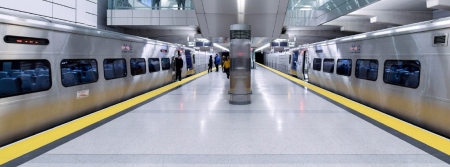
On track: The success of the state-of-the-art East Side Access project makes Long Island fertile ground for transit-oriented development.
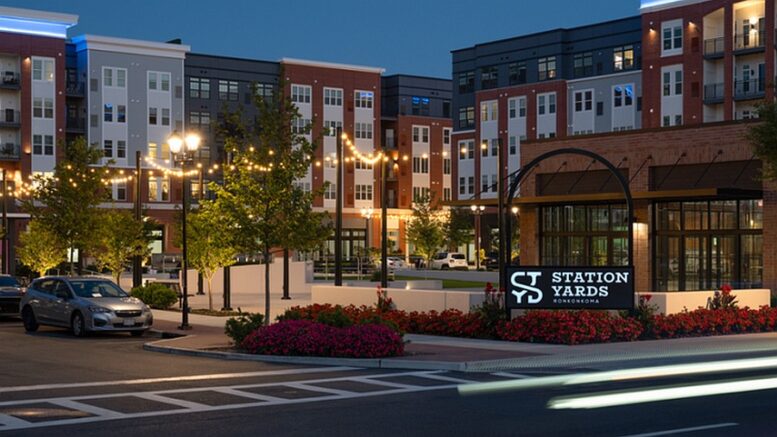
Projects like Station Yards (1,400 new homes and vibrant retail in Ronkonkoma) and Hicksville’s downtown revitalization are proving that well-planned development can attract residents and businesses alike. Mineola is another standout. Where once apartment living was stigmatized, a modern vision for suburban life is taking shape. High-quality multifamily rentals now thrive, offering luxury, permanence and even space to start a family.
This has been a priority for state and local governments for decades and is paramount to Gov. Kathy Hochul’s agenda. However, fundamental challenges which persist in many forms have stymied countless advances.
NIMBYism remains a potent force, with residents wedded to outdated notions of what multifamily housing represents. Local zoning laws are often restrictive. Infrastructure needs updating. And financial tools for developers are limited.
These are not insurmountable barriers but can cause inaction in the face of urgent needs.
Transit-oriented development is not about transforming Long Island into an urban landscape. It’s about creating walkable, amenity-rich communities where residents can access transit, retail and jobs without enduring hours of gridlock. It’s about responding to the realities of modern lifestyles where people value flexibility, sustainability and community.
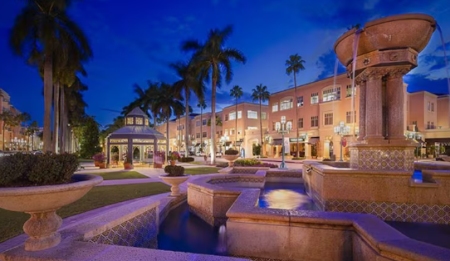
Something for everyone: Boca Raton’s Mizner Park is a high-end mix of residential, retail and entertainment uses.
Importantly, TOD also aligns with environmental goals by reducing car dependence and making better use of existing infrastructure.
National mixed-use models like Mizner Park in Boca Raton, Fla., and Hudson Yards in New York City prove TOD can reshape regions for the better. Locally, we’re beginning to see the same momentum. But we need to go further, faster.
Educating both residents and policymakers on the value of TOD is key. So is sharing the success stories, highlighting how communities like Wyandanch and Ronkonkoma are turning around with mixed-use development.
With political will and public support, TOD can help Long Island remain resilient, vibrant and affordable. The time for half-measures is over. This isn’t just a development strategy; it’s a vision for a viable future of Long Island that embraces both tradition and progress. It’s time we got on board.
Scott Burman is the founder and president of Burman Real Estate.