By TOM MARINER //
When the first U.S. Army recruits marched across the pine barrens of Upton, Long Island, in 1917, few could have imagined the global scientific breakthroughs that would one day rise from beneath their boots.
 Camp Upton, a U.S. Army training installation created during World War I, has evolved into Brookhaven National Laboratory, one of the world’s leading research institutions. The camp was a vital military site in each of the World Wars, but that pales in comparison to what it’s become.
During the first World War, the camp trained more than 30,000 soldiers (including the famed composer Irving Berlin, who’d later craft “God Bless America”). During the second World War, it geared up again, this time training American troops and housing German prisoners of war.
When WWII ended in 1945, the Army no longer needed its Upton base – and a group of visionary scientists saw an opportunity.
In 1947, with the backing of the newly formed U.S. Atomic Energy Commission, Camp Upton was repurposed as Brookhaven National Laboratory. Its mission: to explore the peaceful applications of atomic energy and otherwise push the boundaries of science.
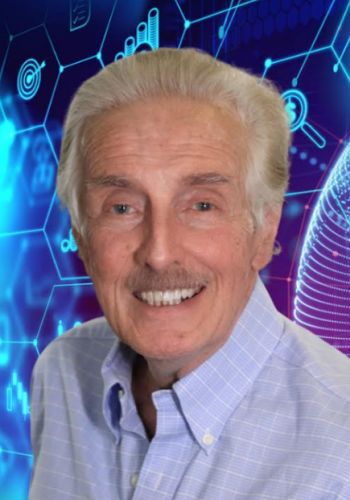
Tom Mariner: Laboratory tech.
The laboratory quickly established itself as a center of innovation. In 1952, it flipped the switch on the Cosmotron, the world’s first particle accelerator to achieve a billion electron-volts (allowing scientists to study the smallest bits of matter); many more advances and discoveries would follow.
Among other things, BNL played a major role in the discovery of the muon neutrino – just one giant leap that would lead to seven Nobel Prizes for BNL science and scientists.
The 1960s saw the rise of the Alternating Gradient Synchrotron, a circular particle accelerator that has helped discover new particles and solve mysteries about the universe’s most fundamental functions, on the tiniest scales.
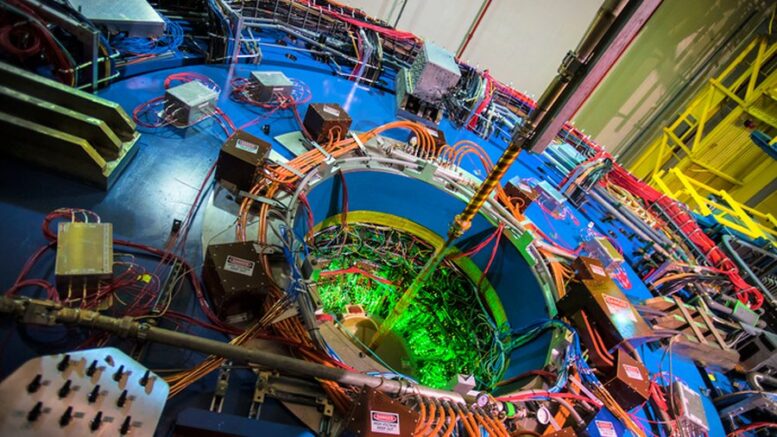
In 1982, the laboratory debuted the National Synchrotron Light Source – a second-generation synchrotron that significantly upped the ante on particle physics – and in 2000 launched the Relativistic Heavy Ion Collider, a 2.36-mile-circumference accelerator ring where atomic nuclei are smashed together at nearly the speed of light, recreating conditions that existed just after the Big Bang.
As far as heavy ion colliders go, the RHIC is second in size only the CERN’s 16.78-mile Large Hadron Collider, which straddles the border of France and Switzerland. Brookhaven Lab was actually instrumental in the creation of the LHC, designing and fabricating its superconducting magnets – a key component in the LHC’s 2012 discovery of the Higgs boson, the elementary particle that gives mass to all other particles.
In 2015, another quantum leap was made when BNL supplanted the NSLS with the new-and-improved NSLS-II, a super-bright X-ray machine that lets scientists zoom in on materials, cells and chemicals – again, at super-microscopic levels – to see what makes them tick.
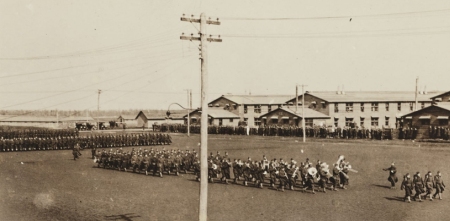
Initial formation: Circa-1918 Camp Upton was a far cry from the world-class laboratory that rose in its wake.
Now, BNL is preparing for its next great endeavor: the Electron-Ion Collider, a $1.7 billion facility approved by the U.S. Department of Energy in 2020. Currently being constructed within the existing RHIC tunnel, the EIC will allow scientists to explore the structure of protons and neutrons in even greater detail.
Of course, BNL is not limited to particle science. The lab helped pioneer radiopharmaceutical development in nuclear imaging and radiation therapy – significant advances in medical technology – and was among the first facilities to produce the radiotracers technetium-99m and 18F‑FDG, essentially launching the field of nuclear-medicine imaging.
Even better, BNL has made major contributions to the exciting field of theranostics, the science that allows diseased cells and tissues to be destroyed without harming surrounding healthy tissues.
The world-class institution currently operates under the steady hand of Director JoAnne Hewett, who can concentrate on both theoretical particle physics (she earned a PhD in physics from Iowa State University) and technical direction (she notched many management achievements as chief research officer and associate laboratory director of the Fundamental Physics Directorate at the Stanford Linear Accelerator Center).
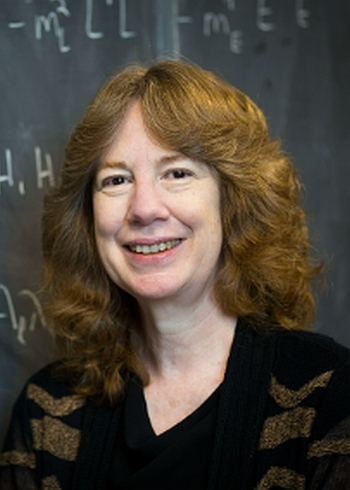
JoAnne Hewett: Inquisitive nature.
While leading roughly 2,800 employees and some 5,000 visiting scientists, the BNL director ensures that the laboratory functions as both a hub of discovery and a pipeline for future scientific and engineering talent. Among her Long Island-benefiting priorities is one of the nation’s most robust STEM-outreach programs, inspiring 25,000 K-12 students annually to pursue studies in science, technology, engineering and mathematics.
That comprehensive outreach effort includes internships, teacher fellowships and Discovery Park – a multifaceted platform designed to advance science- and technology-based economic development for Long Island, New York State and beyond.
In no small way, BNL is shaping the next generation of U.S. scientists and engineers.
“We really need an energetic new-generation workforce to come to Brookhaven and bring us all the talent that you have – and all your inquisitiveness,” Hewett notes.
As Brookhaven National Laboratory looks ahead, its legacy reminds us that some of the most powerful engines of innovation can begin in the most unlikely places – even on land once used for digging trenches and detaining POWs. From defense to discovery, Upton’s transformation continues to shape science and society on a global scale.
Tom Mariner is the executive director of Bayport-based Long Island Bio.