By TERRY LYNAM //
Most people have a negative instinctive reaction to government bureaucracy and regulatory mandates, often viewed as excessively burdensome micromanagement.
 Many are inarguably flawed – but regulatory requirements also protect consumers in a capitalist marketplace. And considering recent history, it’s clear America’s opioid epidemic was fueled in large part by an astonishing lack of government oversight.
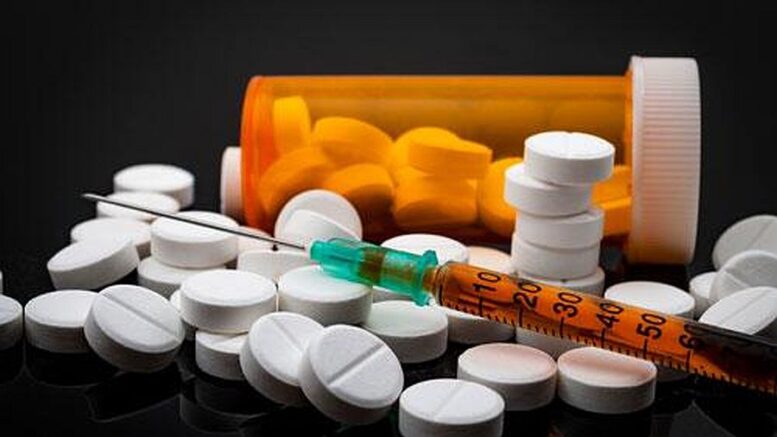
Since the opioid epidemic began in the late 1990s, the federal government estimates that more than 1 million Americans have died from drug overdoses, including an all-time annual high of 107,622 in 2021. Most overdose deaths over the past decade can be traced to the powerful synthetic opioid fentanyl, which is illicitly manufactured and shows up in cocaine, heroin and counterfeit pills being peddled as legitimate Xanax or Adderall.
But the roots of the opioid crisis can be traced to the U.S. Food & Drug Administration’s 1995 approval of Connecticut-based Purdue Pharma’s OxyContin as “safe and effective” for patients with moderate-to-severe chronic pain.
Terry Lynam: Oversight is 20/20.
While the FDA’s decision was influenced by the medical community’s desire to improve pain management for patients – and the mistaken belief that the drug’s controlled-release formula would limit its abuse potential – regulators paid little attention to pharmaceutical manufacturers’ aggressive, even fraudulent marketing efforts.
Those tactics would ultimately generate a lawsuit tsunami, already leading to tens of billions of dollars in settlements with opioid manufacturers and drug wholesalers.
In a recent, fascinating episode of his terrific Revisionist History podcast, Malcolm Gladwell analyzed how a regulation establishing state-level prescription monitoring programs could have saved thousands of American lives lost to opioid-related overdoses during the first wave of the crisis.
When OxyContin entered the market in 1996, only five U.S. states – New York, Illinois, Idaho, Texas and California – had what are known as triplicate prescription programs. In those states, copies of prescriptions written for strong narcotics like OxyContin were maintained by not only the clinician and pharmacist, but also state regulatory agencies that maintained a database and monitored it for signs of improprieties.
OxyContin distribution was about 50 percent lower in “triplicate states” in the years after the drug’s launch, according to a 2019 study by researchers from the nonprofit RAND Corp., the University of Notre Dame and the University of Pennsylvania. Court documents involving Purdue Pharma show that state-based triplicate prescription regulations posed a major obstacle to sales of OxyContin, prompting the company to focus its efforts on other states.
 As a result, dispensing rates spiked in states like West Virginia, Kentucky, Tennessee, Alabama, Oklahoma and Louisiana. Predictably, overdoses and prescription drug-related deaths in those states also rose sharply in the early 2000s – and according to the U.S. Centers for Disease Control and Prevention, many are still paying the price.
As they began to see the consequences, many additional states began enacting their own prescription monitoring programs. But while opioid-dispensing rates declined significantly between 2006 and 2020, America’s addiction level had already reached crisis proportions.
As states cracked down and doctors curtailed their opioid painkiller prescriptions, many patients turned to the streets. This led to a 2010 heroin resurgence and, a few years later, the emergence of fentanyl.
While it may not have been the only driver of the opioid crisis, a lack of regulatory oversight was a big factor. New York and other “triplicate states” certainly lost thousands of residents to opioid overdoses, but the impact was much worse in other states.
Based on the latest CDC data, West Virginia, Kentucky, Delaware, Ohio, Tennessee, Maryland, Louisiana and Pennsylvania currently have the nation’s highest drug-overdose mortality rates. New York has the 19th lowest, with an estimated 4,965 overdose deaths in 2020.

Watch it: Government overregulation is often burdensome — but oversight of the pharmaceutical industries may be imperative.
Another CDC report, released just last week, notes substantially higher overdose-death rates among Black and Native American populations – no surprise, considering the well-documented health disparities exposed by the COVID pandemic.
With the growing prevalence of fentanyl, purchasing drugs in non-medical settings has become a game of Russian roulette – and far too many are paying the ultimate price. As states begin to receive proceeds from multibillion-dollar settlement agreements with pharmaceutical companies and others involved in distributing and selling prescription opioids, they need to correct past mistakes.
Oversight of the pharmaceutical industry is a must. And most of the settlement money should goes toward expanding treatment options for the millions of Americans still struggling with addiction.
Terry Lynam is a communications consultant and former senior vice president/chief public relations officer for Northwell Health.