By JOHN PARKER //
It’s fall in America and an impactful event is about to begin on the other side of the Atlantic: The 26th U.N. Climate Change Conference of the Parties, which is not familiar to most Americans but centers on what many call the greatest existential crisis of our livable world.
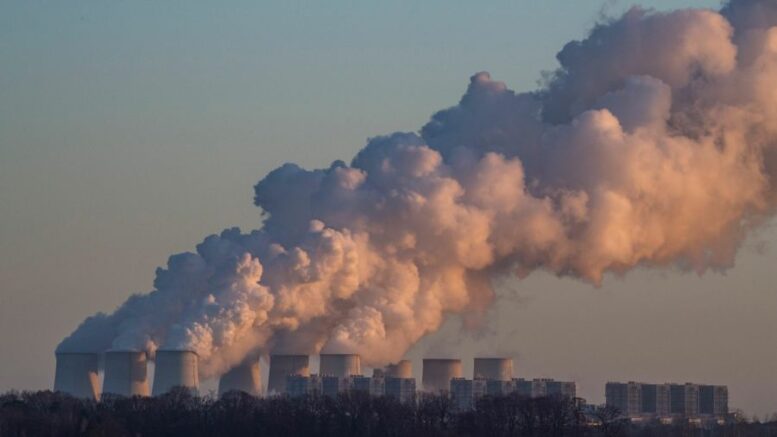
 The amount of carbon gases released into the atmosphere will need to be radically reduced by 2030 if there’s any hope of reducing global climate change impacts in a meaningful way. From energy production to transportation, climate is becoming an increasingly high priority, and slowing the pace of climate change is proving to be a daunting task.
COP26 is a 12-day event commencing Oct. 31 in Glasgow, Scotland. Elected leaders, scientists and advocates will meet along the River Clyde to advance an effort that began in 1992, under the United Nations Framework Convention on Climate Change. The leading industrialized countries of Europe – along with China, India, Australia and the United States – are all part of the historic effort.
It’s clear there’s much to do.
In August, a red flag waved when the U.N. released a climate report concluding that our livable world – where we reside, work and play – will continue to warm, with resulting weather changes and rising sea levels. The report was based on more than 14,000 studies from scientists in 66 countries, providing the most compelling view yet of humanity’s collective wisdom on this topic. And it presented clear evidence that humans cause climate change.

John Parker: Irrefutable science.
Based upon this scientific consensus, COP26 will encourage world leaders to make commitments to limiting the increase in global temperatures to 1.5 degrees Celsius to stave off the worst impacts of a warming world. This is an urgent goal requiring large-scale reductions in carbon-gas emissions – current policies and practices put the likely temperature increase closer to 3 degrees Celsius above preindustrial levels.
The goal of “net zero” emissions by 2050 requires the rapid de-carbonization of our world by phasing out fossil fuels, switching to renewable energy sources and changing many aspects of our lives – how we travel, how we power our spaces.
COP26 is expected to draw 25,000 people to build upon previous climate conferences and international treaties. Among the topics slated to be covered are finance (changing public and private financing for infrastructure, technology and innovation to align with “net zero” goals); energy (accelerating the phase-out of fossil fuels, increasing investments in solar, wind and other renewables); nature (encouraging sustainable agriculture, protecting biodiversity and addressing nutrition); adaptation (focusing on responsiveness in local communities); and transportation (stressing the need for electric vehicles in all countries).
Participants will also discuss cities (decreasing the impact of large buildings’ carbon emissions, increasing resiliency in the “built environment”), youth and public empowerment, and gender equality.
The scope and scale of these topics demonstrate the ambitious nature of this conference. Despite worldwide acknowledgment of the importance of COP26, there remains widespread disparities over what can be accomplished – and how fast it can be achieved.
Climate change is rife with such contradiction, even though the evidence is in plain sight: Warmer air holds more water in some areas – enabling torrential rains – and creates drier and hotter temperatures in other areas, leading to droughts and wildfires.
Americans on the West Coast have witnessed these consequences for months, with some of the worst forest fires ever recorded – so large that smoke and haze have blotted the sun over East Coast cities.
 Climate change also exacts a high human toll in areas not built or designed to withstand intense, fast-developing flood events. Rainfall from Hurricane Ida, which actually made landfall in the Gulf Region, ravaged New York City this summer; half a world away, intense rains caused catastrophic summer flooding in Belgium and Germany.
The economic need to address climate change is also clear. Our consumer economy is increasingly tied to international trade; if net-zero emissions aren’t achieved by 2050, estimates put the loss of total economic value worldwide at almost 10 percent – a $23 trillion reduction.
These losses and business disruptions will directly impact the products consumers buy, which arrive through a global supply chain. Supply chain interruption during the COVID-19 pandemic resulted in panic buying and a lack of products in many stores.
By 2026, a total of $1.26 trillion in revenue losses is anticipated for suppliers in the global supply chain due to climate change, further complicating the long-term challenges and costs of international commerce. Another $120 billion loss, estimated in increased environmental costs, will be borne by corporate buyers.
There are, however, significant economic benefits to addressing climate change. Investment in efforts to offset or reduce climate change have been shown to produce more jobs than similar investment in fossil-fuel industries, providing an incentive to invest in transition.
New York has millions of residents and hundreds of thousands of homes, businesses and schools – creating power, infrastructure and transportation sectors that are among the planet’s largest contributors of atmospheric carbon gases. Fortunately, state law is moving to address the climate future.

Deep trouble: Sea levels are rising faster than anticipated.
For instance, New York has developed projects to counter the impacts of projected sea-level rise (good news for Long Island, where the Medium Projection is sea levels will rise by 6 inches just in this decade – and by 16 inches by the 2050s).
New York has also enacted the Climate Leadership and Community Protection Act, a law setting significant and ambitious goals including 100 percent zero-emission electricity (by 2040) and emissions that are 85 percent below 1990 levels (by 2050).
New sources of renewable energy are key to meeting New York’s requirements, including the significant goals of 9,000 megawatts of offshore wind by 2035 and 6,000 megawatts of solar power by 2025. These mirror nationwide efforts; for instance, offshore-wind projects are being planned for the entire U.S. coastline.
The New York Bight – the area of the Atlantic Ocean extending from Montauk to Virginia – is a great asset, with its 800,000 acres of so-called “Wind Energy Areas” now subject to competitive bidding. Offshore-wind projects in this area are estimated to result in 6,800 jobs and more than $12.1 billion in economic activity in New York.
Driving is the primary form of transportation on Long Island, and during the pandemic, reduced commuter traffic resulted in radical air-quality improvements. But as the pandemic ebbs, traffic has returned.
One climate-friendly solution is electric-powered vehicles. In New York, EVs must replace gasoline-powered new cars by 2035. While they do, consumers will be considering many issues; the EV must be as useful and reliable as their current cars, including sufficient single-charge travel ranges.
Long Island will need plenty of electric-charging stations for all these EVs. In response, LIPA and PSEG are seeking approvals for $66 million in expenditures over the next five years, looking to install superfast charging stations (charge a car in less than an hour) and thousands more Level 2 chargers (charge a car in about four hours).
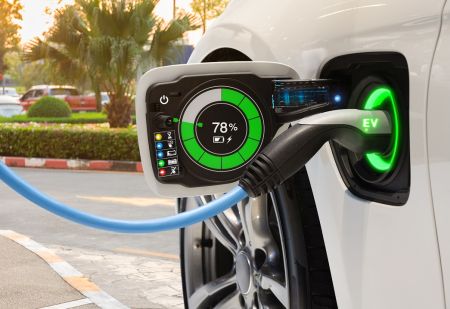
Electric avenue: Long Island is going to need a lot of electric-vehicle charging stations over the next decade.
Increased numbers of EVs will also require enough power to meet nightly car-recharging needs at home, which will require substantial improvements to Long Island’s century-old electric grid – especially if the number of EVs on local roads jumps from roughly 23,000 today to 180,000 by 2025, as projected by Albany.
The state has also set battery-storage goals on a scale necessary to make the switch practical and reliable: 3,000 megawatts of energy storage by 2030 and 6,000 megawatts of solar power by 2025, both needed to make an effective transition away from fossil fuels.
Meeting that solar power goal will require a tripling in the current rate of solar installations. And an upgraded electrical-storage infrastructure has to be built, hardened against extreme weather. There are many locations where this storage will be possible and economically feasible, and efforts to increase such storage are well underway.
The battery-storage question will likely be addressed in tandem with other well-established environmental programs, including those that remediate and reuse contaminated sites and provide tax credits for such commercial and industrial reuses.
These environmental cleanups, and incentivizing locations for those battery-storage projects, represent a clear interconnection of regional land-use and zoning laws that will need to be addressed with heightened prioritization.
New York is creating opportunities and focusing resources to address the same issues as those on the table at COP26. Public and private investment, along with government action, are needed to move away from carbon-intensive energy sources and toward zero-emission renewable sources.
Long Island’s transition is underway, with ongoing offshore-wind projects, improving infrastructure and the increasing use of electric vehicles. These nascent efforts are a major part of our future.
John Parker leads the Environmental, Energy, and Natural Resources Practice Group at Sahn Ward PLLC.