By JEFFREY L. REYNOLDS //
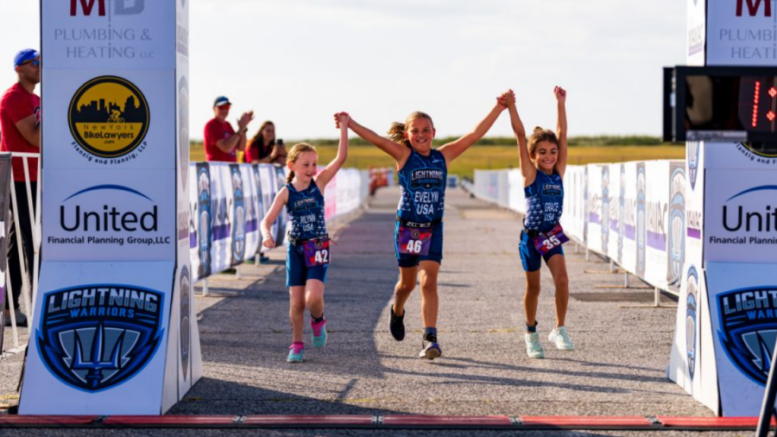
Eisenhower Park filled April 19 with dozens of determined kids racking bikes, pulling on swim caps and nervously gearing up for the annual Mini MightyMan Sprint Triathlon.
 The beginner’s race features a pool swim, a bike ride around the park and a short run. Almost 100 adults toed the line as well, but teens dominated the course and claimed eight of the top 10 finishes.
This year’s overall winner, Esteban Quintero, was 15 years old.
Quacere Hagans was also only 15 when he was shot and killed in the same park, just a few hundred yards away, just a few days earlier. Two other men, ages 28 and 31, also suffered gunshot wounds in the April 15 shooting. It remains under investigation, but Nassau County Police say the incident during a large gathering may have been gang-related.
Mini MightyMan wasn’t meant to be a statement, a reflective symbol or an inspirational community response to this tragedy. It was simply a triathlon, with children swimming, biking and running their hearts out, supported by proud coaches, excited peers, loving parents and volunteers who showed up on a cold, rainy Sunday morning because they still believe in the power of what sports can do for a kid.

Jeffrey Reynolds: Bit of an Ironman himself.
Naturally, regular exercise delivers a wide range of physical benefits for children. Lower obesity risk, stronger cardiovascular health and improved coordination, flexibility, balance and muscle strength are among the most well-documented – along with a meaningful boost in immune function and sleep quality that helps kids stave off contagious classroom bugs.
Young people who participate in organized sports also have lower rates of depression and anxiety. They report higher levels of self-esteem and self-efficacy – the sense that their actions have consequences and that they can do hard things. And they maintain stronger social connections, while spending less time isolating in front of screens.
Adolescent athletes generally have more adults in their lives who know their names, notice when they’re absent or something is off, and nudge them out of their comfort zones. They have more coaches, mentors and additional sets of eyes on them during what can be exceptionally challenging years.
Perhaps more than anything, sports give young people a place to shine and a safe place to land when they stumble. They learn structure and discipline. They find a community that expects them to put in the work and finish what they start and will celebrate their success. And young athletes can develop their own identities – rather than inherit one from a neighborhood, a gang or the circumstances they were born into.
“Triathlon is much more than three sports,” says Noah Lam, a Stony Brook triathlete who founded the nonprofit Lightning Warriors Youth Triathlon Team in 2017 after seeing his 15-year-old son Zachary thrive as he trained and raced. “The sport provides an opportunity to adapt to unexpected situations and helps build resilience and confidence that carries into everyday life.”
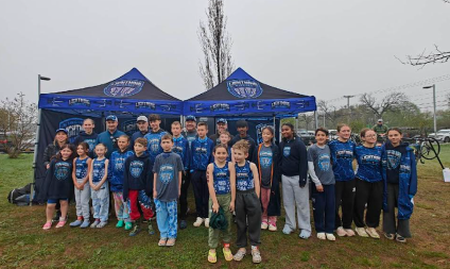
Youth summit: Nearly 30 Lightning Warriors shined at the April 19 Mini MightyMan. (Photo: Noah Lam)
Zachary went on from shorter races to complete a half Ironman 70.3-mile triathlon and now serves as a sergeant in the United States Army. Teammates have gone on to win college scholarships, U.S. Naval Academy appointments and spots on Division 1 collegiate teams.
Lightning Warriors fielded 28 athletes in Sunday’s race, claiming several top spots. More than 50 kids, ages 7 to 19, participate in the group’s weekly practices. Head Coach Jodie Robertson, who also teaches elementary band in the Herricks Union Free School District, raced as a professional triathlete for 10 years, and is a two-time Ironman Champion, as well as an Olympic Marathon Trials qualifier.
She oversees a cadre of volunteer coaches who provide free or low-cost training opportunities, including pool access – a big triathlon barrier for many kids – and equipment including bikes, helmets and other gear.
Lam sees triathlon as a great option for kids who may not make it onto highly competitive school-based teams, can’t afford expensive club/travel teams or can’t get to weekly rec teams focused on other sports.
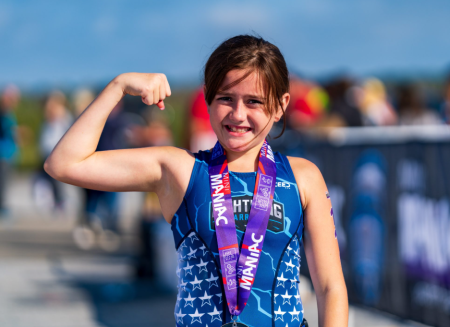
Healthy start: It can’t cure all of society’s ills, but participation in youth sports can strengthen kids’ chances.
“We want every young person on Long Island – including those from diverse communities – to experience the benefits of triathlon,” he says. “So we’re focused on inclusivity and building the infrastructure for a sport that’s still seen as niche.”
The group’s signature event, the Mini Maniac Youth Triathlon, is scheduled for Sept. 13 at Smith Point County Park. It ranks among the nation’s largest youth triathlons.
To be clear, participation in sports – even in three sports – won’t by itself keep kids safe or prevent tragedies. Kids who compete gain real and significant physical, mental and social benefits, but young people can’t simply swim, bike and run out of unsafe neighborhoods, failing schools, struggling families, chronic trauma and all the other conditions that conspire to derail futures and claim lives.
No finish line, however hard-earned, can fix all of that. But this one gives our kids something worthy to race toward.
Jeffrey L. Reynolds is the president and CEO of the Garden City-based Family and Children’s Association.
Editor’s note: Jeffrey is a member of the Lightning Warriors Board of Directors.