By TOM MARINER //
The world’s largest healthcare-solutions provider sure didn’t start that way.
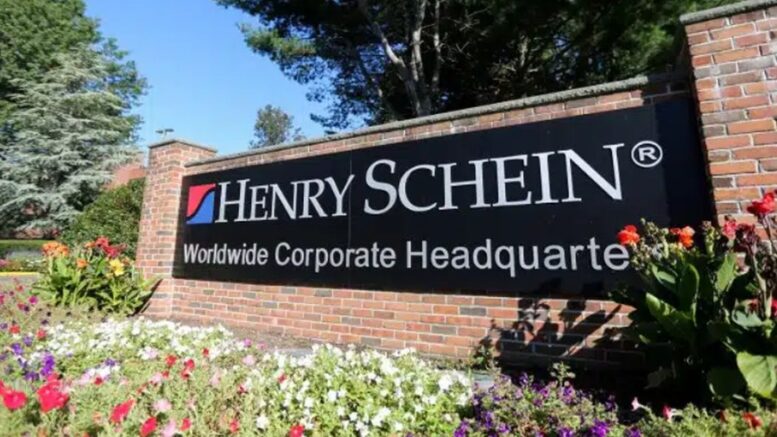
 But what began in 1932 as a neighborhood pharmacy in Queens has certainly evolved into a multibillion-dollar behemoth of medical devices and healthcare-related services – and a true socioeconomic cornerstone on Long Island, where it has firmly anchored its global headquarters.
Today, Henry Schein services more than 1 million global customers (mostly private dental and medical practices and groups) and employes 25,000 people across 34 countries. But its operating philosophy – deep customer relationships, localized sales expertise, disciplined expansion plans – has remained unchanged over the last century.
As envisioned by outer borough pharmacist Henry Schein and his wife/co-founder, Esther, the company launched as a pharmaceuticals supplier for local physicians. In the postwar decades, as suburban Long Island grew, so too did demand from local doctors and dentists, changing the middleman’s focus from retail pharmaceuticals to a wider range of healthcare-supplies distribution – a subtle shift that would define the company’s Fortune 500 future.
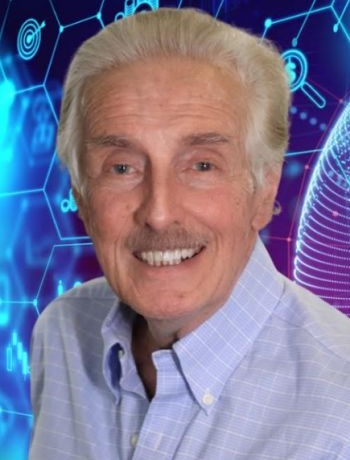
Tom Mariner: Oh, Henry.
By the 1970s and 1980s, Henry Schein had cemented its Long Island operations – first in Port Washington, later in Melville – and positioned itself as an anchor of the rapidly expanding Route 110 corporate corridor. The location offered proximity to New York City while enabling easy expansion into Long Island’s growing base of healthcare providers and medical-related small businesses.
Following in his parents’ footsteps, Henry and Esther’s son, Jacob Schein, ran the firm through the end of the 1980s, until his premature death from cancer in 1989. That engendered a management buyout led by then-Chief Financial Officer Stanley Bergman – and lit the fuse of the company’s modern era.
At the time, Henry Schein was a midsized distributor with approximately $225 million in annual sales. Over the next three decades, Bergman and his leadership team executed a smart-and-steady growth strategy built on two pillars – acquisition and integration – with the company expanding aggressively across the dental, medical-product and animal-health markets.
It acquired dozens of businesses, all while maintaining its consistent operating model. And when Henry Schein finally went public in 1995, it collected working capital that supercharged its expansion.
 From that point forward, the company’s growth trajectory was nothing short of striking: from hundreds of millions in annual revenues to more than $13 billion today, representing one of the most successful scale-ups in Long Island corporate history.
A notable aspect of Henry Schein’s history is the extraordinary continuity of its leadership. Co-founder Henry headed the firm for 40 years; his family held sway for two intermittent decades; and Bergman served as CEO well into the 21st Century (and still serves as chairman, a seat he’s filled since 1994).
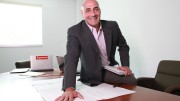
On March 2, a new management era began, when Bergman handed the CEO reins to Frederick Lowery, who brings extensive experience in growing distribution and owned-product businesses – most significantly as executive vice president of Massachusetts-based Thermo Fisher Scientific, where he led manufacturing, marketing, R&D and sales operations.
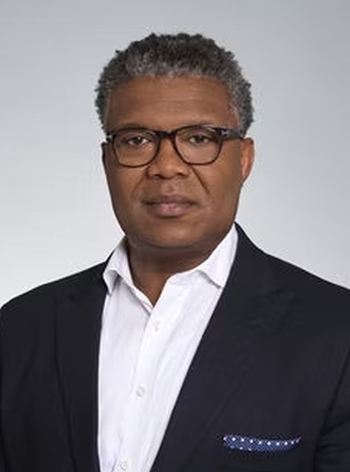
Frederick Lowery: Big shoes to fill.
Since that 1995 IPO on the NASDAQ, the largest publicly traded firm headquartered on Long Island has proven to be a sure bet for investors, but its success is not only measured in strong bottom lines. Henry Schein has been recognized by business-ethics watchdog Ethisphere as one of the World’s Most Ethical Companies for 15 straight years – proof positive of its never-ending focus on integrity, community engagement and workforce development, all baked into its core business model.
While expanding its global footprint, Henry Schein remains deeply tied to its Melville campus. Local internships, apprenticeship pathways and programs such as the Henry Schein Cares Foundation – the company’s global corporate citizenship effort – all translate corporate values into measurable impact, linking ethical leadership directly to business performance.
Moreover, the meteoric medtech spotlights a broader pattern across Long Island’s innovation ecosystem: the ability to build globally competitive companies in cutting-edge sectors such as healthcare, life sciences and advanced manufacturing, way out here in the ’burbs.
Henry Schein’s impressive trajectory offers many lessons, but none as important as these: Scalable business models can emerge from local service businesses, leadership continuity matters and customer relationships remain central, even in a Digital Age.
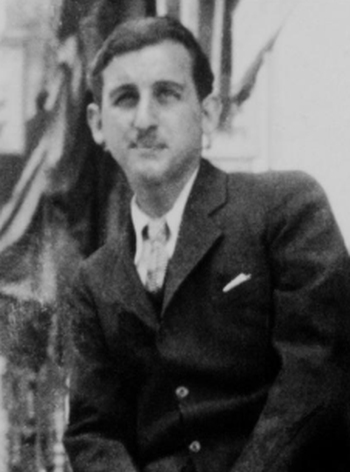
Henry Schein: Case study.
Long Island, of course, boasts a vibrant life-sciences sector, overflowing with the research, development, manufacturing and sales of all kinds of advanced medical and dental products. That’s certainly helped a company that now boasts several “mega” international distribution centers, responsible for millions of annual shipments to providers around the planet.
As healthcare continues to evolve – driven by digitalization, consolidation and changing care-delivery models – Henry Schein is positioned to remain a key intermediary between manufacturers and practitioners. Its continued investment in technology, logistics and services suggests its growth story is far from complete.
For the Island, Henry Schein represents more than a corporate success story – it’s a case study in how regional companies can scale globally while reinforcing the economic and innovation fabric of their home base.
Tom Mariner is the executive director of Bayport-based Long Island Bio.