By TOM MARINER //
The Center for Biotechnology at Stony Brook University has long been one of New York State’s most powerful engines for life-sciences innovation.
 And it’s not letting up one bit: At this month’s Center for Biotechnology Life Sciences Summit, held at the Alexandria Life Sciences Center in Manhattan, SBU leadership once again flexed the state’s biggest biotech muscle – on a national stage.
The summit’s venue, a 1.3-million-square-foot technology hub overlooking the East River, matched the event’s energy: Two days of whirlwind panels, investor discussions and startup presentations from across the country, exploring everything from early-stage biotech financing to manufacturing scale-ups to the future of artificial intelligence-driven drug discovery. It was an unfiltered look at how innovators are turning lab-bench concepts into next-generation therapies.
Behind the success of this national event were Clinton Rubin and Diane Fabel, whose dual leadership has shaped the Center for Biotechnology’s evolution for more than three decades.
The center was founded in 1983 under the steady hand of the late Richard Koehn, a successful ecology and evolution researcher and SBU dean of life sciences who envisioned a center that would bridge academic research in biotechnology and commercial application – a novel concept at the time.
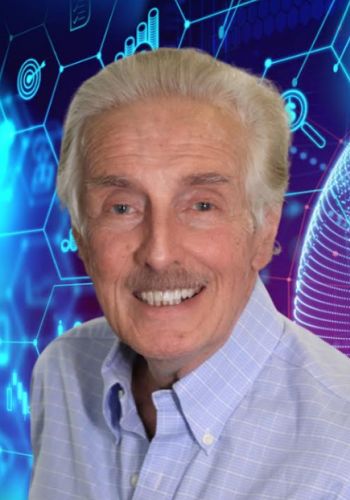
Tom Mariner: Bio bro.
That same year, the center was awarded one of New York State’s first four Center for Advanced Technology designations. The CAT program’s goal is to promote partnerships between universities and industries that drive technology transfer, promote economic growth and spur job creation.
Fabel, who joined the center in 1990, became its operational backbone. Now director of operations and chief operating officer, she has developed commercialization programs, entrepreneurial training efforts and seed-grant initiatives that connect researchers and innovators across the state. She also organizes the annual Life Sciences Summit – and is already planning next year’s edition.
Among her most impactful efforts was expanding the center’s role in Small Business Innovation Research Training – opening the door to critical federal grants that fund early-stage R&D.
These programs traditionally help startups secure up to $250,000 for proof-of-concept and more than $1.5 million for actual technology development. While national funding has temporarily stalled, the center’s mentorship model remains a blueprint for success.
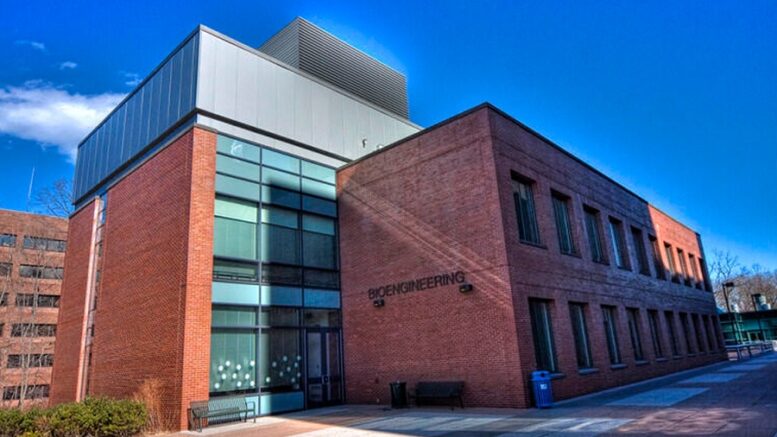
Rubin, appointed center director in 1997, brings an engineer’s precision to the mission. He has broadened the center’s translational research, startup mentoring and collaborations with state and industry partners; he also founded SBU’s Department of Biomedical Engineering, secured funding for the circa-2010 Bioengineering Building on the university’s West Campus and oversaw its completion.
Under Rubin’s leadership, the center has become synonymous with innovation, serving as the connective tissue between academia, entrepreneurs and investors.
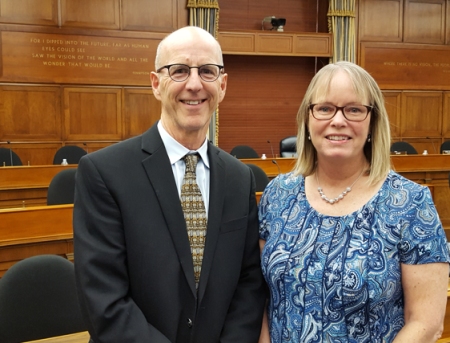
Teamwork makes the dream work: Rubin (left) and Fabel have led the Center for Biotechnology to considerable heights.
The center’s sustained excellence has been reflected in every decade of New York’s CAT redesignation process. And it has consistently adapted to the state’s changing economic priorities and the rapidly evolving biotech landscape – from recombinant DNA and monoclonal antibodies in the 1980s to genomics and bioinformatics in the 2000s to today’s fascinations with AI, mRNA and in-silico drug development.
This adaptability has paid off. Between 2017 and 2022, the Center for Biotechnology accounted for an estimated 27 percent of the total $2.95 billion economic impact generated by New York’s 15-member CAT network, the largest share in the state. Today, the center continues to drive both innovation and job creation across Long Island’s growing life-sciences economy.
Stony Brook’s commitment to bioscience extends beyond programs; it’s built into the landscape. Across the university’s West Campus, three major facilities anchor Long Island’s innovation corridor: the Bioengineering Building, home to the Center for Biotechnology and translational research labs; the Advanced Energy Research & Technology Center, integrating bioenergy and bioprocess technologies; and the Innovation & Discovery Center, a multi-tenant incubator supporting emerging bioscience and technology startups.
In addition, the university and the Center for Biotechnology are involved with projects like New York BioGenesis Park, a groundbreaking $430 million Cell and Gene Therapy innovation hub rising in Nassau County.
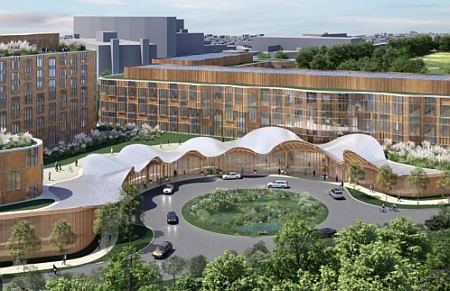
Welcome to BioGenesis Park: The coming-soon Nassau County biotech hub promises to supercharge regional research efforts.
At this year’s summit, two insights resonated strongly among participants. First, that the journey from biotechnological concept to clinical application is way too long (often exceeding a decade). And second, that in-silico testing – the use of computer simulations to model biological processes – holds enormous promise to shorten that path.
Few institutions are better positioned for the coming convergence than SBU and its Center for Biotechnology. The intense focus on innovation at the interface of biology, engineering and data perfectly positions the university for this next frontier, where science will redefine how life-saving therapies reach patients.
From its modest campus-office beginnings in the 1980s to today’s scientific leadership and statewide economic impact, the Center for Biotechnology has been a consistent force in translating scientific discovery into commercial and clinical success. Through Rubin and Fabel’s shared vision and the steadfast support of Albany’s CAT program, the center has positioned SBU as a cornerstone of America’s life-sciences economy – and cemented Long Island’s innovation legacy for decades to come.
Tom Mariner is the executive director of Bayport-based Long Island Bio.